In Alaska, the Transfer-on-Death Deed is a valuable estate planning tool that allows property owners to designate beneficiaries who will receive their real estate upon their passing, all without the need for probate. This form streamlines the transfer process, making it easier for loved ones to inherit property directly, thereby reducing potential legal complications and costs associated with traditional inheritance methods. Importantly, the deed remains revocable during the property owner's lifetime, giving them the flexibility to change beneficiaries or even revoke the deed entirely if circumstances change. To ensure its validity, the form must be properly executed, which includes signing in the presence of a notary public. Additionally, it is essential to record the deed with the appropriate local authority to make the transfer effective. By understanding the key features of the Alaska Transfer-on-Death Deed, property owners can take proactive steps to secure their wishes and provide clarity for their heirs.
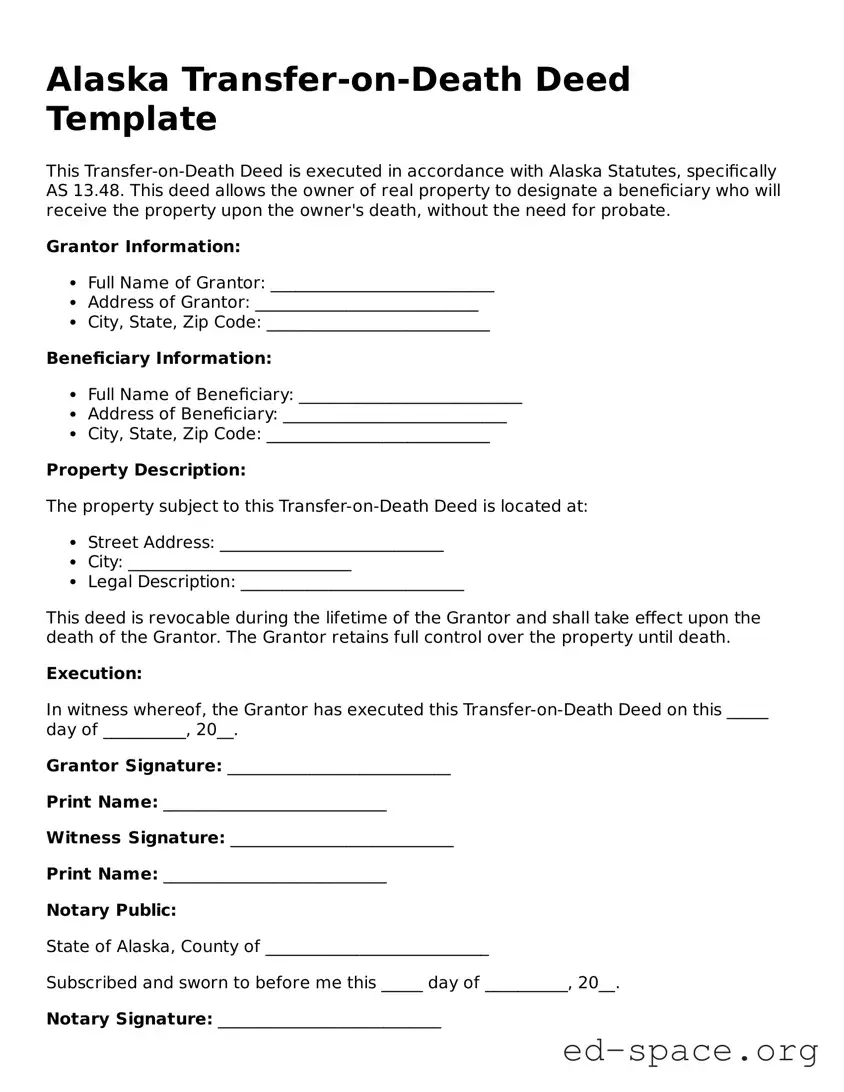
Alaska Transfer-on-Death Deed Template
This Transfer-on-Death Deed is executed in accordance with Alaska Statutes, specifically AS 13.48. This deed allows the owner of real property to designate a beneficiary who will receive the property upon the owner's death, without the need for probate.
Grantor Information:
Beneficiary Information:
Property Description:
The property subject to this Transfer-on-Death Deed is located at:
This deed is revocable during the lifetime of the Grantor and shall take effect upon the death of the Grantor. The Grantor retains full control over the property until death.
Execution:
In witness whereof, the Grantor has executed this Transfer-on-Death Deed on this _____ day of __________, 20__.
Grantor Signature: ___________________________
Print Name: ___________________________
Witness Signature: ___________________________
Print Name: ___________________________
Notary Public:
State of Alaska, County of ___________________________
Subscribed and sworn to before me this _____ day of __________, 20__.
Notary Signature: ___________________________
My Commission Expires: ___________________________
| Fact Name | Details |
|---|---|
| Definition | The Alaska Transfer-on-Death Deed allows property owners to transfer real estate to beneficiaries upon their death without going through probate. |
| Governing Law | Alaska Statutes, Title 13, Chapter 34, specifically sections 13.34.010 - 13.34.060. |
| Eligibility | Any individual who owns real property in Alaska can create a Transfer-on-Death Deed. |
| Revocation | The deed can be revoked at any time before the property owner's death, ensuring flexibility. |
| Beneficiary Designation | Multiple beneficiaries can be named, and they can be individuals or entities. |
| Filing Requirement | The deed must be recorded with the local recorder's office to be effective and valid. |
Filling out the Alaska Transfer-on-Death Deed form is a straightforward process. Once completed, this form allows you to designate a beneficiary who will receive your property upon your passing, without going through probate. Here’s how to fill it out effectively.
After submitting the form, it will be recorded and become part of public records. Keep a copy for your records, and inform your beneficiary about the transfer. This ensures that everyone is on the same page and aware of the arrangements you've made.
What is an Alaska Transfer-on-Death Deed?
The Alaska Transfer-on-Death Deed is a legal document that allows a property owner to designate one or more beneficiaries who will automatically receive the property upon the owner's death. This deed bypasses the probate process, making the transfer of property more straightforward and efficient for the beneficiaries.
Who can use a Transfer-on-Death Deed in Alaska?
Any individual who owns real property in Alaska can use a Transfer-on-Death Deed. This includes homeowners, landowners, and anyone with legal ownership of property. However, it is essential to ensure that the deed complies with state laws and regulations.
How do I complete a Transfer-on-Death Deed?
To complete a Transfer-on-Death Deed, you must fill out the form with your name, the legal description of the property, and the names of the beneficiaries. It is crucial to sign the deed in front of a notary public. Once completed, the deed must be recorded with the local recording office to be valid.
Do I need to notify my beneficiaries about the Transfer-on-Death Deed?
While it is not legally required to notify your beneficiaries, it is highly recommended. Informing them about the deed can prevent confusion and ensure that they are aware of their future interest in the property. Open communication can also help clarify your intentions.
Can I change or revoke a Transfer-on-Death Deed?
Yes, you can change or revoke a Transfer-on-Death Deed at any time before your death. To do this, you must create a new deed that explicitly states your intentions or formally revoke the existing deed. It is advisable to record any changes with the local recording office to ensure that your wishes are clear and legally recognized.
What happens if a beneficiary dies before me?
If a beneficiary named in the Transfer-on-Death Deed dies before you, their share of the property will typically go to their heirs, depending on the terms of their estate. If you wish to avoid complications, you may want to consider naming alternate beneficiaries in your deed.
Are there any tax implications associated with a Transfer-on-Death Deed?
Generally, transferring property through a Transfer-on-Death Deed does not trigger immediate tax consequences. However, beneficiaries may be subject to capital gains taxes when they sell the property. It is wise to consult a tax professional for specific advice related to your situation.
Is a Transfer-on-Death Deed the same as a will?
No, a Transfer-on-Death Deed is not the same as a will. While both documents deal with the transfer of property after death, a will goes through the probate process, whereas a Transfer-on-Death Deed allows for direct transfer without probate. Each serves different purposes and can be used in conjunction with one another.
Can I use a Transfer-on-Death Deed for all types of property?
In Alaska, a Transfer-on-Death Deed can only be used for real property, such as land and buildings. It cannot be used for personal property, bank accounts, or other assets. For those types of assets, different estate planning tools should be considered.
Where can I obtain a Transfer-on-Death Deed form in Alaska?
You can obtain a Transfer-on-Death Deed form from various sources, including online legal resources, local government offices, or legal stationery stores. It is important to ensure that the form you use complies with Alaska state laws to avoid any issues during the transfer process.
Failing to include all required information. It is essential to provide complete details about the property and the beneficiaries.
Not signing the deed in the presence of a notary. A notary's signature is necessary to validate the document.
Using incorrect legal descriptions of the property. Ensure the property description matches what is recorded in public records.
Omitting the names of all beneficiaries. All intended recipients must be clearly listed to avoid disputes.
Not understanding the implications of the deed. A Transfer-on-Death Deed affects how property is transferred upon death, and misunderstandings can lead to complications.
Failing to record the deed with the appropriate local authority. A Transfer-on-Death Deed must be filed to be legally effective.
Not updating the deed after life changes. Changes such as marriage, divorce, or the death of a beneficiary should prompt a review and possible update of the deed.
Assuming that the deed overrides existing wills or trusts. A Transfer-on-Death Deed may not be effective if it conflicts with other estate planning documents.
Neglecting to inform beneficiaries about the deed. Clear communication can prevent confusion and potential legal issues after the property owner's death.
The Alaska Transfer-on-Death Deed form allows property owners to transfer their real estate to designated beneficiaries upon their death without going through probate. This form is part of a broader estate planning strategy. Several other documents often accompany this deed to ensure a smooth transition of assets and clarify the wishes of the property owner.
Using these documents in conjunction with the Alaska Transfer-on-Death Deed can help ensure that your wishes are honored and that your assets are distributed according to your preferences. Proper planning can alleviate stress for your loved ones during a difficult time.
The Transfer-on-Death Deed (TOD) form is similar to several other legal documents that facilitate the transfer of property or assets. Here are six documents that share similarities with the TOD deed:
When filling out the Alaska Transfer-on-Death Deed form, it is important to approach the process with care. Here are some guidelines to help you navigate this task effectively.
By following these guidelines, you can help ensure that your intentions are clearly expressed and legally recognized.
Understanding the Alaska Transfer-on-Death Deed can help individuals make informed decisions about their estate planning. However, several misconceptions can lead to confusion. Here are five common misunderstandings:
By clearing up these misconceptions, individuals can better navigate their estate planning options in Alaska.
Understanding the Alaska Transfer-on-Death Deed is crucial for anyone looking to ensure a smooth transfer of property upon death. Here are some key takeaways to consider:
Taking these points into account can help property owners in Alaska navigate the complexities of estate planning effectively. Ensuring that the Transfer-on-Death Deed is filled out correctly and recorded properly can save time and resources for loved ones in the future.