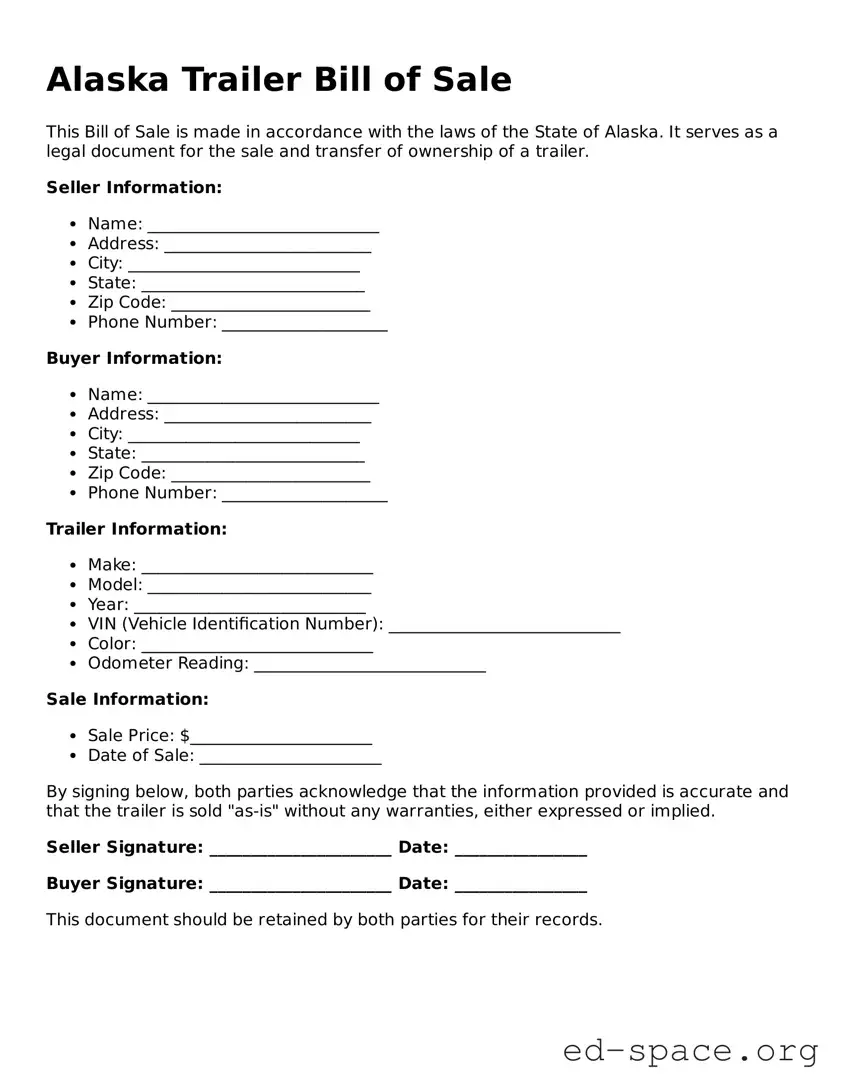
When it comes to buying or selling a trailer in Alaska, having the right paperwork is essential to ensure a smooth transaction. One of the most important documents in this process is the Trailer Bill of Sale form. This form serves as a legal record of the sale, detailing key information such as the names and addresses of both the buyer and seller, a description of the trailer including its make, model, and Vehicle Identification Number (VIN), and the sale price. Additionally, it provides space for both parties to sign, confirming their agreement to the terms outlined in the document. By using this form, individuals can protect their interests and establish clear ownership, which is especially important for future registration and any potential disputes. In a state as vast and diverse as Alaska, having a reliable Bill of Sale not only streamlines the buying and selling process but also ensures compliance with state regulations. Understanding the nuances of this form can help both buyers and sellers navigate their responsibilities and rights effectively.
Alaska Trailer Bill of Sale
This Bill of Sale is made in accordance with the laws of the State of Alaska. It serves as a legal document for the sale and transfer of ownership of a trailer.
Seller Information:
Buyer Information:
Trailer Information:
Sale Information:
By signing below, both parties acknowledge that the information provided is accurate and that the trailer is sold "as-is" without any warranties, either expressed or implied.
Seller Signature: ______________________ Date: ________________
Buyer Signature: ______________________ Date: ________________
This document should be retained by both parties for their records.
| Fact Name | Description |
|---|---|
| Purpose | The Alaska Trailer Bill of Sale form is used to document the sale and transfer of ownership of a trailer in Alaska. |
| Governing Law | This form is governed by Alaska Statutes Title 28, which covers motor vehicles and trailers. |
| Required Information | The form typically requires details such as the seller's and buyer's names, addresses, trailer description, and sale price. |
| Signature Requirement | Both the seller and buyer must sign the form to validate the transaction and confirm the transfer of ownership. |
| Usage | While not mandatory, using a Bill of Sale is highly recommended to protect both parties in the transaction. |
Completing the Alaska Trailer Bill of Sale form is a straightforward process that requires accurate information about the transaction. After filling out the form, both the buyer and seller should retain copies for their records. This ensures that both parties have proof of the sale and can refer to the details if necessary.
What is a Trailer Bill of Sale in Alaska?
A Trailer Bill of Sale is a legal document that records the sale of a trailer in Alaska. It serves as proof of the transaction between the seller and the buyer. This document includes important details such as the names of both parties, the trailer's identification information, and the sale price. It is essential for transferring ownership and may be required for registration purposes with the state.
What information is required on the Alaska Trailer Bill of Sale?
The Alaska Trailer Bill of Sale should include several key pieces of information. This includes the names and addresses of the seller and buyer, a description of the trailer (including make, model, year, and Vehicle Identification Number), the sale price, and the date of the transaction. Both parties should sign the document to validate the sale.
Is the Trailer Bill of Sale required for all trailer sales in Alaska?
While it is not legally required to have a Bill of Sale for every trailer sale in Alaska, it is highly recommended. Having this document protects both the buyer and seller by providing a clear record of the transaction. It can also be useful for registration and titling purposes with the Alaska Division of Motor Vehicles.
Can I create my own Trailer Bill of Sale?
Yes, you can create your own Trailer Bill of Sale. However, it is important to ensure that all necessary information is included to make the document valid. Alternatively, pre-made templates are available online, which can simplify the process and ensure that all legal requirements are met.
How do I complete the Alaska Trailer Bill of Sale?
To complete the Alaska Trailer Bill of Sale, start by filling in the names and addresses of both the seller and buyer. Next, provide a detailed description of the trailer, including its make, model, year, and VIN. Specify the sale price and the date of the transaction. Finally, both parties should sign the document to finalize the sale.
What should I do with the Trailer Bill of Sale after the sale?
After the sale, both the buyer and seller should keep a copy of the Trailer Bill of Sale for their records. The buyer may need to present this document when registering the trailer with the Alaska Division of Motor Vehicles. It serves as proof of ownership and can be important for future transactions or legal matters.
Incomplete Information: One common mistake is leaving out essential details. Both the buyer's and seller's names, addresses, and signatures must be included. Omitting any of this information can lead to complications later.
Incorrect Vehicle Identification Number (VIN): The VIN must be accurate and match the trailer's title. A simple typo can create issues with registration and ownership verification.
Failure to Date the Document: Not including the date can cause confusion about when the sale took place. This date is important for legal and tax purposes.
Not Notarizing the Sale: While notarization may not be required in every case, it adds an extra layer of authenticity. Some buyers may prefer a notarized document for their records.
Missing Sale Price: Leaving the sale price blank can lead to misunderstandings. Clearly stating the amount helps both parties understand the terms of the sale.
Ignoring Local Regulations: Each state may have specific requirements for trailer sales. Not checking local laws can result in fines or complications during registration.
When completing a trailer sale in Alaska, several additional forms and documents may be required to ensure a smooth transaction. Each document serves a specific purpose, helping to clarify ownership, registration, and compliance with local regulations.
Having these documents ready can streamline the buying and selling process, ensuring that both parties are informed and protected throughout the transaction. Each document plays a vital role in establishing clear ownership and compliance with state regulations.
The Trailer Bill of Sale form is similar to several other documents that serve similar purposes in the transfer of ownership and documentation of personal property. Below are five such documents:
When filling out the Alaska Trailer Bill of Sale form, it's important to follow certain guidelines to ensure the document is completed correctly. Here’s a helpful list of dos and don’ts:
By following these guidelines, you can ensure a smooth and successful transaction when selling or purchasing a trailer in Alaska.
The Alaska Trailer Bill of Sale form is an important document for anyone involved in the sale or purchase of a trailer in Alaska. However, there are several misconceptions surrounding this form that can lead to confusion. Below are five common misconceptions explained.
This is not true. The Alaska Trailer Bill of Sale is required for both new and used trailers. It serves as proof of ownership and is essential for registration purposes regardless of the trailer's age.
While notarization can add an extra layer of security, it is not a requirement for the Alaska Trailer Bill of Sale. The form must be signed by both the buyer and the seller, but notarization is optional.
This is incorrect. The Bill of Sale should be completed at the time of the transaction. It is crucial for documenting the sale and should be filled out and signed by both parties immediately.
Both the buyer and the seller should retain a copy of the Bill of Sale. This document serves as proof of the transaction for both parties, which can be important for future reference or legal purposes.
This is false. Even if a trailer is given as a gift, a Bill of Sale is still advisable. It provides a clear record of the transfer of ownership and can help avoid potential disputes in the future.
When filling out and using the Alaska Trailer Bill of Sale form, consider the following key takeaways: