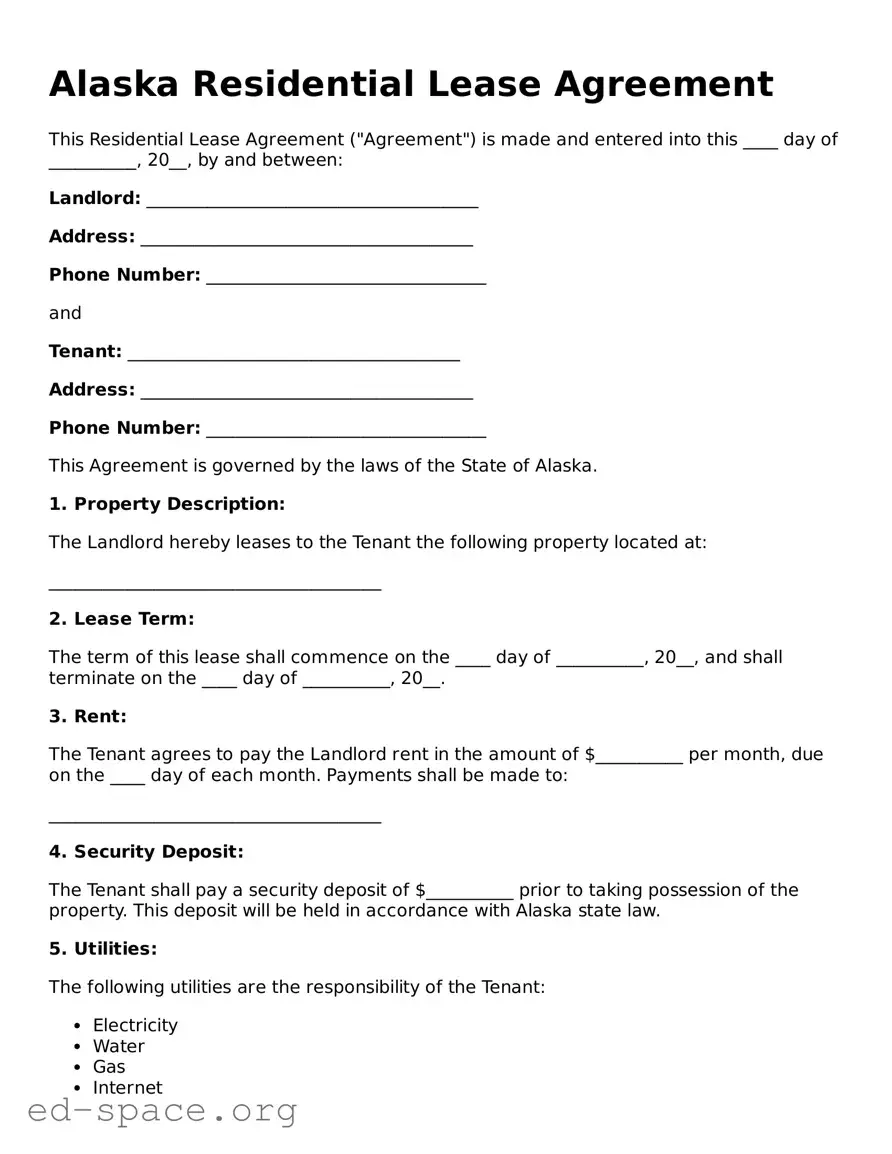
When renting a property in Alaska, understanding the Residential Lease Agreement form is crucial for both landlords and tenants. This form outlines the terms and conditions of the rental arrangement, ensuring that both parties have a clear understanding of their rights and responsibilities. Key aspects of the agreement include the duration of the lease, the amount of rent due, and the security deposit requirements. Additionally, it addresses maintenance responsibilities, rules regarding pets, and conditions for terminating the lease. By providing a framework for communication and expectations, the Alaska Residential Lease Agreement helps to prevent disputes and fosters a positive rental experience for everyone involved.
Alaska Residential Lease Agreement
This Residential Lease Agreement ("Agreement") is made and entered into this ____ day of __________, 20__, by and between:
Landlord: ______________________________________
Address: ______________________________________
Phone Number: ________________________________
and
Tenant: ______________________________________
Address: ______________________________________
Phone Number: ________________________________
This Agreement is governed by the laws of the State of Alaska.
1. Property Description:
The Landlord hereby leases to the Tenant the following property located at:
______________________________________
2. Lease Term:
The term of this lease shall commence on the ____ day of __________, 20__, and shall terminate on the ____ day of __________, 20__.
3. Rent:
The Tenant agrees to pay the Landlord rent in the amount of $__________ per month, due on the ____ day of each month. Payments shall be made to:
______________________________________
4. Security Deposit:
The Tenant shall pay a security deposit of $__________ prior to taking possession of the property. This deposit will be held in accordance with Alaska state law.
5. Utilities:
The following utilities are the responsibility of the Tenant:
6. Maintenance and Repairs:
The Tenant agrees to maintain the property in good condition. The Tenant shall notify the Landlord of any needed repairs within a reasonable time frame.
7. Termination:
Either party may terminate this Agreement by providing written notice at least ____ days in advance.
8. Governing Law:
This Agreement shall be governed by the laws of the State of Alaska.
9. Signatures:
By signing below, both parties agree to the terms outlined in this Agreement.
_____________________________
Landlord Signature
Date: ______________________
_____________________________
Tenant Signature
Date: ______________________
| Fact Name | Description |
|---|---|
| Governing Law | The Alaska Residential Lease Agreement is governed by Alaska Statutes Title 34, Chapter 03. |
| Parties Involved | The agreement typically involves a landlord and a tenant, both of whom must be clearly identified. |
| Lease Duration | The lease can be for a fixed term or a month-to-month basis, as agreed upon by both parties. |
| Security Deposit | Landlords may require a security deposit, which is usually limited to two months' rent under Alaska law. |
| Rent Payment | The agreement must specify the amount of rent, payment due date, and acceptable payment methods. |
| Maintenance Responsibilities | The lease should outline the responsibilities of both the landlord and tenant regarding property maintenance. |
| Termination Notice | Notice requirements for terminating the lease vary depending on the lease type and must be clearly stated. |
Filling out the Alaska Residential Lease Agreement form is a straightforward process. You’ll need to provide specific information about the rental property, the landlord, and the tenant. Make sure to have all necessary details at hand before you begin.
Once the form is filled out and signed, keep a copy for your records. This document serves as a legal agreement between the landlord and tenant, outlining the terms of the rental arrangement.
What is an Alaska Residential Lease Agreement?
An Alaska Residential Lease Agreement is a legally binding contract between a landlord and a tenant. This document outlines the terms and conditions of renting a residential property in Alaska. It includes details such as the rental amount, duration of the lease, and responsibilities of both parties. Having this agreement in place protects the rights of both the landlord and the tenant, ensuring clarity and reducing potential disputes.
What should be included in the Alaska Residential Lease Agreement?
The agreement should cover several key components. These include the names of the landlord and tenant, the property address, the rental amount, and the payment due date. Additionally, it should specify the lease term, whether it's month-to-month or for a fixed period. Other important details include security deposits, maintenance responsibilities, and rules regarding pets or smoking. Including these elements helps establish clear expectations for both parties.
How long is a typical lease term in Alaska?
In Alaska, lease terms can vary widely. Many leases are for one year, providing stability for both landlords and tenants. However, month-to-month agreements are also common, offering flexibility for tenants who may need to relocate sooner. It's essential to choose a lease term that aligns with your needs and plans. Always discuss and agree on the duration before signing the lease.
Can a landlord increase the rent during the lease term?
Generally, a landlord cannot increase the rent during the lease term unless the lease specifically allows for it. If you have a fixed-term lease, the rent amount will remain the same until the lease expires. For month-to-month leases, landlords can raise the rent, but they must provide proper notice, typically 30 days in advance. Understanding these rules can help tenants avoid unexpected costs.
What happens if a tenant wants to break the lease early?
If a tenant needs to break the lease early, they should review the lease agreement for any specific terms regarding early termination. Many leases include clauses that outline penalties or fees for breaking the lease. It's often advisable for tenants to communicate openly with the landlord about their situation. In some cases, landlords may agree to negotiate an early termination, especially if they can find a new tenant quickly.
Is it necessary to have a written lease agreement in Alaska?
While verbal agreements can be legally binding, having a written lease agreement is highly recommended. A written document provides clear evidence of the terms agreed upon by both parties. This can be invaluable in case of disputes. A written lease also helps ensure that both the landlord and tenant understand their rights and responsibilities, promoting a smoother rental experience.
Incomplete Personal Information: Many individuals forget to fill in all required fields, such as full names, contact information, and social security numbers. Missing this information can lead to delays or complications.
Incorrect Dates: Entering the wrong lease start or end dates is a common mistake. This can affect the lease's validity and create confusion regarding the rental period.
Omitting Rent Amount: Some people neglect to specify the monthly rent amount or fail to include details about late fees. This omission can lead to disputes later on.
Ignoring Security Deposit Terms: Failing to outline the security deposit amount and the conditions for its return can create misunderstandings between landlords and tenants.
Not Listing Included Utilities: Tenants often forget to clarify which utilities are included in the rent. This can lead to unexpected expenses and frustrations.
Neglecting Maintenance Responsibilities: It's essential to specify who is responsible for maintenance and repairs. Omitting this information can result in disputes over property upkeep.
Failure to Sign: A surprisingly common error is forgetting to sign the lease. Without signatures, the agreement is not legally binding.
Not Initialing Changes: If any modifications are made to the standard lease terms, failing to initial those changes can lead to confusion about what was agreed upon.
Ignoring Local Laws: Some individuals overlook specific local regulations that might affect lease terms. Being unaware of these laws can lead to non-compliance issues.
Not Providing a Copy: After signing, it’s crucial to provide a copy of the signed lease to all parties involved. This ensures everyone has access to the same information.
When entering into a rental agreement in Alaska, several additional forms and documents can complement the Residential Lease Agreement. These documents help clarify responsibilities, protect both parties, and ensure a smooth leasing process. Below is a list of commonly used forms that can enhance the leasing experience.
Utilizing these forms alongside the Alaska Residential Lease Agreement can help create a transparent and structured leasing process. Each document serves a specific purpose, ensuring that both landlords and tenants understand their rights and responsibilities throughout the rental period.
When filling out the Alaska Residential Lease Agreement form, it's important to follow certain guidelines to ensure accuracy and compliance. Here are some key do's and don'ts:
When it comes to the Alaska Residential Lease Agreement form, several misconceptions can lead to confusion for both landlords and tenants. Understanding these myths is essential for a smooth rental experience. Here are six common misconceptions:
By debunking these myths, both landlords and tenants can navigate the rental landscape in Alaska with greater confidence and understanding.
When filling out and using the Alaska Residential Lease Agreement form, keep the following key takeaways in mind:
By paying attention to these details, you can help ensure a smooth leasing experience in Alaska.