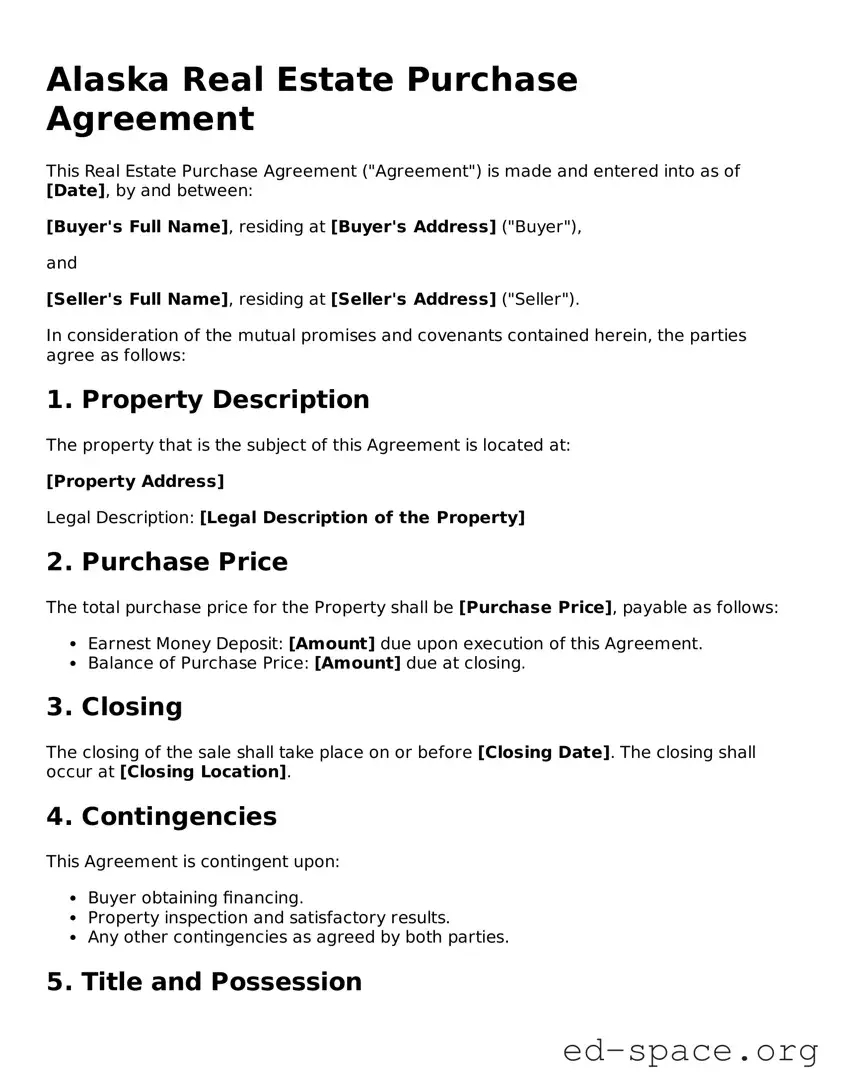
The Alaska Real Estate Purchase Agreement form serves as a crucial document in the process of buying or selling property in the state. This form outlines the essential terms and conditions that govern the transaction, ensuring that both parties have a clear understanding of their rights and obligations. Key components of the agreement include the identification of the buyer and seller, a detailed description of the property, and the purchase price. Additionally, the form addresses contingencies, such as financing and inspection requirements, which can significantly impact the sale. It also stipulates the closing date and any earnest money deposits, providing a framework for the transfer of ownership. By delineating these aspects, the Alaska Real Estate Purchase Agreement not only facilitates a smoother transaction but also helps to protect the interests of both buyers and sellers throughout the real estate process.
Alaska Real Estate Purchase Agreement
This Real Estate Purchase Agreement ("Agreement") is made and entered into as of [Date], by and between:
[Buyer's Full Name], residing at [Buyer's Address] ("Buyer"),
and
[Seller's Full Name], residing at [Seller's Address] ("Seller").
In consideration of the mutual promises and covenants contained herein, the parties agree as follows:
1. Property Description
The property that is the subject of this Agreement is located at:
[Property Address]
Legal Description: [Legal Description of the Property]
2. Purchase Price
The total purchase price for the Property shall be [Purchase Price], payable as follows:
3. Closing
The closing of the sale shall take place on or before [Closing Date]. The closing shall occur at [Closing Location].
4. Contingencies
This Agreement is contingent upon:
5. Title and Possession
Seller agrees to convey good and marketable title to the Property, free from all liens and encumbrances, except as disclosed. Possession of the Property shall be delivered to Buyer on [Possession Date].
6. Governing Law
This Agreement shall be governed by the laws of the State of Alaska.
7. Signatures
In witness whereof, the parties have executed this Agreement as of the date first above written.
__________________________
[Buyer's Full Name] (Buyer)
__________________________
[Seller's Full Name] (Seller)
__________________________
[Witness Name] (Witness)
Date: [Date]
| Fact Name | Description |
|---|---|
| Governing Law | The Alaska Real Estate Purchase Agreement is governed by the laws of the State of Alaska. |
| Purpose | This form is used to outline the terms and conditions of a real estate transaction in Alaska. |
| Parties Involved | The agreement typically includes the buyer, seller, and any agents involved in the transaction. |
| Property Description | A detailed description of the property being sold is included to avoid any confusion. |
| Contingencies | The form allows for contingencies, such as financing and inspection, to protect both parties. |
| Signatures Required | Both the buyer and seller must sign the agreement for it to be legally binding. |
Filling out the Alaska Real Estate Purchase Agreement form is an important step in the home buying process. Once completed, this form will serve as the foundation for your real estate transaction. Follow these steps to ensure you fill it out correctly.
After completing the form, it will need to be reviewed and signed by all parties involved. Ensure that everyone understands their obligations before moving forward with the transaction.
What is an Alaska Real Estate Purchase Agreement?
The Alaska Real Estate Purchase Agreement is a legal document used when buying or selling property in Alaska. It outlines the terms and conditions of the sale, including the purchase price, financing details, and any contingencies. This agreement serves to protect both the buyer and the seller by clearly defining their responsibilities and expectations throughout the transaction.
What are the key components of the agreement?
Key components of the Alaska Real Estate Purchase Agreement include the identification of the parties involved, a description of the property, the purchase price, earnest money deposit details, closing date, and any contingencies such as inspections or financing. Additionally, it may include clauses related to repairs, disclosures, and other specific terms agreed upon by both parties.
Do I need a lawyer to complete this agreement?
While it is not legally required to have a lawyer to complete the Alaska Real Estate Purchase Agreement, it is highly recommended. A real estate attorney can provide valuable guidance, ensure that all legal requirements are met, and help protect your interests throughout the process.
What happens if either party does not fulfill their obligations?
If either party fails to fulfill their obligations under the agreement, it may result in a breach of contract. The non-breaching party may have the right to seek legal remedies, which could include specific performance (forcing the other party to comply) or seeking damages. It’s important to understand these potential outcomes before signing the agreement.
Can the agreement be modified after it is signed?
Yes, the Alaska Real Estate Purchase Agreement can be modified after it is signed, but both parties must agree to the changes. Any modifications should be documented in writing and signed by both the buyer and the seller to ensure clarity and legal enforceability.
What is an earnest money deposit?
An earnest money deposit is a sum of money provided by the buyer to demonstrate their commitment to purchasing the property. This deposit is typically held in escrow until the closing of the sale. If the transaction goes through, the earnest money is usually applied to the purchase price. If the buyer backs out without a valid reason, they may lose this deposit.
How long does it take to close a real estate transaction in Alaska?
The time it takes to close a real estate transaction in Alaska can vary, but it generally takes between 30 to 60 days from the date the agreement is signed. Factors such as financing, inspections, and title searches can influence the timeline. Both parties should stay in communication to ensure a smooth closing process.
Where can I obtain the Alaska Real Estate Purchase Agreement form?
The Alaska Real Estate Purchase Agreement form can be obtained from various sources, including real estate agents, online legal form providers, or local real estate associations. It’s important to ensure that the form you use is up-to-date and complies with current Alaska real estate laws.
Failing to provide complete and accurate information about the property. Buyers should ensure that all details, including the address and legal description, are correct.
Not specifying the purchase price clearly. It is crucial to state the exact amount being offered to avoid any confusion later.
Overlooking contingencies. Buyers often forget to include important contingencies, such as financing or inspection, which can protect their interests.
Neglecting to sign and date the agreement. An unsigned or undated document may lead to complications in the transaction process.
Inadequate understanding of closing costs. Buyers should be aware of all potential costs associated with the purchase, as these can significantly impact their budget.
Ignoring the importance of earnest money. Failing to specify the amount of earnest money can weaken the offer and create uncertainty.
Not consulting with a real estate professional. Many buyers attempt to navigate the process alone, which can lead to mistakes that a professional could easily help avoid.
Misunderstanding the timeline for the transaction. It’s important to clearly outline deadlines for contingencies and closing to keep the process on track.
Forgetting to include personal property. Buyers should list any items they expect to be included in the sale, such as appliances or fixtures, to prevent misunderstandings.
When engaging in a real estate transaction in Alaska, several documents may accompany the Real Estate Purchase Agreement. These forms help clarify the terms of the sale, protect the interests of both parties, and ensure compliance with state laws. Below is a list of commonly used documents that you may encounter.
Understanding these documents can greatly enhance your real estate transaction experience. Each form plays a vital role in ensuring that the process runs smoothly and that both parties are protected throughout the sale. Always consider consulting with a professional if you have questions about any of these documents.
When filling out the Alaska Real Estate Purchase Agreement form, it’s essential to be thorough and accurate. Here’s a list of things to do and avoid to ensure a smooth process.
Understanding the Alaska Real Estate Purchase Agreement form is crucial for anyone involved in real estate transactions in the state. However, there are several misconceptions that can lead to confusion. Below are six common misconceptions along with explanations to clarify the realities of this important document.
While the Alaska Real Estate Purchase Agreement form has standard elements, it can be customized to fit the specific needs of the parties involved. Each transaction may have unique terms that reflect the individual circumstances.
This form is applicable to various types of real estate transactions, including commercial properties and land sales. It is not limited to residential real estate.
Amendments can be made to the agreement after it has been signed, provided both parties agree to the changes. Flexibility exists to adapt the terms as necessary.
While it is not legally required to have a lawyer review the agreement, it is highly advisable. A legal review can help identify potential issues and ensure that your interests are protected.
While including contingencies is important, they can be added later as negotiations progress. Parties often have the opportunity to discuss and finalize contingencies before closing.
Signing the agreement does not guarantee that the sale will be completed. Various factors, such as financing issues or inspections, can affect whether the transaction proceeds as planned.
Being aware of these misconceptions can help buyers and sellers navigate the real estate process more effectively. Understanding the true nature of the Alaska Real Estate Purchase Agreement form is essential for a successful transaction.
When engaging in real estate transactions in Alaska, understanding the Real Estate Purchase Agreement (REPA) form is crucial. Here are some key takeaways to consider: