The Alaska Notice to Quit form serves as a crucial document in the landlord-tenant relationship, particularly when a landlord seeks to terminate a rental agreement. This form is essential for landlords who wish to reclaim their property due to various reasons, including non-payment of rent, lease violations, or the expiration of a lease term. It outlines the specific grounds for termination, providing tenants with a clear understanding of the circumstances that necessitate their departure. Additionally, the form stipulates the time frame within which the tenant must vacate the premises, ensuring compliance with state laws governing eviction processes. By utilizing this form, landlords can formally communicate their intentions while adhering to legal requirements, thus minimizing the potential for disputes. Tenants, on the other hand, gain insight into their rights and obligations, allowing them to respond appropriately to the notice. Overall, the Alaska Notice to Quit form plays a vital role in facilitating a structured and lawful transition for both parties involved in a rental agreement.
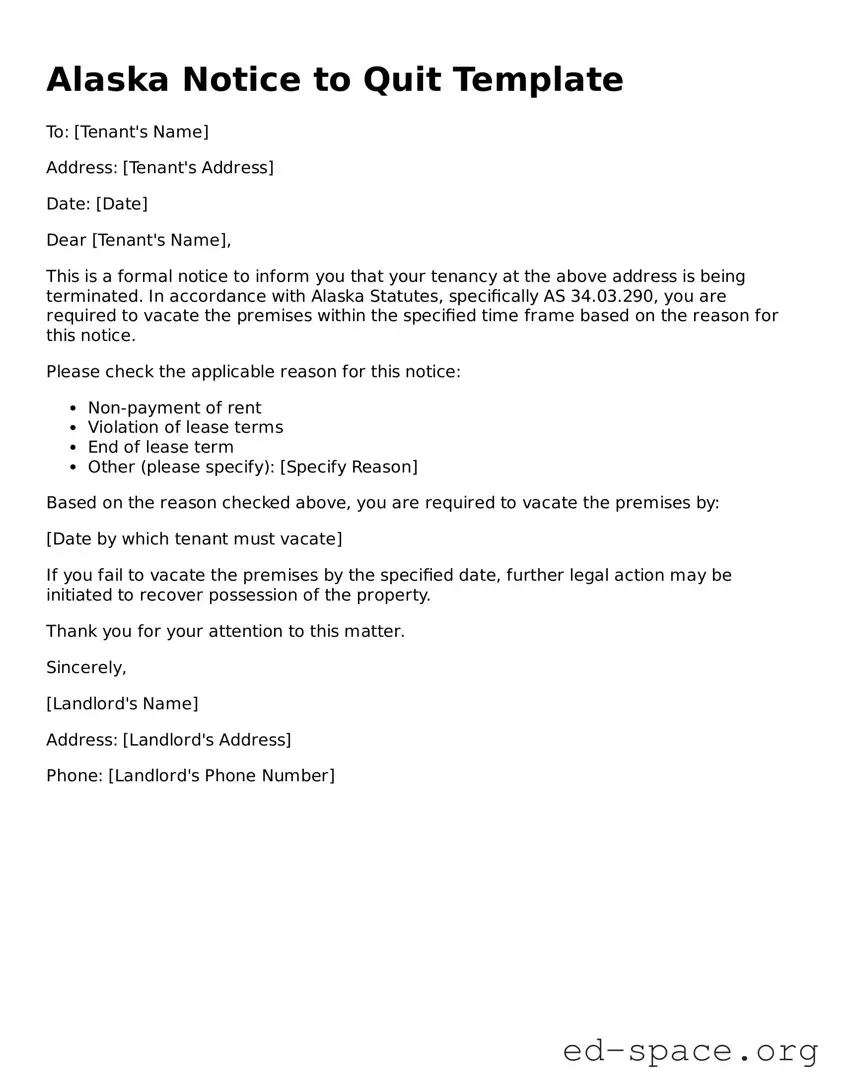
Alaska Notice to Quit Template
To: [Tenant's Name]
Address: [Tenant's Address]
Date: [Date]
Dear [Tenant's Name],
This is a formal notice to inform you that your tenancy at the above address is being terminated. In accordance with Alaska Statutes, specifically AS 34.03.290, you are required to vacate the premises within the specified time frame based on the reason for this notice.
Please check the applicable reason for this notice:
Based on the reason checked above, you are required to vacate the premises by:
[Date by which tenant must vacate]
If you fail to vacate the premises by the specified date, further legal action may be initiated to recover possession of the property.
Thank you for your attention to this matter.
Sincerely,
[Landlord's Name]
Address: [Landlord's Address]
Phone: [Landlord's Phone Number]
| Fact Name | Description |
|---|---|
| Purpose | The Alaska Notice to Quit form is used by landlords to formally notify tenants of the need to vacate the rental property. |
| Governing Law | This form is governed by Alaska Statutes Title 34, Chapter 03, which outlines landlord-tenant relationships. |
| Notice Period | Depending on the reason for the eviction, the notice period can vary. Generally, a 30-day notice is required for month-to-month leases. |
| Delivery Methods | The notice can be delivered personally, by mail, or by posting it on the tenant's door, ensuring the tenant receives it. |
| Contents Required | The form must include the tenant's name, the address of the rental property, the reason for the notice, and the date by which the tenant must vacate. |
| Legal Consequences | Failure to comply with the Notice to Quit can lead to eviction proceedings in court, so it’s crucial to follow the legal requirements. |
| Tenant Rights | Tenants have the right to contest the notice and seek legal counsel if they believe the notice is unjust or improperly served. |
Once you have the Alaska Notice to Quit form in hand, it's essential to fill it out accurately to ensure that it serves its purpose. This form is a critical step in the process of addressing lease violations or non-payment of rent. Completing it correctly can help facilitate a smoother transition to the next steps in your situation.
After completing the form, ensure that you deliver it to the tenant in a manner that complies with local laws. Proper delivery is crucial, as it can affect the next steps in the process.
What is the Alaska Notice to Quit form?
The Alaska Notice to Quit form is a legal document used by landlords to notify tenants that they must vacate the rental property. This notice serves as a formal communication indicating that the landlord is terminating the rental agreement. It outlines the reasons for the termination and provides a specified time frame for the tenant to leave the premises.
When is a Notice to Quit required in Alaska?
A Notice to Quit is typically required when a landlord wants to terminate a lease agreement for reasons such as non-payment of rent, violation of lease terms, or the expiration of a lease. The specific circumstances under which a Notice to Quit is necessary may vary, so it is important for landlords to understand the applicable laws and regulations.
How much notice must be given to the tenant?
The amount of notice required depends on the reason for the eviction. For example, if the tenant has not paid rent, the landlord usually must provide a 14-day notice to quit. In other cases, such as lease violations, a 30-day notice may be required. Understanding the appropriate notice period is crucial for compliance with Alaska law.
Can a tenant contest a Notice to Quit?
Yes, tenants have the right to contest a Notice to Quit. If a tenant believes the notice is unjust or that they have rectified the issue cited in the notice, they can respond by communicating with the landlord. Additionally, tenants may seek legal advice or assistance to explore their options for contesting the eviction.
What happens if a tenant does not comply with the Notice to Quit?
If a tenant fails to comply with the Notice to Quit by the specified date, the landlord may initiate formal eviction proceedings. This process typically involves filing a lawsuit in court to obtain a judgment for possession of the property. It is important for both landlords and tenants to understand the legal implications of non-compliance.
Is the Notice to Quit form available online?
Yes, many resources are available online for landlords and tenants in Alaska. Various websites offer templates and guidance on completing the Notice to Quit form. However, it is essential to ensure that the form complies with current state laws and regulations.
What should be included in a Notice to Quit?
A properly completed Notice to Quit should include several key elements. These include the date of the notice, the tenant's name and address, the reason for the notice, and the deadline for vacating the property. Additionally, it may be helpful to include any relevant lease terms or conditions that have been violated.
Can a landlord issue a Notice to Quit without a lease agreement?
Yes, a landlord can issue a Notice to Quit even if there is no formal lease agreement in place. In such cases, the landlord must still follow the appropriate notice periods and legal requirements based on the tenancy arrangement, whether it is a month-to-month agreement or another type of rental situation.
What should tenants do upon receiving a Notice to Quit?
Upon receiving a Notice to Quit, tenants should carefully read the document to understand the reason for the notice and the timeline for compliance. It is advisable for tenants to communicate with the landlord to discuss the situation. Seeking legal advice may also be beneficial to understand their rights and options moving forward.
Incorrect Tenant Information: Many individuals fail to provide accurate names and addresses of the tenants. Ensure that the information matches what is on the lease agreement.
Missing Signature: Some people forget to sign the Notice to Quit. A signature is essential for the document to be valid.
Improper Delivery Method: The form must be delivered according to state regulations. Failing to deliver it in person or via certified mail can lead to complications.
Not Specifying the Reason: It's important to clearly state the reason for the eviction. Leaving this out may render the notice ineffective.
Incorrect Timeframe: The notice must comply with Alaska's legal requirements for notice periods. Miscalculating this timeframe can delay the eviction process.
When dealing with tenant evictions in Alaska, it’s essential to be aware of various forms and documents that may accompany the Notice to Quit. Each of these documents serves a specific purpose in the eviction process. Here’s a list of common forms that you might encounter:
Understanding these documents can help streamline the eviction process and ensure that all legal requirements are met. If you are facing an eviction situation, consider consulting with a legal professional to navigate the complexities involved.
When filling out the Alaska Notice to Quit form, it's essential to be careful and thorough. Here’s a list of things you should and shouldn’t do to ensure the process goes smoothly.
By following these guidelines, you can help ensure that your Notice to Quit is effective and legally sound.
Understanding the Alaska Notice to Quit form is essential for both landlords and tenants. However, several misconceptions can lead to confusion. Here are nine common misunderstandings:
The Notice to Quit form is specifically for terminating a lease for non-payment of rent or lease violations. It cannot be used for other reasons, such as simply wanting to end a tenancy.
Many people think that sending the notice via mail is sufficient. However, the law requires that it be delivered in a manner that ensures the tenant receives it, which often means personal delivery or certified mail.
Different situations may require different notices. For example, a notice for non-payment of rent is different from a notice for lease violations. Each has its own requirements and timeframes.
Some tenants believe they can disregard the Notice to Quit. However, ignoring it can lead to legal action, including eviction proceedings.
Landlords must follow specific timelines and reasons for issuing a Notice to Quit. They cannot simply decide to terminate a lease without cause.
The Notice to Quit is a preliminary step, not a formal eviction notice. It gives the tenant a chance to rectify the issue before further legal action is taken.
The notice period can vary depending on the reason for the eviction. For example, a tenant who hasn't paid rent might receive a shorter notice period than one who has violated lease terms.
Issuing a Notice to Quit does not mean a tenant can be evicted right away. The tenant usually has a specific period to comply before further action can be taken.
Landlords should always keep a copy of the Notice to Quit for their records. This documentation is important if the situation escalates to legal proceedings.
By understanding these misconceptions, both landlords and tenants can navigate the eviction process more effectively and avoid unnecessary complications.
When dealing with the Alaska Notice to Quit form, it is essential to understand its purpose and the proper procedures for filling it out and using it effectively. Here are key takeaways to keep in mind: