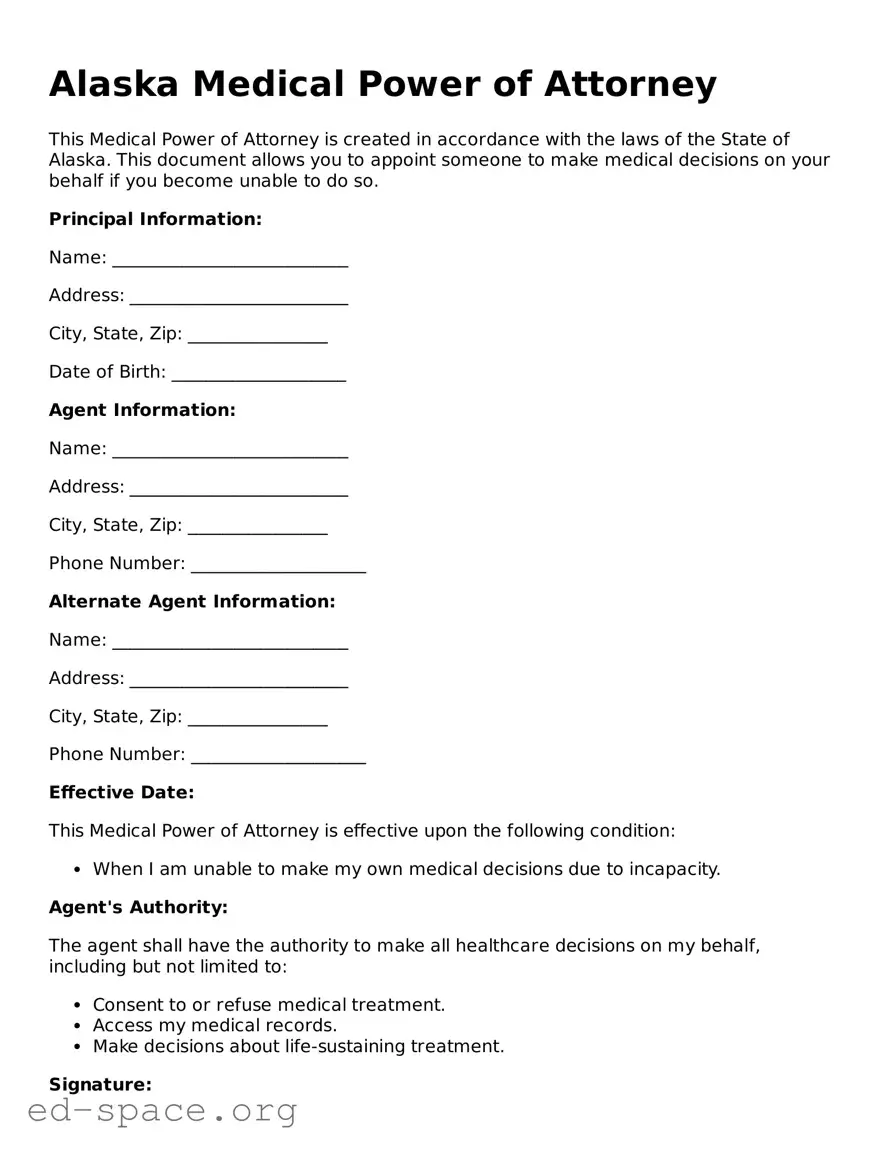
When it comes to healthcare decisions, having a clear plan in place is essential, especially in unexpected situations. The Alaska Medical Power of Attorney form serves as a vital tool for individuals looking to designate a trusted person to make medical decisions on their behalf when they are unable to do so. This document allows you to specify who will act as your agent, ensuring that your healthcare preferences are respected. It covers a range of important aspects, including the authority granted to the agent, any limitations you wish to impose, and the conditions under which the document becomes effective. Additionally, it provides guidance on how to revoke or amend the power of attorney, ensuring that your wishes can adapt over time. Understanding this form can empower you to take control of your medical care, ensuring that your voice is heard even when you cannot speak for yourself.
Alaska Medical Power of Attorney
This Medical Power of Attorney is created in accordance with the laws of the State of Alaska. This document allows you to appoint someone to make medical decisions on your behalf if you become unable to do so.
Principal Information:
Name: ___________________________
Address: _________________________
City, State, Zip: ________________
Date of Birth: ____________________
Agent Information:
Name: ___________________________
Address: _________________________
City, State, Zip: ________________
Phone Number: ____________________
Alternate Agent Information:
Name: ___________________________
Address: _________________________
City, State, Zip: ________________
Phone Number: ____________________
Effective Date:
This Medical Power of Attorney is effective upon the following condition:
Agent's Authority:
The agent shall have the authority to make all healthcare decisions on my behalf, including but not limited to:
Signature:
Principal's Signature: ___________________________
Date: ________________________________________
Witnesses:
This document must be witnessed by two individuals who are not related to the principal or the agent.
Notary Public:
State of Alaska
County of ___________________________
Subscribed and sworn to before me this _____ day of __________, 20__.
Notary Public Signature: _______________________
My Commission Expires: ________________________
| Fact Name | Details |
|---|---|
| Definition | The Alaska Medical Power of Attorney form allows you to designate someone to make healthcare decisions on your behalf if you become unable to do so. |
| Governing Law | This form is governed by Alaska Statutes, specifically AS 13.52, which outlines the laws regarding advance health care directives. |
| Requirements | To be valid, the form must be signed by you and witnessed by at least two individuals or notarized. |
| Revocation | You can revoke the Alaska Medical Power of Attorney at any time, as long as you are competent to do so. |
Filling out the Alaska Medical Power of Attorney form is an important step in ensuring that your healthcare preferences are honored when you are unable to communicate them yourself. This document allows you to designate someone you trust to make medical decisions on your behalf. Below are the steps to complete the form accurately.
Once you have completed these steps, your Medical Power of Attorney will be ready to guide your healthcare decisions according to your wishes.
What is a Medical Power of Attorney in Alaska?
A Medical Power of Attorney (MPOA) is a legal document that allows you to appoint someone you trust to make healthcare decisions on your behalf if you become unable to do so. This could be due to illness, injury, or any other condition that affects your ability to communicate your wishes. It ensures that your healthcare preferences are honored, even when you cannot express them yourself.
Who can be appointed as my agent in an Alaska Medical Power of Attorney?
You can choose any competent adult to act as your agent, provided they are willing to take on this responsibility. This could be a family member, a close friend, or even a trusted advisor. It's essential to select someone who understands your values and wishes regarding medical treatment. However, certain individuals, like your healthcare provider or an employee of a healthcare facility where you are receiving treatment, may not be eligible to serve as your agent.
How do I create a Medical Power of Attorney in Alaska?
Creating a Medical Power of Attorney in Alaska involves a few straightforward steps. First, you need to fill out the MPOA form, which typically includes your personal information, the agent's details, and specific instructions regarding your healthcare preferences. After completing the form, it must be signed in the presence of a notary public or two witnesses who are not related to you and do not stand to inherit from you. This step is crucial to ensure that the document is legally valid.
Can I revoke or change my Medical Power of Attorney once it’s created?
Yes, you can revoke or change your Medical Power of Attorney at any time, as long as you are mentally competent. To revoke it, you should notify your agent and any healthcare providers who may have a copy of the document. It’s also a good idea to create a new MPOA if you wish to appoint a different agent or update your healthcare preferences. Always ensure that the new document is properly signed and witnessed to avoid any confusion.
Not Choosing the Right Agent: One of the most critical mistakes is failing to select an appropriate agent. The person you choose should be trustworthy and capable of making medical decisions on your behalf. Avoid picking someone who may have conflicting interests or may not fully understand your wishes.
Leaving Sections Blank: It’s crucial to fill out all sections of the form. Leaving parts blank can lead to confusion or misinterpretation of your wishes. Ensure that every area is addressed, even if it means repeating information.
Not Specifying Preferences: People often forget to clearly state their medical preferences. It’s important to outline your desires regarding treatments, life support, and end-of-life care. Without clear instructions, your agent may struggle to make decisions that align with your values.
Failing to Update the Document: Life changes, and so may your preferences. Failing to update your Medical Power of Attorney when significant life events occur—like marriage, divorce, or changes in health—can lead to complications. Regularly review and revise the document to ensure it reflects your current wishes.
The Alaska Medical Power of Attorney form is an essential document for anyone looking to designate someone to make healthcare decisions on their behalf. However, it is often used in conjunction with other important forms to ensure comprehensive planning for medical and financial matters. Below are several key documents that are frequently paired with the Medical Power of Attorney in Alaska.
Using these documents in conjunction with the Alaska Medical Power of Attorney can provide clarity and peace of mind. Together, they help ensure that personal wishes regarding health and financial matters are respected and followed when it matters most.
When filling out the Alaska Medical Power of Attorney form, it is essential to ensure that the document is completed accurately and in accordance with state requirements. Below are five recommendations on what to do and what to avoid during this process.
Understanding the Alaska Medical Power of Attorney form is crucial for making informed decisions about healthcare. However, there are several misconceptions that can lead to confusion. Here are seven common misconceptions:
This is not true. The Alaska Medical Power of Attorney can be used for various healthcare decisions, not just those related to end-of-life care. It allows your designated agent to make choices about your medical treatment when you are unable to do so.
While you have the freedom to choose your agent, there are specific requirements. For instance, your agent must be at least 18 years old and cannot be your healthcare provider or an employee of your healthcare provider.
Although having legal assistance can be beneficial, it is not a requirement. You can complete the Alaska Medical Power of Attorney form on your own, provided you follow the state's guidelines.
This misconception is misleading. You have the right to revoke or update your Medical Power of Attorney at any time, as long as you are of sound mind. Just ensure that you notify your agent and any relevant healthcare providers of the changes.
While the form is designed for use in Alaska, it may be recognized in other states. However, it’s advisable to check the specific laws of the state where you seek medical treatment.
The Alaska Medical Power of Attorney is strictly for healthcare decisions. If you want someone to handle financial matters, you will need a separate financial power of attorney document.
Your agent must act in accordance with your wishes and best interests. If you have specific preferences or values, make sure to communicate them clearly in the document or through discussions with your agent.
By dispelling these misconceptions, individuals can better navigate their healthcare decisions and ensure their wishes are respected.
Filling out a Medical Power of Attorney (MPOA) form in Alaska is an important step in ensuring that your healthcare decisions are made according to your wishes. Here are some key takeaways to keep in mind:
By keeping these points in mind, you can create a Medical Power of Attorney that truly reflects your wishes and provides peace of mind for you and your loved ones.