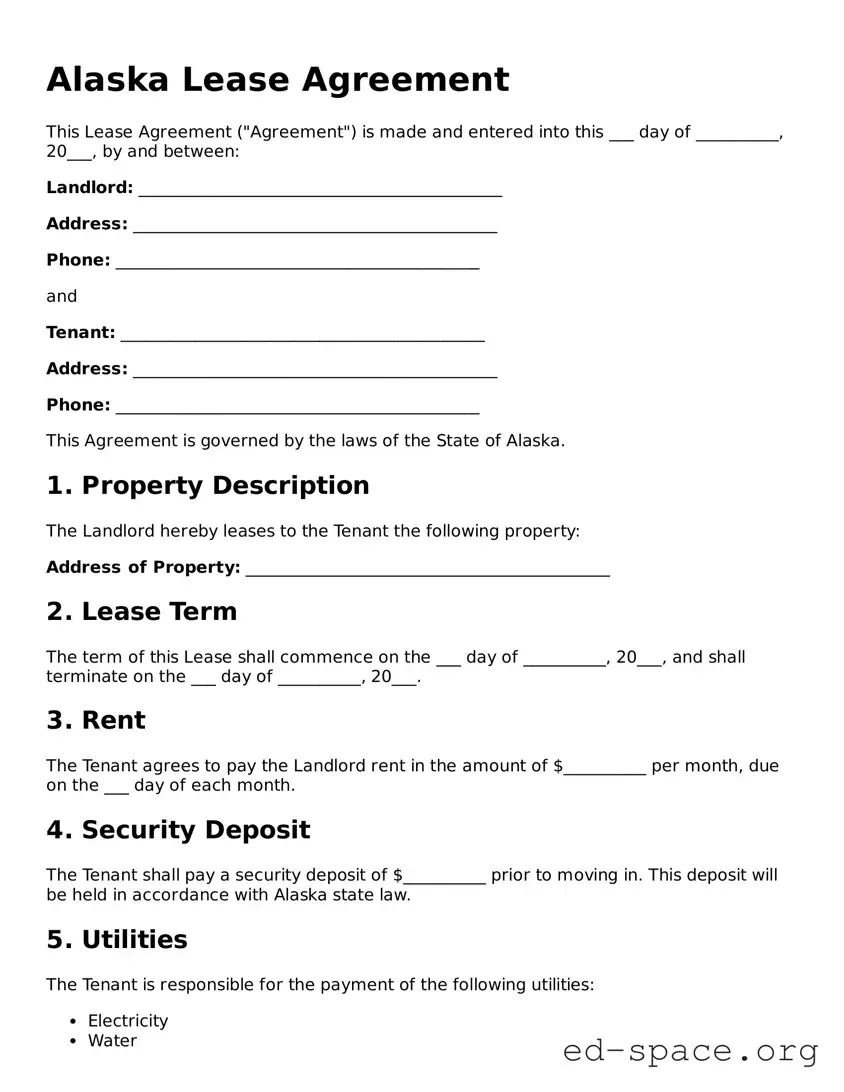
When entering into a lease agreement in Alaska, understanding the essential components of the Alaska Lease Agreement form is crucial for both landlords and tenants. This form outlines the rights and responsibilities of each party, ensuring a clear understanding of the terms involved. Key aspects include the duration of the lease, the amount of rent, and the payment schedule. Additionally, it covers security deposits, maintenance obligations, and rules regarding pets or alterations to the property. By detailing these important elements, the Alaska Lease Agreement helps to prevent misunderstandings and disputes, creating a smoother rental experience for everyone involved. Whether you're a seasoned landlord or a first-time renter, knowing how to navigate this form can make all the difference in establishing a successful rental relationship.
Alaska Lease Agreement
This Lease Agreement ("Agreement") is made and entered into this ___ day of __________, 20___, by and between:
Landlord: ____________________________________________
Address: ____________________________________________
Phone: ____________________________________________
and
Tenant: ____________________________________________
Address: ____________________________________________
Phone: ____________________________________________
This Agreement is governed by the laws of the State of Alaska.
1. Property Description
The Landlord hereby leases to the Tenant the following property:
Address of Property: ____________________________________________
2. Lease Term
The term of this Lease shall commence on the ___ day of __________, 20___, and shall terminate on the ___ day of __________, 20___.
3. Rent
The Tenant agrees to pay the Landlord rent in the amount of $__________ per month, due on the ___ day of each month.
4. Security Deposit
The Tenant shall pay a security deposit of $__________ prior to moving in. This deposit will be held in accordance with Alaska state law.
5. Utilities
The Tenant is responsible for the payment of the following utilities:
6. Maintenance and Repairs
The Tenant shall keep the property in a clean and sanitary condition. Any repairs needed should be reported to the Landlord promptly.
7. Termination
Either party may terminate this Agreement by providing written notice at least ___ days prior to the intended termination date.
8. Governing Law
This Agreement shall be governed by the laws of the State of Alaska.
9. Signatures
By signing below, both parties agree to the terms and conditions outlined in this Lease Agreement.
Landlord Signature: _____________________________ Date: ___________
Tenant Signature: _____________________________ Date: ___________
| Fact Name | Description |
|---|---|
| Purpose | The Alaska Lease Agreement form is used to outline the terms of a rental agreement between a landlord and a tenant. |
| Governing Law | This lease agreement is governed by Alaska state law, specifically under Alaska Statutes Title 34, Chapter 03. |
| Duration | The form allows for both fixed-term leases and month-to-month agreements, depending on the parties' preferences. |
| Security Deposit | Landlords may require a security deposit, which is typically limited to two months' rent for residential leases. |
| Notice Requirements | The agreement includes provisions for notice periods for termination, generally requiring 30 days' notice for month-to-month leases. |
| Maintenance Responsibilities | It specifies the maintenance responsibilities of both the landlord and tenant to ensure the property remains in good condition. |
| Utilities | The lease outlines which utilities are included in the rent and which are the responsibility of the tenant. |
| Pets | Landlords can include specific pet policies, detailing any restrictions or additional fees associated with pet ownership. |
| Default and Remedies | The agreement defines what constitutes a default and the remedies available to the landlord in such cases. |
| Signatures | Both parties must sign the lease agreement to make it legally binding, along with the date of signing. |
Filling out the Alaska Lease Agreement form is a straightforward process. By following the steps below, you will ensure that all necessary information is accurately provided, setting the stage for a smooth leasing experience.
Once the form is completed, keep a copy for your records. It’s also wise to review the agreement with all parties involved to ensure everyone is on the same page before moving forward.
What is an Alaska Lease Agreement form?
The Alaska Lease Agreement form is a legal document that outlines the terms and conditions under which a landlord allows a tenant to occupy a residential or commercial property in Alaska. This form serves to protect the rights of both parties by clearly stating responsibilities, payment terms, and other important details related to the lease. It is essential for ensuring a mutual understanding between the landlord and tenant, thereby reducing the potential for disputes.
What should be included in an Alaska Lease Agreement?
An effective Alaska Lease Agreement should include several key components. First, it must identify the parties involved, including the landlord and tenant. Next, it should specify the property address and describe the premises being leased. Additionally, the agreement should outline the lease term, which can be for a fixed period or month-to-month. Payment terms, including rent amount, due dates, and accepted payment methods, should also be clearly stated. Other important clauses may cover security deposits, maintenance responsibilities, and rules regarding pets or alterations to the property.
How long is a typical lease term in Alaska?
Lease terms in Alaska can vary widely based on the needs of the landlord and tenant. Commonly, leases are either short-term, lasting for a few months, or long-term, often extending for one year or more. Month-to-month leases are also an option, providing flexibility for tenants who may not want to commit to a long-term arrangement. Regardless of the term, it is crucial for both parties to agree on the duration before signing the lease.
Can a landlord increase the rent during the lease term?
Generally, a landlord cannot increase the rent during the lease term unless the lease agreement specifically allows for such adjustments. If the lease is month-to-month, the landlord may provide written notice to the tenant about the rent increase, typically 30 days in advance. For long-term leases, any rent increase would usually take effect only after the lease expires and a new agreement is negotiated.
What happens if a tenant wants to break the lease early?
If a tenant wishes to break the lease early, they should first review the lease agreement for any terms related to early termination. Many leases include clauses that outline the process for ending the lease prematurely, which may involve providing written notice or paying a fee. It is advisable for tenants to communicate openly with their landlord, as some landlords may be willing to negotiate or allow for an early termination under certain circumstances.
Are there specific laws governing leases in Alaska?
Yes, Alaska has specific laws that govern landlord-tenant relationships, which are primarily found in the Alaska Statutes. These laws cover various aspects of leasing, including security deposits, eviction procedures, and tenant rights. It is important for both landlords and tenants to familiarize themselves with these laws to ensure compliance and to protect their rights. Additionally, local ordinances may also apply, so checking with local authorities is advisable.
Incomplete Information: One of the most common mistakes is failing to provide all required information. This can include missing names, addresses, or dates. Each section of the lease agreement must be filled out completely to avoid confusion later.
Incorrect Dates: Entering the wrong dates can lead to significant issues. Ensure that the lease term start and end dates are accurate. Misstating these dates can result in misunderstandings about the duration of the lease.
Neglecting to Sign: A lease agreement is not valid without signatures. Both the landlord and tenant must sign the document. Failing to do so can render the agreement unenforceable.
Ignoring Local Laws: Alaska has specific laws governing lease agreements. Not adhering to these regulations can create legal challenges. It is crucial to familiarize oneself with local statutes before finalizing the lease.
Overlooking Additional Clauses: Some leases may require additional clauses, such as pet policies or maintenance responsibilities. Omitting these can lead to disputes later. Always review the lease for any specific terms that need to be included.
Not Keeping Copies: After completing the lease agreement, it is vital to keep copies for both parties. This ensures that everyone has access to the same information. Not doing so can lead to disagreements regarding terms and conditions.
The Alaska Lease Agreement is a crucial document for establishing the terms between a landlord and tenant. Along with this agreement, several other forms and documents are commonly utilized to ensure a comprehensive understanding and protection of both parties' rights and responsibilities. Below is a list of these documents, each with a brief description.
These documents serve to clarify expectations and protect the interests of both landlords and tenants throughout the rental process. Utilizing them can help prevent misunderstandings and disputes in the future.
Rental Agreement: Similar to a lease agreement, a rental agreement outlines the terms under which a landlord allows a tenant to occupy property. It often covers duration, payment terms, and responsibilities of both parties.
Sublease Agreement: This document allows a tenant to lease the property to another individual. It typically requires the original landlord's consent and includes terms similar to those in the primary lease.
Commercial Lease Agreement: This type of lease is specifically for commercial properties. It includes terms that cater to business use, such as maintenance responsibilities and permissible activities on the premises.
Month-to-Month Lease: Unlike a standard lease with a fixed term, this agreement allows either party to terminate the lease with proper notice. It provides flexibility for both landlords and tenants.
Room Rental Agreement: This document is used when renting out a single room within a larger property. It typically includes specific terms regarding shared spaces and utilities.
Lease Option Agreement: This agreement gives the tenant the option to purchase the property at a later date. It combines elements of a lease and a purchase agreement, detailing terms for both leasing and buying.
Ground Lease: A ground lease is a long-term lease of land, where the tenant can build on the property. This document outlines the rights and responsibilities regarding the land and any structures built upon it.
Tenancy Agreement: This is a broader term that can refer to any agreement between a landlord and tenant. It covers similar aspects as a lease but may vary in formality and duration.
Lease Purchase Agreement: This document combines a lease with a purchase agreement, allowing the tenant to buy the property after a specified period. It specifies the purchase price and terms for the sale.
Co-tenant Agreement: This agreement is used when multiple tenants share a rental property. It details the responsibilities and rights of each tenant, ensuring clarity in shared living situations.
When filling out the Alaska Lease Agreement form, it’s crucial to approach the task with care and attention to detail. Here are some important dos and don’ts to keep in mind:
By following these guidelines, you can help ensure that your lease agreement is filled out correctly and that all parties are protected. It’s essential to handle this document with the seriousness it deserves.
When it comes to the Alaska Lease Agreement form, many people have misconceptions that can lead to confusion or missteps. Understanding these common misunderstandings can help both landlords and tenants navigate the leasing process more smoothly. Here’s a breakdown of seven prevalent misconceptions:
By clearing up these misconceptions, both landlords and tenants can engage in a more informed and productive leasing process. Understanding the true nature of the Alaska Lease Agreement form is key to a successful rental experience.
When filling out and using the Alaska Lease Agreement form, several important considerations come into play. Here are ten key takeaways to keep in mind:
By paying attention to these key elements, both landlords and tenants can navigate the leasing process more effectively, fostering a positive rental experience.