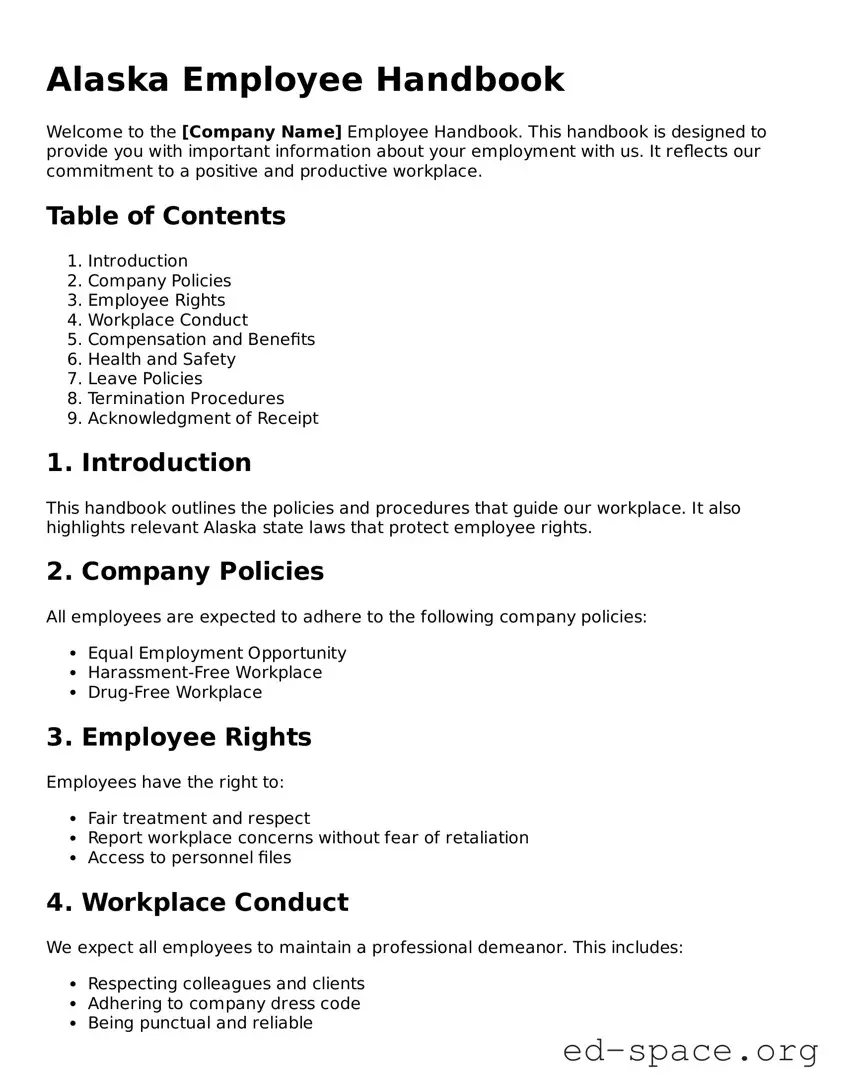
Creating a comprehensive Employee Handbook is an essential step for any organization operating in Alaska. This handbook serves as a vital resource for employees, outlining company policies, procedures, and expectations in a clear and accessible manner. It typically covers a range of topics, including workplace conduct, attendance policies, benefits, and safety protocols. Additionally, the handbook addresses employee rights and responsibilities, providing guidance on issues such as harassment, discrimination, and conflict resolution. By ensuring that all employees have access to this information, employers foster a transparent work environment where everyone understands their roles and the standards expected of them. Furthermore, an effective Employee Handbook can help protect the organization legally by demonstrating compliance with state and federal laws. Ultimately, this document not only serves as a guide for new hires but also reinforces the company’s commitment to a positive and productive workplace culture.
Alaska Employee Handbook
Welcome to the [Company Name] Employee Handbook. This handbook is designed to provide you with important information about your employment with us. It reflects our commitment to a positive and productive workplace.
Table of Contents
1. Introduction
This handbook outlines the policies and procedures that guide our workplace. It also highlights relevant Alaska state laws that protect employee rights.
2. Company Policies
All employees are expected to adhere to the following company policies:
3. Employee Rights
Employees have the right to:
4. Workplace Conduct
We expect all employees to maintain a professional demeanor. This includes:
5. Compensation and Benefits
Employees will receive:
6. Health and Safety
Your safety is our priority. We comply with Alaska state laws regarding workplace safety. Employees are encouraged to report any unsafe conditions.
7. Leave Policies
We offer various types of leave, including:
8. Termination Procedures
Termination may occur for various reasons. Employees will receive notice in accordance with Alaska state law.
9. Acknowledgment of Receipt
By signing below, you acknowledge that you have received and read the [Company Name] Employee Handbook.
Employee Name: ________________________
Signature: ______________________________
Date: __________________________________
Thank you for being a part of our team!
| Fact Name | Description |
|---|---|
| Purpose | The Alaska Employee Handbook serves to outline company policies, procedures, and employee rights within the workplace. |
| Governing Laws | This handbook is governed by Alaska Statutes, specifically Title 23, which addresses labor and workforce regulations. |
| Mandatory Inclusions | Employers must include essential topics such as anti-discrimination policies, workplace safety, and employee benefits. |
| Employee Acknowledgment | Employees are typically required to sign an acknowledgment form, confirming they have received and understood the handbook. |
| Updates and Revisions | Regular updates are necessary to ensure compliance with changing laws and company practices, and employees should be informed of any changes. |
Completing the Alaska Employee Handbook form is an important step in understanding your rights and responsibilities as an employee. Follow these steps carefully to ensure that you fill out the form correctly.
Once you have submitted the form, it will be processed by the HR department. They will keep it on file as part of your employment records.
What is the purpose of the Alaska Employee Handbook form?
The Alaska Employee Handbook form serves as a comprehensive guide for employees. It outlines company policies, procedures, and expectations. This document helps ensure that all employees understand their rights and responsibilities within the workplace. It also provides information on benefits, workplace conduct, and the process for addressing grievances.
Who is required to complete the Alaska Employee Handbook form?
All employees, both new and existing, must complete the Alaska Employee Handbook form. New hires should submit the form during their onboarding process. Existing employees are required to review and sign the form whenever updates occur. This ensures that everyone is aware of the latest policies and procedures.
How often is the Alaska Employee Handbook updated?
The Alaska Employee Handbook is reviewed and updated at least annually. However, updates may occur more frequently if there are changes in laws, regulations, or company policies. Employees will be notified of any significant changes and will need to acknowledge the updated handbook by signing the form again.
What should I do if I have questions about the Employee Handbook?
If you have questions regarding the Employee Handbook, reach out to your supervisor or the Human Resources department. They can provide clarification on policies and procedures. It’s important to address any uncertainties to ensure you fully understand your rights and responsibilities as an employee.
Incomplete Information: Many individuals fail to provide all required personal details. This may include missing sections such as emergency contact information or social security numbers. Incomplete submissions can delay processing and create complications.
Incorrect Job Title: Some employees mistakenly list an inaccurate job title. This error can lead to confusion regarding roles and responsibilities, impacting organizational structure and reporting lines.
Failure to Sign: A common oversight is neglecting to sign the form. Without a signature, the document is considered incomplete and may not be valid. This can hinder the acknowledgment of policies and procedures.
Not Reading the Policies: Employees often skip the section detailing company policies. Failing to understand these policies can result in unintentional violations, leading to disciplinary action or misunderstandings in the workplace.
Ignoring Submission Deadlines: Some individuals overlook deadlines for submitting the handbook form. Late submissions can disrupt HR processes and may affect an employee's onboarding experience.
When creating an Alaska Employee Handbook, it’s essential to consider other documents that can complement it. These documents help clarify workplace policies, ensure compliance with state laws, and promote a positive work environment. Here’s a brief overview of some key forms and documents often used alongside the Employee Handbook.
Using these documents alongside the Employee Handbook can create a comprehensive framework for managing your workforce effectively. They ensure that everyone is on the same page regarding expectations and responsibilities, ultimately contributing to a harmonious workplace.
The Employee Handbook is an important document for any workplace. It sets the tone for company culture and outlines policies. Here are four documents that are similar to the Employee Handbook:
When filling out the Alaska Employee Handbook form, it is important to follow certain guidelines to ensure accuracy and compliance. Here are five things to do and five things to avoid:
Things You Should Do:
Things You Shouldn't Do:
By following these guidelines, you can help ensure that your submission is processed smoothly and efficiently.
Understanding the Alaska Employee Handbook form is crucial for both employers and employees. However, several misconceptions can lead to confusion. Here are nine common misconceptions, along with clarifications:
Many believe that having an employee handbook is not necessary. In reality, it serves as a vital tool for setting clear expectations and protecting both parties.
Some think that all employee handbooks must follow a one-size-fits-all template. Each handbook should be tailored to reflect the specific policies and culture of the organization.
There is a misconception that an employee handbook constitutes a legally binding contract. While it outlines policies, it generally does not create enforceable legal obligations unless explicitly stated.
Some employers believe that once the handbook is created, it does not need to be updated. However, regular reviews are essential to ensure compliance with changing laws and workplace practices.
It is often assumed that only the Human Resources department should manage the handbook. In fact, input from various departments can enhance its effectiveness and relevance.
Many assume that employees will read the handbook in its entirety. In reality, it is common for employees to skim or overlook important sections, which is why training and reminders are important.
Some believe that every possible policy must be included in the handbook. Instead, it should focus on essential policies that guide employee behavior and company culture.
There is a belief that handbooks can be disregarded during workplace disputes. However, they often serve as a reference point for resolving conflicts and clarifying expectations.
Some think that only large organizations need employee handbooks. In truth, even small businesses can benefit significantly from having clear guidelines in place.
Addressing these misconceptions can help create a more informed workplace. Clarity and understanding around the employee handbook can foster a positive work environment.
When it comes to filling out and utilizing the Alaska Employee Handbook form, several key points can guide you through the process effectively. Understanding these takeaways can help ensure compliance and clarity for both employers and employees.
By focusing on these key takeaways, organizations can create a comprehensive and effective employee handbook that benefits everyone involved.