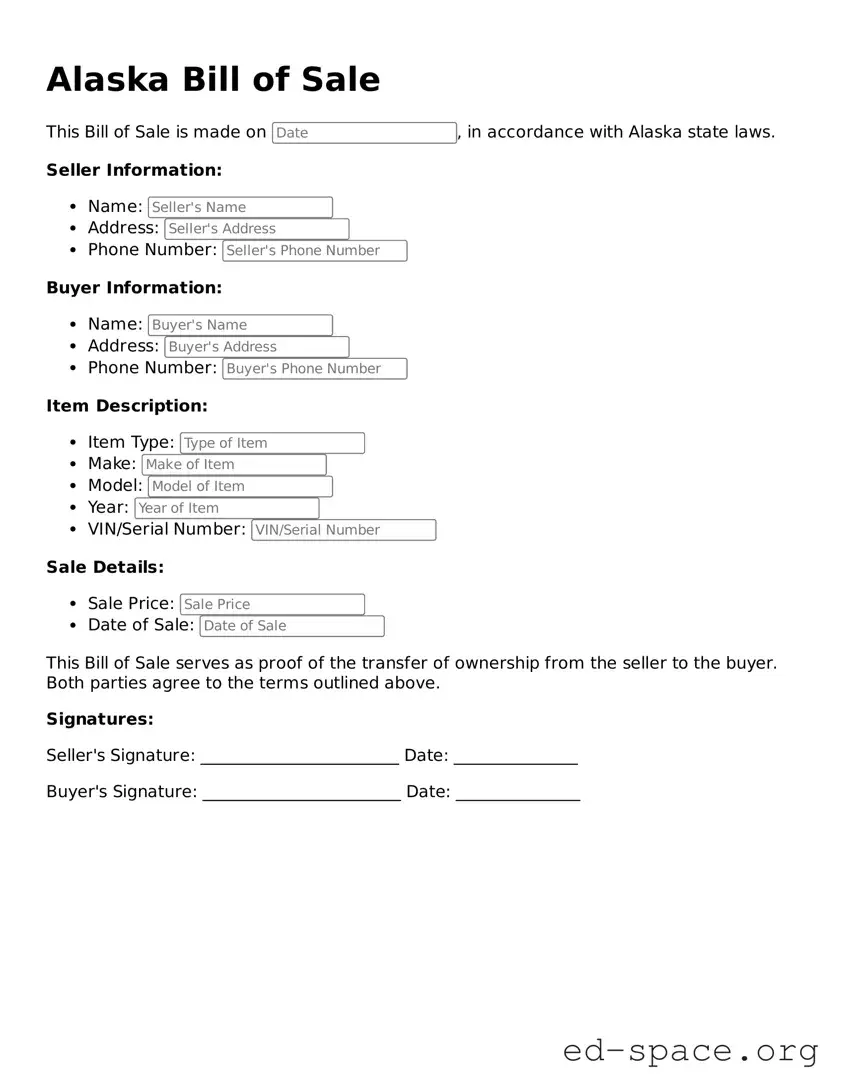
In the vast and diverse state of Alaska, where the breathtaking landscapes meet the spirit of adventure, the Bill of Sale form serves as a vital document for both buyers and sellers engaged in the transfer of personal property. This straightforward yet essential form is designed to provide a clear record of the transaction, ensuring that both parties are protected during the exchange. It typically includes key details such as the names and addresses of the buyer and seller, a description of the item being sold, and the purchase price. Additionally, the Bill of Sale may specify any warranties or conditions related to the sale, offering peace of mind to both parties involved. Whether it's a snowmobile, a boat, or a piece of equipment, having this document in place not only solidifies the transaction but also serves as proof of ownership, which can be crucial for future registrations or legal matters. Understanding the significance and components of the Alaska Bill of Sale form is essential for anyone looking to navigate the waters of personal property sales in this unique and beautiful state.
Alaska Bill of Sale
This Bill of Sale is made on , in accordance with Alaska state laws.
Seller Information:
Buyer Information:
Item Description:
Sale Details:
This Bill of Sale serves as proof of the transfer of ownership from the seller to the buyer. Both parties agree to the terms outlined above.
Signatures:
Seller's Signature: ________________________ Date: _______________
Buyer's Signature: ________________________ Date: _______________
| Fact Name | Description |
|---|---|
| Purpose | The Alaska Bill of Sale form is used to document the transfer of ownership of personal property, such as vehicles or equipment, between a seller and a buyer. |
| Governing Law | Alaska Statutes Title 45, Chapter 29 governs the sale of goods and the use of Bill of Sale forms in the state. |
| Required Information | It typically includes details such as the names and addresses of the buyer and seller, a description of the item, and the sale price. |
| Notarization | While notarization is not always required, it is recommended for added legal protection and to verify the identities of the parties involved. |
| Use for Vehicles | For vehicle sales, the Bill of Sale is often required for registration and title transfer with the Alaska Division of Motor Vehicles. |
| Record Keeping | Both parties should keep a copy of the completed Bill of Sale for their records, as it serves as proof of the transaction. |
Filling out the Alaska Bill of Sale form is a straightforward process. Once completed, you will have a document that serves as proof of the transaction between the buyer and the seller. This form is essential for both parties to ensure clarity and legality in the exchange.
What is an Alaska Bill of Sale form?
The Alaska Bill of Sale form is a legal document used to record the transfer of ownership of personal property from one party to another within the state of Alaska. This form serves as proof of the transaction and outlines details such as the buyer and seller's information, a description of the property being sold, and the sale price. It is important for both parties to have a copy of this document for their records.
When is a Bill of Sale required in Alaska?
A Bill of Sale is typically required when selling or purchasing personal property, such as vehicles, boats, or firearms. While not always legally mandated for every transaction, having a Bill of Sale can help protect both the buyer and seller by providing clear evidence of the sale. Additionally, some transactions, particularly those involving vehicles, may require a Bill of Sale for registration purposes with the Alaska Division of Motor Vehicles.
What information should be included in an Alaska Bill of Sale?
An effective Alaska Bill of Sale should include several key elements. These include the full names and addresses of both the buyer and seller, a detailed description of the property being sold, the sale price, and the date of the transaction. It is also advisable to include any terms or conditions related to the sale, such as warranties or representations about the property. Both parties should sign the document to validate the agreement.
Is a Bill of Sale legally binding in Alaska?
Yes, a Bill of Sale is considered a legally binding document in Alaska, provided it is properly completed and signed by both parties. This means that the terms outlined in the Bill of Sale can be enforced in a court of law. However, it is crucial to ensure that all information is accurate and that both parties understand their rights and responsibilities as outlined in the document.
Failing to include all necessary details about the buyer and seller. It’s crucial to provide full names, addresses, and contact information. Omitting any of this can lead to confusion or disputes later.
Not accurately describing the item being sold. Whether it’s a vehicle, boat, or other property, a clear and precise description helps avoid misunderstandings. Include make, model, year, and identification numbers when applicable.
Neglecting to include the sale price. This is a key element of the transaction. If the price is not stated, it can create complications in future ownership verification or tax assessments.
Forgetting to sign the document. Both parties must sign the Bill of Sale for it to be valid. Without signatures, the agreement lacks legal weight.
Not keeping copies of the completed form. Both the buyer and seller should retain a copy for their records. This can be vital if any issues arise after the sale.
Ignoring state-specific requirements. Alaska may have unique regulations regarding Bill of Sale forms. It’s essential to ensure compliance with local laws to avoid future legal problems.
When completing a transaction involving the sale of personal property in Alaska, several additional documents may be beneficial to ensure a smooth process. Each of these forms serves a specific purpose and can help protect both the buyer and the seller. Below is a list of commonly used documents that often accompany the Alaska Bill of Sale form.
Utilizing these additional forms alongside the Alaska Bill of Sale can provide clarity and security for both parties involved in the transaction. By ensuring all necessary documentation is in place, buyers and sellers can proceed with confidence, knowing their rights and responsibilities are clearly defined.
When filling out the Alaska Bill of Sale form, it’s essential to approach the task with care. Here are some important dos and don'ts to keep in mind:
There are several misconceptions about the Alaska Bill of Sale form. Understanding these can help clarify its purpose and usage. Below are eight common misconceptions:
Being aware of these misconceptions can help individuals navigate the process of buying and selling items in Alaska more effectively.
When dealing with the Alaska Bill of Sale form, understanding its purpose and requirements is essential. Here are some key takeaways to keep in mind:
By following these guidelines, you can ensure that your Bill of Sale is completed correctly and serves its intended purpose effectively.