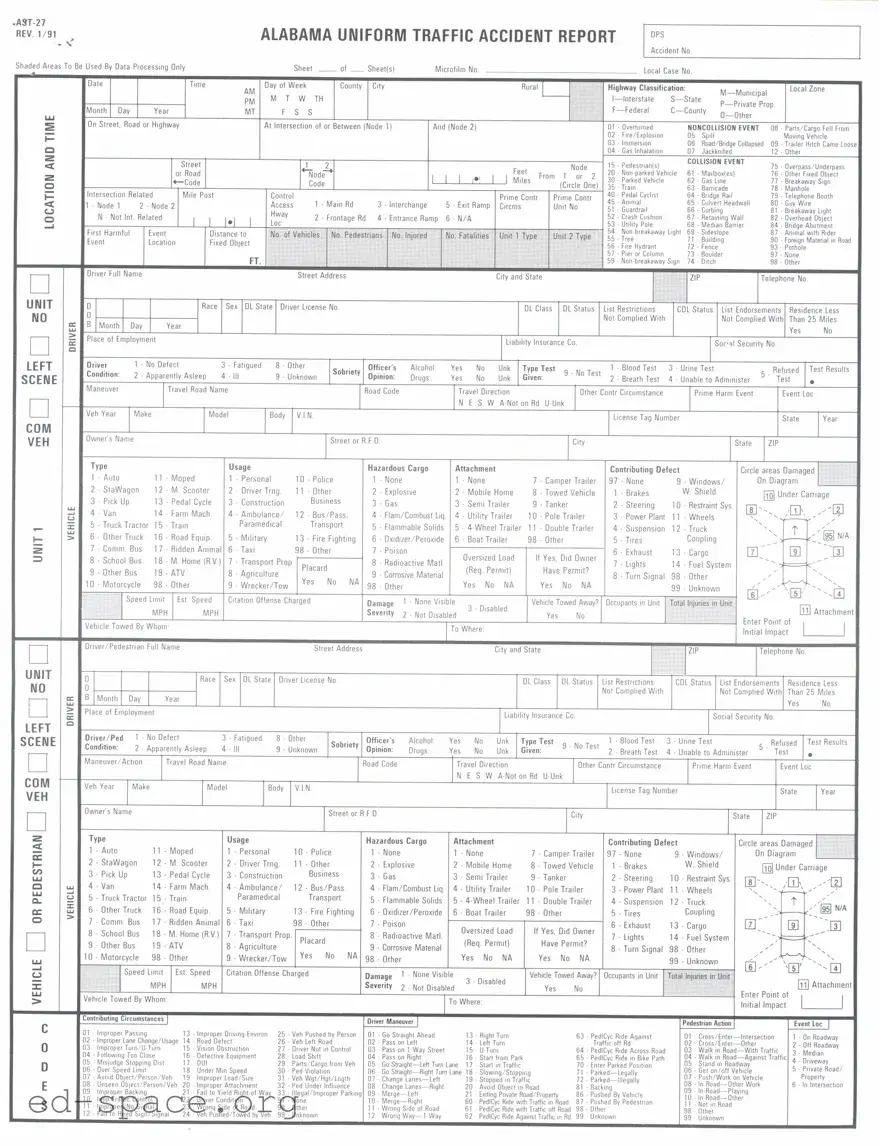
The Alabama Uniform Traffic Report form is an essential tool used by law enforcement to document traffic accidents across the state. This standardized form captures critical information about the incident, including the date, time, and location of the accident, as well as details about the vehicles involved and the individuals affected. It provides sections for identifying the type of accident, whether it was a collision or a non-collision event, and the specific circumstances surrounding the incident. The form also includes fields for reporting injuries, fatalities, and property damage, ensuring that all pertinent details are recorded. Additionally, it captures information about the drivers, such as their licenses, insurance status, and any contributing factors that may have played a role in the accident. By compiling this information, the form aids in accident analysis and helps improve road safety measures throughout Alabama.

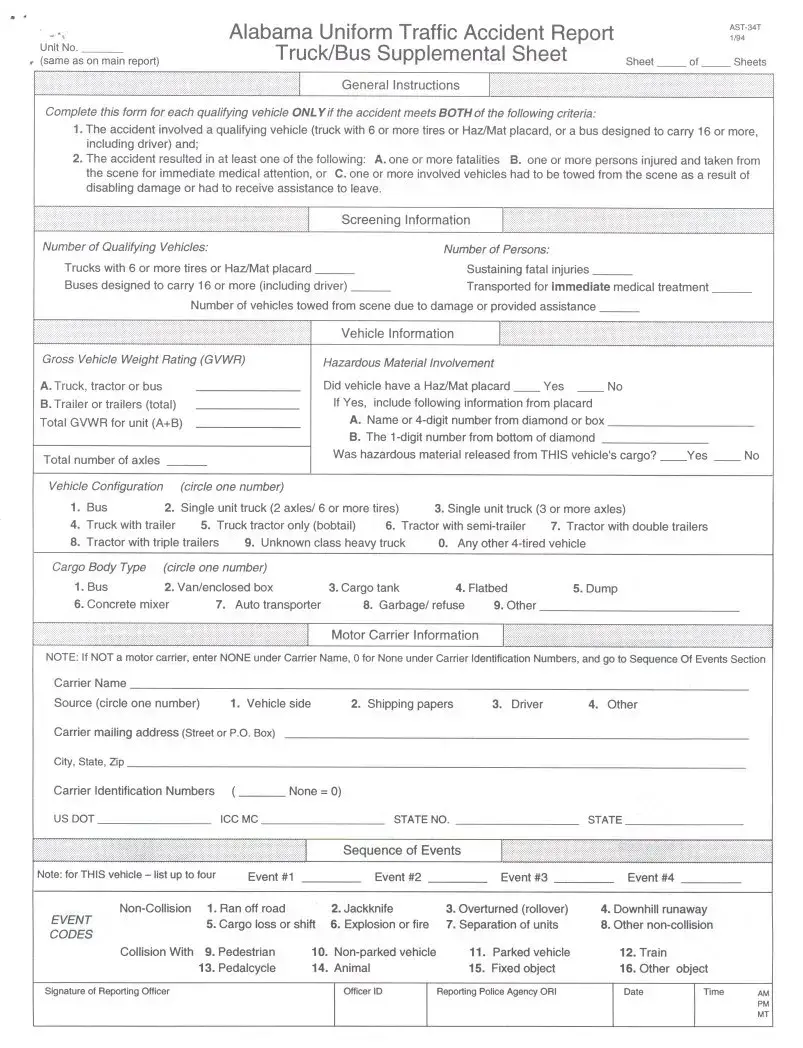
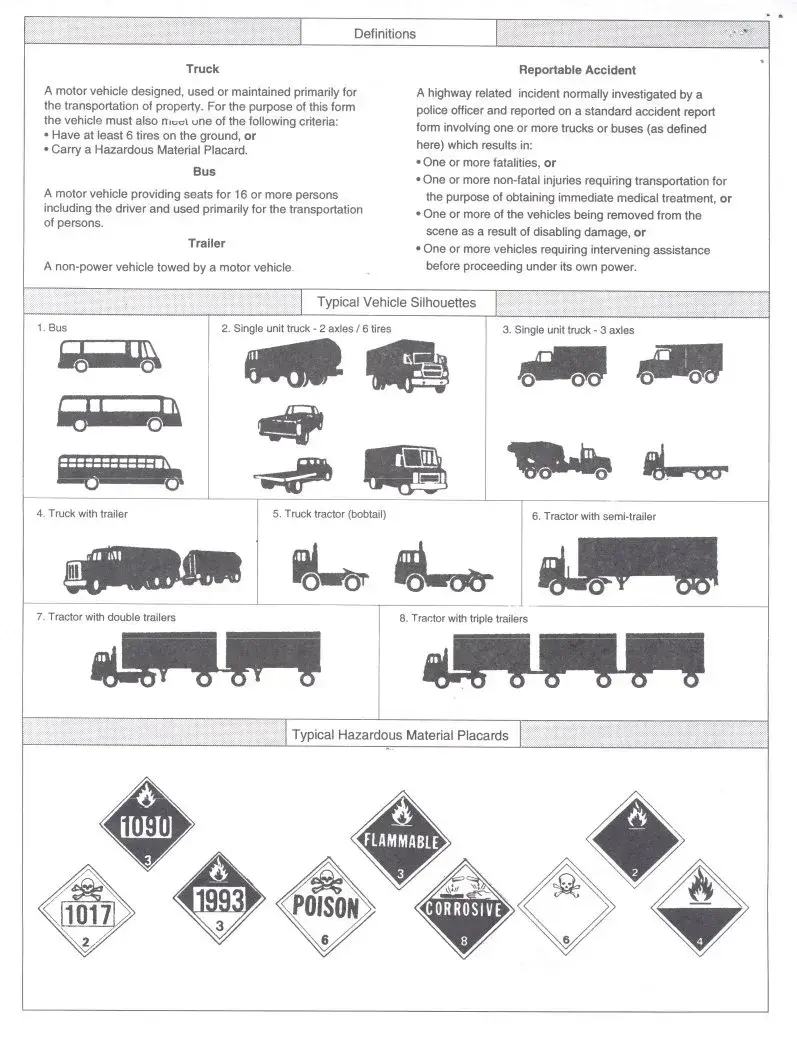
| Fact Name | Details |
|---|---|
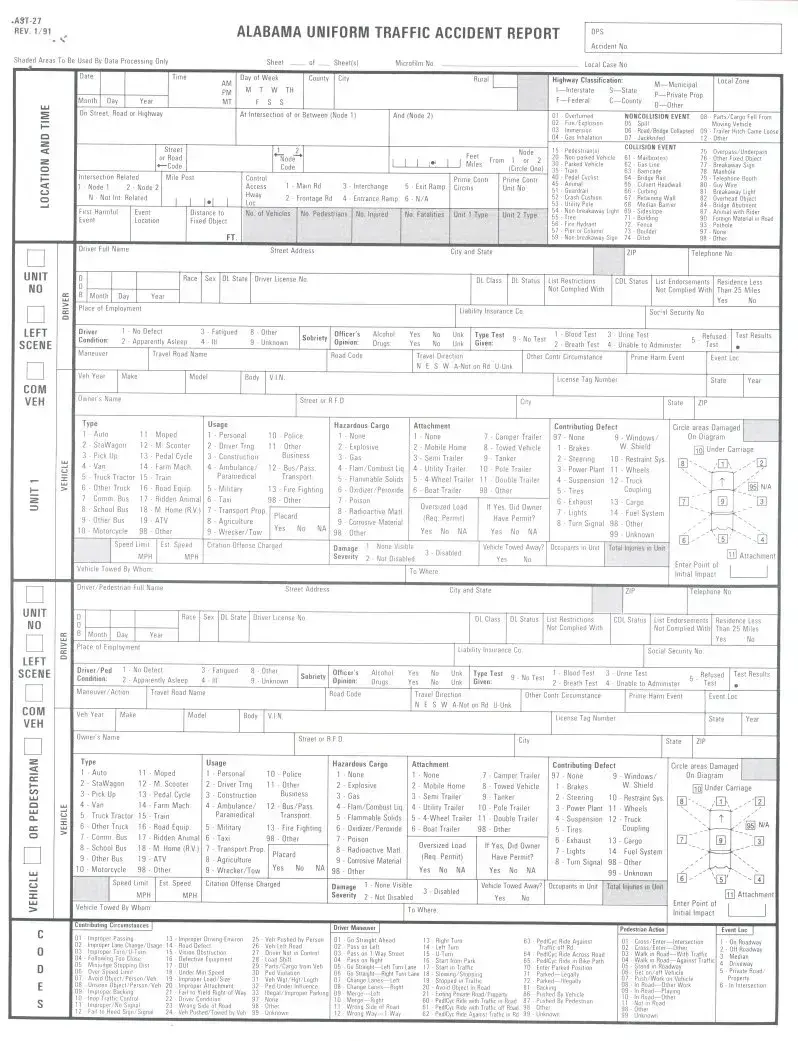
| Form Identifier | The Alabama Uniform Traffic Accident Report is identified as AST-27, revised in January 1991. |
| Governing Law | This form is governed by the Alabama Code Title 32, Chapter 10, which pertains to motor vehicle accident reporting. |
| Purpose | The report is used to document details of traffic accidents, including the parties involved, damages, and circumstances. |
| Data Processing | Shaded areas on the form are designated for data processing purposes only, ensuring clarity for manual entries. |
| Event Classification | Accidents are categorized into collision and non-collision events, helping to streamline reporting and analysis. |
| Driver Information | The form collects detailed information about drivers, including license status and insurance coverage, which is crucial for legal and insurance purposes. |
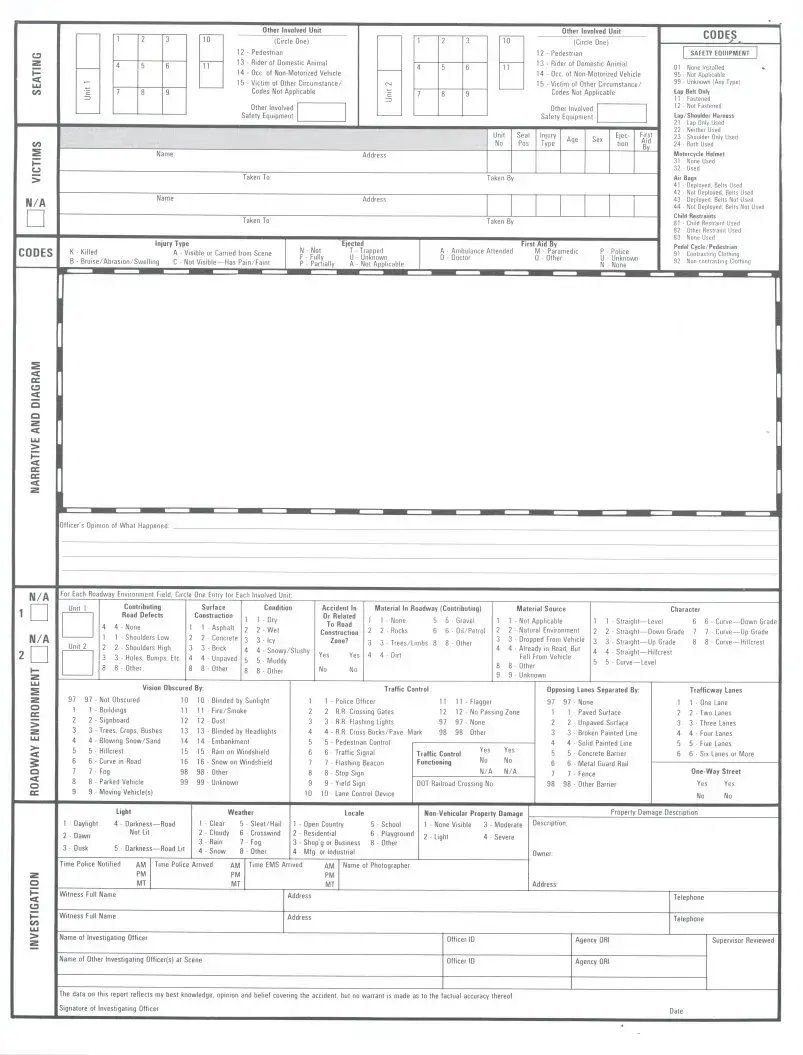
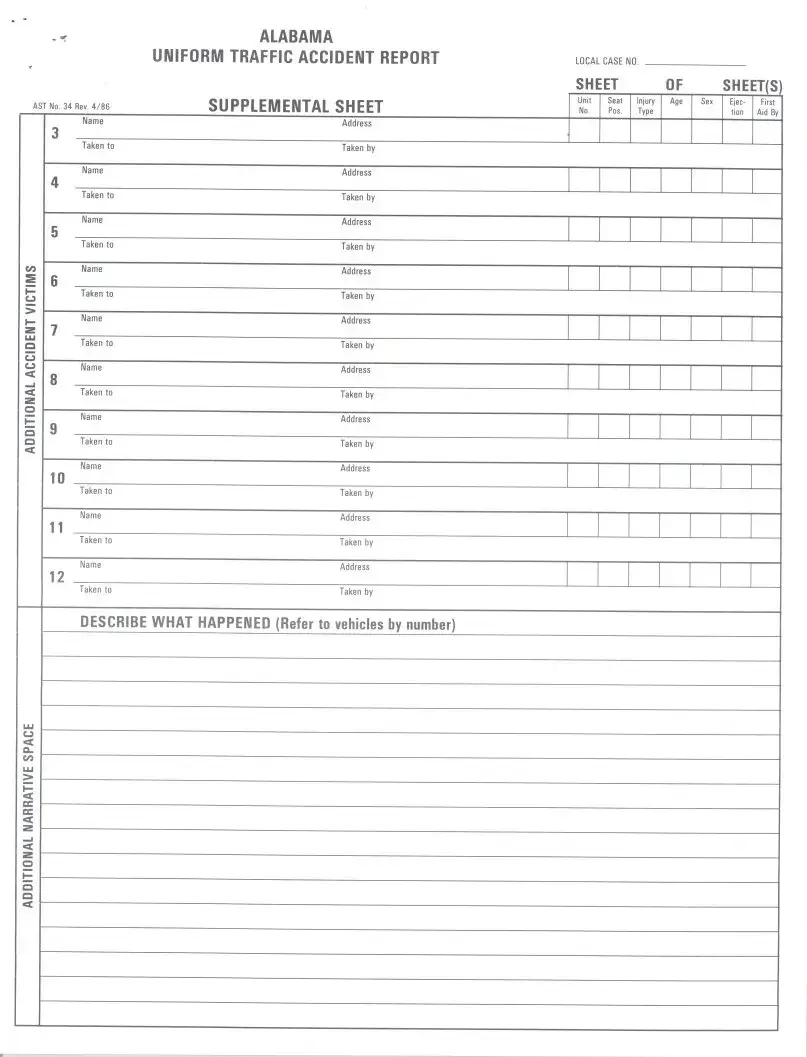
| Witness Statements | Witness information is recorded, providing additional perspectives on the accident, which can be vital in investigations. |
Filling out the Alabama Uniform Traffic Report form requires careful attention to detail to ensure accuracy. This report is essential for documenting traffic accidents and will be used by law enforcement and insurance companies. Follow these steps to complete the form properly.
What is the Alabama Uniform Traffic Report form used for?
The Alabama Uniform Traffic Report form is designed to document traffic accidents that occur on public roads in Alabama. This form collects vital information about the accident, including details about the vehicles involved, the drivers, and any injuries or damages. Law enforcement officers typically complete this form at the scene of an accident, ensuring that all relevant information is recorded for legal and insurance purposes.
Who is responsible for filling out the Alabama Uniform Traffic Report?
Generally, law enforcement officers are responsible for completing the Alabama Uniform Traffic Report. When they respond to a traffic accident, they gather information from the involved parties, witnesses, and the scene itself. The officer will fill out the form to reflect their findings and observations. This report becomes an official record of the incident and can be used in investigations or legal proceedings.
What information is included in the report?
The report includes a variety of information, such as the date, time, and location of the accident, the number of vehicles and people involved, and any injuries or fatalities. It also captures details about the vehicles, including their makes, models, and license plate numbers. Additionally, the report notes the circumstances surrounding the accident, such as contributing factors like weather conditions or road hazards.
How can I obtain a copy of the Alabama Uniform Traffic Report?
If you need a copy of the Alabama Uniform Traffic Report, you can typically request it from the law enforcement agency that investigated the accident. Many agencies have procedures in place for obtaining accident reports, which may involve filling out a request form and paying a small fee. It's important to have relevant details handy, such as the date of the accident and the names of those involved, to facilitate the process.
Incomplete Information: One of the most common mistakes is failing to fill out all required fields. If any section is left blank, it can lead to delays in processing the report and may result in complications later on. Always double-check that every necessary box is filled in before submitting the form.
Incorrect Dates and Times: Another frequent error involves entering the wrong date or time of the incident. This can create confusion and may even affect legal proceedings. Make sure to verify the date and time are accurate and reflect when the accident occurred.
Misidentifying the Location: Accurately identifying the location of the accident is crucial. Many people mistakenly provide an incorrect street name or fail to specify the exact intersection. This information is vital for law enforcement and insurance purposes, so take care to ensure it is correct.
Failing to Report All Vehicles Involved: Some individuals neglect to list all vehicles involved in the accident. This can lead to incomplete data and may complicate insurance claims or legal actions. It’s essential to include every vehicle and driver involved in the incident.
The Alabama Uniform Traffic Report form serves as a crucial document for law enforcement and insurance companies following traffic incidents. However, several other forms and documents often accompany it to provide a comprehensive overview of the circumstances surrounding the accident. Below are five key documents frequently used in conjunction with the Alabama Uniform Traffic Report.
In summary, these documents work together to provide a detailed account of traffic incidents. They help ensure that all relevant information is captured and available for insurance claims, legal proceedings, and safety assessments. Understanding these forms can be invaluable for anyone involved in a traffic accident.
Filling out the Alabama Uniform Traffic Report form can seem daunting, but with the right approach, you can make the process smoother. Here’s a list of things to do and avoid when completing this important document.
By following these guidelines, you’ll help ensure that the report is processed efficiently and effectively. Remember, accuracy and clarity are your best friends in this process!
Many believe that the Alabama Uniform Traffic Report form is only necessary for severe accidents. In reality, it is used for all traffic incidents, regardless of severity. This ensures that all relevant data is captured for analysis and future reference.
While police officers often complete the report, anyone involved in the accident can provide information. This includes drivers, passengers, and witnesses. Accurate reporting is crucial, and all perspectives help create a complete picture of the incident.
Some people think that the report has no bearing on insurance claims. However, insurance companies often require this documentation to assess liability and determine coverage. Having a complete and accurate report can significantly impact the outcome of a claim.
While this specific form is used in Alabama, the concepts behind it are universal. Other states have similar reporting requirements. Understanding the purpose of these forms can help individuals navigate traffic incidents anywhere in the country.
Many assume that once the Alabama Uniform Traffic Report is filed, no changes can be made. In fact, if new information arises or errors are found, amendments can be requested. It's essential to ensure that all details are correct to avoid complications later.
Complete all sections accurately. When filling out the Alabama Uniform Traffic Report form, ensure that every section is filled out completely and accurately. Missing information can lead to delays in processing and may affect any claims or legal proceedings that follow the incident.
Use clear and concise language. The form requires specific details about the accident, including the time, location, and nature of the incident. Using clear language helps avoid confusion and ensures that the report is understood by all parties involved.
Be aware of the importance of diagrams. If applicable, use the diagram section to illustrate the accident scene. This visual representation can provide valuable context and clarity about how the accident occurred, which can be beneficial in investigations.
Document witness information. If there are witnesses to the accident, include their names and contact details. Their accounts can provide additional perspectives on the incident, which may be useful in determining liability.
Keep a copy for your records. After completing the form, make sure to keep a copy for your own records. This can be helpful for future reference, especially if any disputes arise regarding the accident.