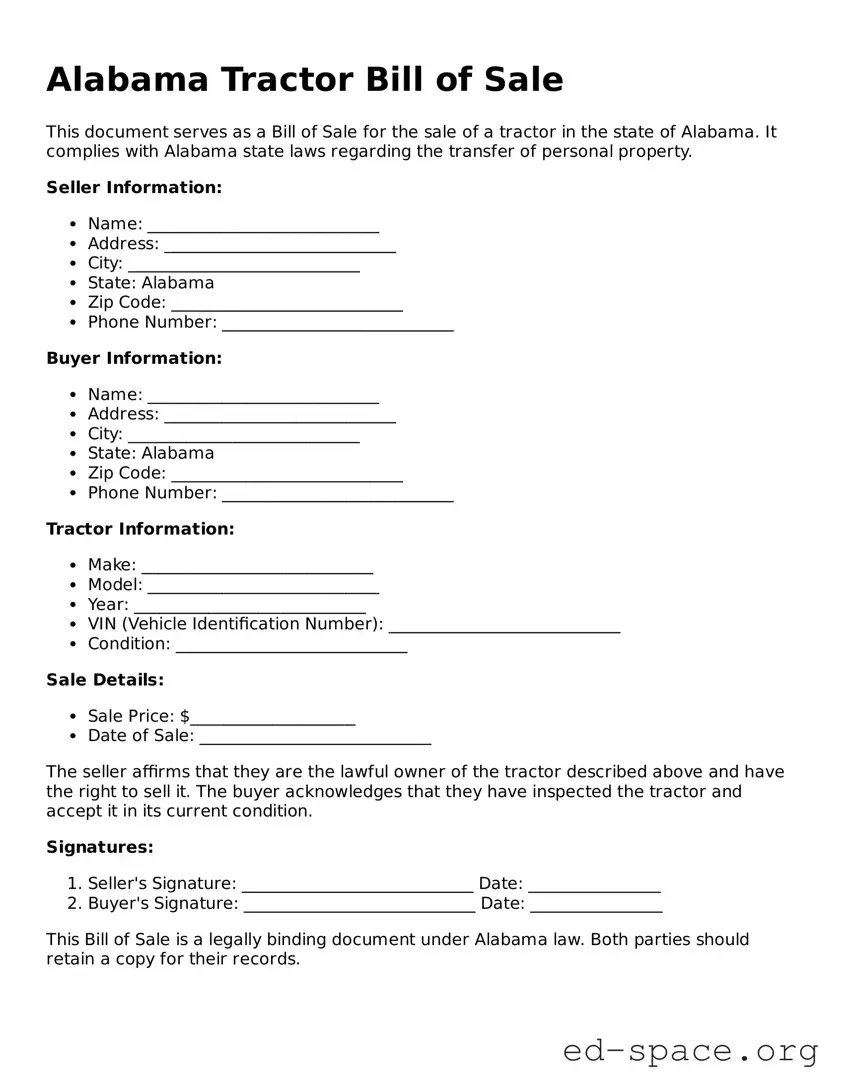
When purchasing or selling a tractor in Alabama, having a well-drafted bill of sale is essential for both parties involved in the transaction. This document serves as a legal record that outlines the details of the sale, including the buyer and seller's names, the tractor's make, model, year, and Vehicle Identification Number (VIN). Additionally, it specifies the sale price and any terms related to payment. A properly completed Tractor Bill of Sale not only protects the interests of both the buyer and seller but also facilitates the transfer of ownership and can be vital for registration purposes with the state. Understanding the key components of this form helps ensure a smooth transaction, providing peace of mind and clarity for everyone involved.
Alabama Tractor Bill of Sale
This document serves as a Bill of Sale for the sale of a tractor in the state of Alabama. It complies with Alabama state laws regarding the transfer of personal property.
Seller Information:
Buyer Information:
Tractor Information:
Sale Details:
The seller affirms that they are the lawful owner of the tractor described above and have the right to sell it. The buyer acknowledges that they have inspected the tractor and accept it in its current condition.
Signatures:
This Bill of Sale is a legally binding document under Alabama law. Both parties should retain a copy for their records.
| Fact Name | Description |
|---|---|
| Purpose | The Alabama Tractor Bill of Sale is used to document the sale and transfer of ownership of a tractor. |
| Governing Law | This form is governed by Alabama Code Title 32, Chapter 8, which covers the transfer of motor vehicles. |
| Buyer and Seller Information | The form requires detailed information about both the buyer and the seller, including names and addresses. |
| Tractor Details | Specific details about the tractor, such as make, model, year, and VIN, must be included. |
| Purchase Price | The agreed purchase price for the tractor must be clearly stated in the bill of sale. |
| Signatures | Both the buyer and seller must sign the document to make it legally binding. |
| Date of Sale | The date of the transaction should be recorded on the form to establish the timeline of ownership transfer. |
| Notarization | While notarization is not required, it is recommended for added legal protection. |
| Record Keeping | Both parties should keep a copy of the bill of sale for their records after the transaction is completed. |
| State-Specific Requirements | Alabama may have additional requirements for the sale of agricultural equipment, so it's important to check local laws. |
Filling out the Alabama Tractor Bill of Sale form is an important step in ensuring a smooth transaction when buying or selling a tractor. After completing the form, you will need to keep a copy for your records and provide one to the buyer or seller. This document serves as proof of the transaction and includes essential details about the tractor and the parties involved.
What is the Alabama Tractor Bill of Sale form?
The Alabama Tractor Bill of Sale form is a legal document used to record the sale and transfer of ownership of a tractor in the state of Alabama. It provides essential details about the transaction, including the buyer's and seller's information, the tractor's specifications, and the sale price.
Why is a Bill of Sale important?
A Bill of Sale serves as proof of the transaction between the buyer and seller. It protects both parties by documenting the terms of the sale and can be used for registration purposes. Additionally, it helps prevent disputes regarding ownership and the condition of the tractor.
What information is required on the form?
The form typically requires the following information: the names and addresses of the buyer and seller, the date of the sale, a description of the tractor (including make, model, year, and VIN), the sale price, and signatures from both parties. This information ensures clarity and legality in the transaction.
Is the form required for all tractor sales in Alabama?
While it is not legally required for all tractor sales, using a Bill of Sale is highly recommended. It provides a clear record of the transaction and can be essential for future reference, especially if the buyer wishes to register the tractor or if any disputes arise.
Can I create my own Bill of Sale?
Yes, you can create your own Bill of Sale as long as it includes all necessary information. However, using a standard form can help ensure that you do not miss any important details. Templates are often available online, which can simplify the process.
Do I need to have the Bill of Sale notarized?
Notarization is not required for the Bill of Sale to be valid in Alabama. However, having it notarized can add an extra layer of security and credibility to the document, which may be beneficial in case of future disputes.
How do I obtain a Bill of Sale form?
Bill of Sale forms can be obtained from various sources, including online legal document providers, local government offices, or through agricultural associations. Many websites offer free templates that can be customized to fit your needs.
What should I do after completing the Bill of Sale?
After completing the Bill of Sale, both the buyer and seller should keep a copy for their records. The seller should also provide the buyer with any additional documents required for registration, such as the tractor's title, if applicable.
Can the Bill of Sale be used for other types of equipment?
Yes, the Bill of Sale can be adapted for other types of equipment. While this form is specifically designed for tractors, similar documents can be used for the sale of other agricultural machinery or vehicles, provided they include the necessary details.
What if the tractor has a lien on it?
If the tractor has a lien, it is crucial to disclose this information in the Bill of Sale. The seller must ensure that the lien is satisfied before transferring ownership. Buyers should verify the status of any liens to avoid complications in the future.
Not including the date of sale. This detail is crucial for record-keeping and legal purposes.
Failing to provide the full name and address of both the buyer and the seller. Incomplete information can lead to confusion later.
Neglecting to accurately describe the tractor. Details such as make, model, year, and VIN should be included for clarity.
Forgetting to mention any existing liens on the tractor. This can create legal issues for the buyer.
Not signing the form. Both parties must sign to make the sale official.
Overlooking the need for witness signatures. Some transactions may require additional verification.
Using incorrect or outdated form versions. Always ensure you are using the latest version of the bill of sale.
Leaving out the purchase price. This information is essential for tax purposes and future reference.
Not providing any disclosures regarding the condition of the tractor. Buyers deserve to know about any issues.
Failing to keep a copy of the completed form. Both parties should have a record of the transaction.
When buying or selling a tractor in Alabama, several important documents may accompany the Tractor Bill of Sale form. Each of these documents serves a specific purpose, ensuring that the transaction is smooth and legally sound. Here’s a list of commonly used forms and documents that you might encounter.
Having these documents prepared and organized can make the buying or selling process more efficient. Always ensure that you have the necessary paperwork to avoid any complications down the road.
When filling out the Alabama Tractor Bill of Sale form, it's important to follow certain guidelines to ensure accuracy and legality. Below are some key dos and don'ts to consider:
The Alabama Tractor Bill of Sale form is an important document for anyone buying or selling a tractor in the state. However, there are several misconceptions that can lead to confusion. Here’s a breakdown of eight common misunderstandings:
Understanding these misconceptions can help ensure a smooth transaction and protect the interests of both buyers and sellers in Alabama.
When dealing with the Alabama Tractor Bill of Sale form, it's important to understand its purpose and the steps involved in completing it. Here are some key takeaways to consider: