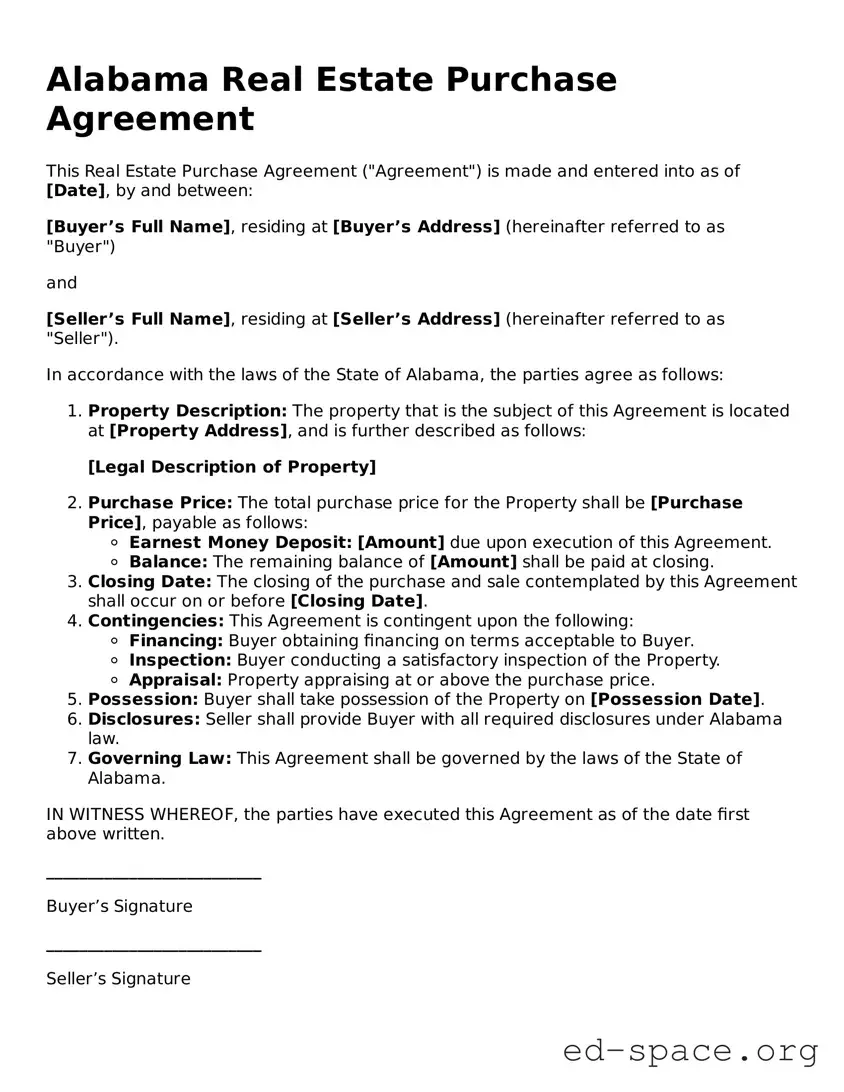
When buying or selling property in Alabama, understanding the Real Estate Purchase Agreement form is essential. This document serves as the foundation for any real estate transaction, outlining the terms and conditions agreed upon by both the buyer and the seller. Key aspects include the purchase price, financing details, and the closing date. The agreement also addresses contingencies, such as inspections and financing approvals, which protect both parties in the event that certain conditions are not met. Additionally, it includes provisions for earnest money deposits, which demonstrate the buyer's commitment to the purchase. By clearly defining the rights and responsibilities of each party, this form helps to prevent misunderstandings and disputes, ensuring a smoother transaction process. Familiarity with this agreement can empower buyers and sellers, making the journey of buying or selling a home more straightforward and less stressful.
Alabama Real Estate Purchase Agreement
This Real Estate Purchase Agreement ("Agreement") is made and entered into as of [Date], by and between:
[Buyer’s Full Name], residing at [Buyer’s Address] (hereinafter referred to as "Buyer")
and
[Seller’s Full Name], residing at [Seller’s Address] (hereinafter referred to as "Seller").
In accordance with the laws of the State of Alabama, the parties agree as follows:
[Legal Description of Property]
IN WITNESS WHEREOF, the parties have executed this Agreement as of the date first above written.
__________________________
Buyer’s Signature
__________________________
Seller’s Signature
| Fact Name | Details |
|---|---|
| Document Purpose | The Alabama Real Estate Purchase Agreement is used to outline the terms of a real estate transaction between a buyer and a seller. |
| Governing Law | This agreement is governed by the laws of the State of Alabama. |
| Parties Involved | The agreement involves at least two parties: the buyer and the seller. |
| Property Description | A detailed description of the property being sold must be included in the agreement. |
| Purchase Price | The total purchase price is clearly stated and agreed upon by both parties. |
| Earnest Money | The agreement specifies the amount of earnest money to be deposited by the buyer. |
| Closing Date | A closing date is included, indicating when the transaction will be finalized. |
| Contingencies | The document may outline contingencies that must be met for the sale to proceed. |
| Signatures Required | Both parties must sign the agreement for it to be legally binding. |
Filling out the Alabama Real Estate Purchase Agreement form is a crucial step in the home buying or selling process. Completing this form accurately helps ensure that both parties are clear on the terms of the transaction. Once you have filled out the form, it will be ready for review and signatures from both the buyer and seller.
What is the Alabama Real Estate Purchase Agreement?
The Alabama Real Estate Purchase Agreement is a legal document used to outline the terms and conditions of a real estate transaction in Alabama. It serves as a binding contract between the buyer and seller, detailing the property being sold, the purchase price, and other essential terms of the sale.
Who needs to use this form?
This form is typically used by individuals or entities involved in the buying or selling of real estate in Alabama. Both buyers and sellers should complete and sign the agreement to ensure that all parties are aware of their rights and responsibilities during the transaction.
What information is included in the agreement?
The agreement includes several key pieces of information. It identifies the parties involved, describes the property being sold, specifies the purchase price, outlines any contingencies, and sets the closing date. Additional terms, such as repairs or inclusions, may also be included based on the negotiations between the buyer and seller.
Is the Alabama Real Estate Purchase Agreement legally binding?
Yes, once both parties sign the agreement, it becomes a legally binding contract. This means that both the buyer and seller are obligated to follow the terms outlined in the document. It is essential for both parties to fully understand the agreement before signing.
Can the agreement be modified after signing?
Yes, modifications can be made to the agreement after it has been signed, but both parties must agree to any changes. It is advisable to document any amendments in writing and have both parties sign the revised agreement to maintain clarity and legal standing.
What happens if one party breaches the agreement?
If one party fails to fulfill their obligations under the agreement, it may be considered a breach of contract. The non-breaching party may have the right to seek legal remedies, which could include enforcing the contract, seeking damages, or terminating the agreement, depending on the circumstances.
Do I need a lawyer to complete the agreement?
While it is not legally required to have a lawyer to complete the Alabama Real Estate Purchase Agreement, it is often recommended. A legal professional can provide guidance, ensure that the agreement complies with state laws, and help protect your interests during the transaction.
How can I obtain the Alabama Real Estate Purchase Agreement form?
The Alabama Real Estate Purchase Agreement form can typically be obtained from real estate agents, online legal document services, or local real estate offices. Ensure that you are using the most current version of the form to comply with any changes in state laws.
Are there any fees associated with using the agreement?
There may be fees associated with obtaining the form, depending on where you source it. Additionally, if you choose to work with a real estate agent or attorney, there may be service fees for their assistance in completing the agreement.
Not including the full legal names of all parties involved. It’s essential to list everyone who will be part of the agreement to avoid confusion later.
Failing to specify the purchase price clearly. This detail is crucial, as it defines the financial terms of the agreement.
Omitting the property address. The agreement must include the complete address to identify the property accurately.
Neglecting to outline contingencies. Buyers should include any conditions that must be met for the sale to proceed, such as financing or inspections.
Not setting a closing date. This date is important as it marks when the ownership will officially transfer.
Using vague language. Clear and precise wording helps prevent misunderstandings about the terms of the agreement.
Forgetting to include earnest money details. Stating the amount and terms of the earnest money deposit is necessary to show the buyer's commitment.
Leaving out the seller's disclosures. Sellers are often required to disclose known issues with the property, and failing to do so can lead to legal problems.
Not providing a clear description of any included fixtures or personal property. This helps clarify what is part of the sale and what is not.
Overlooking the signatures. All parties must sign the agreement for it to be legally binding. Missing signatures can invalidate the contract.
When buying or selling property in Alabama, several important forms accompany the Real Estate Purchase Agreement. Each document plays a crucial role in ensuring a smooth transaction. Here’s a brief overview of four key forms you might encounter.
Using these forms alongside the Real Estate Purchase Agreement can help ensure that both parties are protected and informed throughout the buying or selling process. Each document serves a specific purpose and contributes to a successful real estate transaction in Alabama.
When filling out the Alabama Real Estate Purchase Agreement form, it is important to approach the task with care. Here are some key things to do and avoid.
By following these guidelines, you can help ensure a smoother experience when completing the Alabama Real Estate Purchase Agreement form.
Understanding the Alabama Real Estate Purchase Agreement can be tricky. Here are nine common misconceptions that people often have about this important document:
Being informed about these misconceptions can help you navigate the Alabama Real Estate Purchase Agreement with confidence. Always consider seeking professional advice to ensure your interests are protected.
When filling out and using the Alabama Real Estate Purchase Agreement form, it is essential to understand several key aspects. These takeaways can help ensure a smooth transaction process.
By keeping these key points in mind, individuals can navigate the Alabama Real Estate Purchase Agreement more effectively.