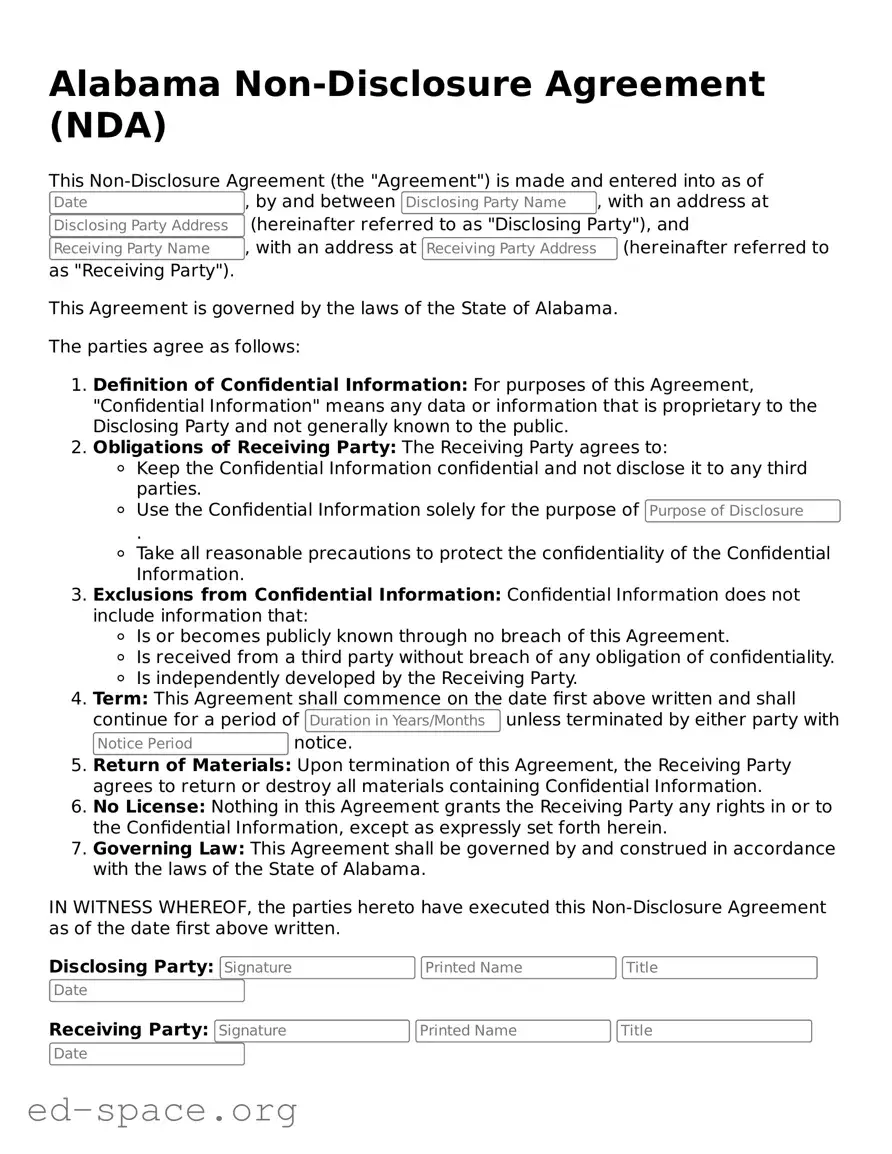
In Alabama, a Non-disclosure Agreement (NDA) serves as a vital tool for protecting sensitive information shared between parties. This legal document is designed to ensure that confidential information, whether it pertains to business operations, intellectual property, or proprietary data, remains secure and is not disclosed to unauthorized individuals. The NDA outlines the obligations of the parties involved, specifying what information is considered confidential and the duration of the confidentiality obligation. Additionally, it typically includes clauses regarding the permitted use of the information and the consequences of breaching the agreement. By clearly defining the terms of confidentiality, an NDA helps foster trust and encourages open communication, which is crucial for collaboration and innovation. Understanding the key components of this form can empower individuals and businesses to safeguard their interests effectively.
Alabama Non-Disclosure Agreement (NDA)
This Non-Disclosure Agreement (the "Agreement") is made and entered into as of , by and between , with an address at (hereinafter referred to as "Disclosing Party"), and , with an address at (hereinafter referred to as "Receiving Party").
This Agreement is governed by the laws of the State of Alabama.
The parties agree as follows:
IN WITNESS WHEREOF, the parties hereto have executed this Non-Disclosure Agreement as of the date first above written.
Disclosing Party:
Receiving Party:
| Fact Name | Description |
|---|---|
| Definition | An Alabama Non-disclosure Agreement (NDA) is a legal contract that protects confidential information shared between parties. |
| Governing Law | The NDA is governed by the laws of the State of Alabama. |
| Purpose | It is used to prevent the unauthorized disclosure of sensitive information, ensuring that proprietary data remains confidential. |
| Enforceability | For an NDA to be enforceable in Alabama, it must be reasonable in scope and duration. |
| Parties Involved | The agreement typically involves at least two parties: the disclosing party and the receiving party. |
Once you have obtained the Alabama Non-disclosure Agreement form, you will need to complete it accurately to ensure that all parties understand their obligations. Carefully following the steps below will help you fill out the form correctly.
What is a Non-disclosure Agreement (NDA) in Alabama?
A Non-disclosure Agreement, or NDA, is a legal contract that establishes a confidential relationship between parties. It protects sensitive information from being disclosed to unauthorized individuals. In Alabama, NDAs are commonly used in business settings to safeguard trade secrets, proprietary information, and other confidential data.
Who typically uses NDAs in Alabama?
NDAs are often utilized by businesses, entrepreneurs, and individuals who share confidential information. This includes companies that need to protect their intellectual property, startups seeking investors, and employees who may have access to sensitive company information.
What types of information can be protected by an NDA?
Various types of information can be protected under an NDA. This includes business plans, customer lists, marketing strategies, financial data, and technical specifications. Essentially, any information that a party wishes to keep confidential can be covered by this agreement.
How long does the confidentiality obligation last?
The duration of the confidentiality obligation can vary. Typically, it lasts for a specified period, which can range from a few years to indefinitely, depending on the nature of the information and the agreement between the parties. It’s important to clearly outline this timeframe in the NDA.
Can an NDA be enforced in Alabama?
Yes, NDAs can be enforced in Alabama as long as they meet legal requirements. The agreement must be clear, reasonable, and not overly broad. If a party violates the NDA, the other party may seek legal remedies, including injunctions and damages.
Are there any exceptions to what can be kept confidential?
Yes, there are exceptions. Information that is already publicly known, independently developed, or required to be disclosed by law cannot be protected by an NDA. It’s essential for parties to understand these exceptions when drafting the agreement.
Do I need a lawyer to draft an NDA in Alabama?
While it is not legally required to have a lawyer draft an NDA, it is highly recommended. A legal professional can ensure that the agreement is comprehensive, enforceable, and tailored to the specific needs of the parties involved.
What happens if someone breaches the NDA?
If someone breaches the NDA, the non-breaching party has the right to take legal action. This may involve seeking monetary damages or an injunction to prevent further disclosure of the confidential information. The specific remedies should be outlined in the NDA.
Is a verbal NDA enforceable in Alabama?
While verbal NDAs can be enforceable, they are difficult to prove and enforce in court. Written agreements are strongly preferred, as they provide clear evidence of the terms and conditions agreed upon by the parties.
Can an NDA be terminated?
Yes, an NDA can be terminated under certain conditions. The agreement should specify how and when it can be terminated, whether by mutual consent or after a certain period. It's important to review these terms carefully to avoid any misunderstandings.
Incomplete Information: Many individuals fail to fill out all required fields. Leaving sections blank can lead to confusion and may render the agreement unenforceable.
Incorrect Party Identification: It’s crucial to accurately identify all parties involved. Mistakes in names or titles can create legal complications down the line.
Vague Definitions: Some people do not clearly define what constitutes confidential information. Without precise definitions, the agreement may not protect sensitive data effectively.
Failure to Specify Duration: Not specifying how long the confidentiality obligation lasts can lead to misunderstandings. A clear timeline is essential for both parties.
Not Including Governing Law: Omitting a clause that states which state’s laws will govern the agreement can create uncertainty in case of disputes.
Neglecting Signatures: Finally, some individuals forget to sign the document or have all parties sign. An unsigned agreement may not hold up in court.
When entering into a Non-disclosure Agreement (NDA) in Alabama, it's often beneficial to have additional forms and documents to ensure comprehensive protection and clarity. Here are four common documents that complement an NDA:
Utilizing these additional documents can help create a robust framework for protecting your interests. Always consider your specific situation and consult with a professional to ensure that all necessary protections are in place.
When filling out the Alabama Non-disclosure Agreement (NDA) form, it’s crucial to approach the task with care. Here’s a list of important dos and don’ts to ensure that your NDA is completed correctly and effectively.
By following these guidelines, you can ensure that your Non-disclosure Agreement is effective and legally sound. Taking these steps seriously will protect your interests and maintain confidentiality.
When it comes to the Alabama Non-disclosure Agreement (NDA), several misconceptions can lead to confusion. Understanding these myths can help individuals and businesses navigate the process more effectively.
Many people believe that only large corporations need NDAs. In reality, any business, regardless of size, can benefit from protecting sensitive information. Startups and small businesses often use NDAs to safeguard their ideas and proprietary information.
While NDAs can be legally binding, they must meet certain criteria to be enforceable. If an NDA is overly broad or vague, a court may not uphold it. It's essential to ensure that the agreement is clear and reasonable.
Some people think that signing an NDA means they can never discuss any aspect of their work. However, NDAs typically only restrict the sharing of specific confidential information. Individuals can still discuss general concepts or publicly available information.
Another common belief is that NDAs last forever. In fact, most NDAs have a specified duration. Once that time period expires, the obligations to maintain confidentiality may no longer apply, allowing individuals to share previously protected information.
When dealing with sensitive information in Alabama, a Non-disclosure Agreement (NDA) is essential. Here are key takeaways to keep in mind when filling out and using this form:
Using an NDA can safeguard your business interests. Take the time to fill it out carefully and ensure all parties understand their responsibilities.