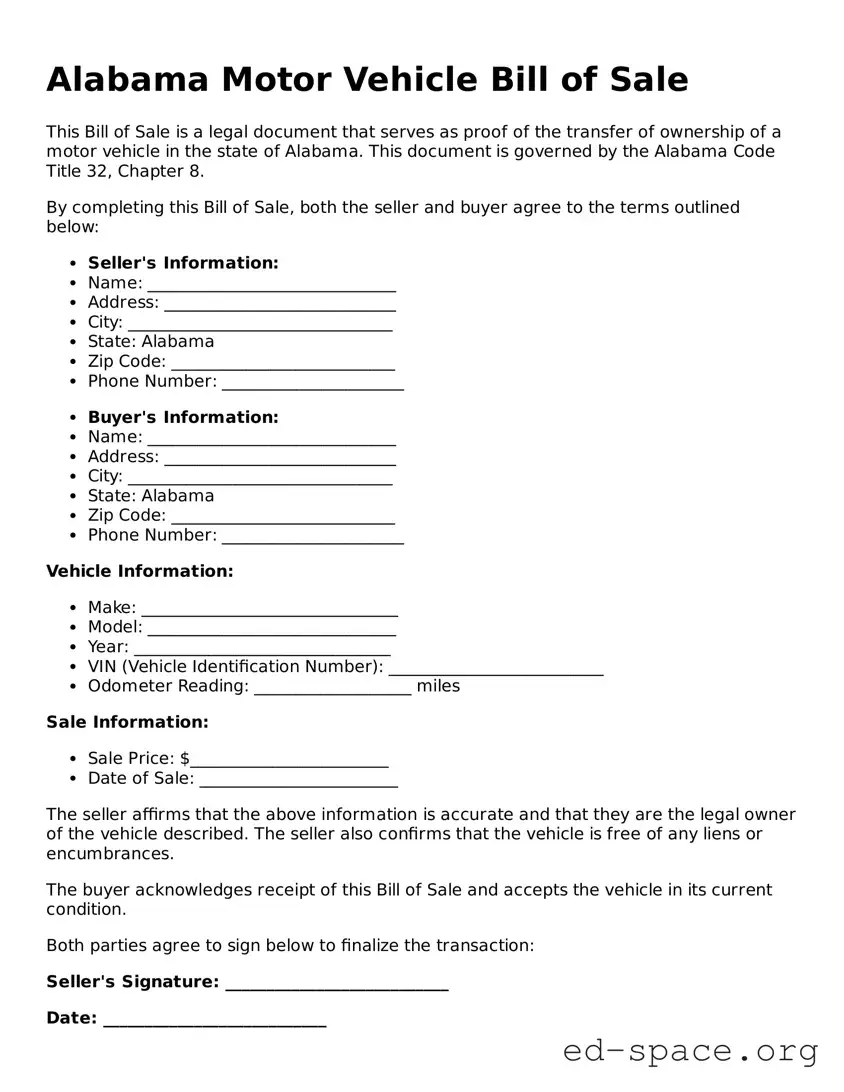
The Alabama Motor Vehicle Bill of Sale form serves as a crucial document in the transfer of ownership for vehicles within the state. This form provides essential details such as the vehicle's make, model, year, and Vehicle Identification Number (VIN), ensuring that both the buyer and seller have a clear record of the transaction. It also captures the purchase price and date of sale, which are vital for tax purposes and future reference. Both parties must provide their names, addresses, and signatures, affirming their agreement to the sale. Additionally, the form may include sections for odometer readings, which help prevent fraud by documenting the vehicle's mileage at the time of sale. By completing this form accurately, buyers and sellers can protect themselves legally and facilitate a smooth transfer of ownership. Understanding the importance of this document is essential for anyone involved in buying or selling a vehicle in Alabama.
Alabama Motor Vehicle Bill of Sale
This Bill of Sale is a legal document that serves as proof of the transfer of ownership of a motor vehicle in the state of Alabama. This document is governed by the Alabama Code Title 32, Chapter 8.
By completing this Bill of Sale, both the seller and buyer agree to the terms outlined below:
Vehicle Information:
Sale Information:
The seller affirms that the above information is accurate and that they are the legal owner of the vehicle described. The seller also confirms that the vehicle is free of any liens or encumbrances.
The buyer acknowledges receipt of this Bill of Sale and accepts the vehicle in its current condition.
Both parties agree to sign below to finalize the transaction:
Seller's Signature: ___________________________
Date: ___________________________
Buyer's Signature: ___________________________
Date: ___________________________
This Bill of Sale is effective as of the date signed above.
| Fact Name | Description |
|---|---|
| Purpose | The Alabama Motor Vehicle Bill of Sale form is used to document the sale or transfer of ownership of a motor vehicle. |
| Governing Law | The form is governed by the Alabama Code, specifically Title 32, Chapter 8. |
| Required Information | It typically requires details such as the buyer's and seller's names, addresses, and signatures. |
| Vehicle Details | Information about the vehicle, including the make, model, year, and Vehicle Identification Number (VIN), must be included. |
| Sales Price | The form should state the sales price of the vehicle to document the transaction value. |
| Notarization | While notarization is not required, it can add an extra layer of verification to the sale. |
| Use for Registration | The completed Bill of Sale can be used to register the vehicle in the buyer's name with the Alabama Department of Revenue. |
| Tax Implications | Sales tax may apply to the transaction, and the Bill of Sale serves as a record for tax purposes. |
| Record Keeping | Both parties should keep a copy of the Bill of Sale for their records, as it may be needed for future reference. |
| Availability | The Alabama Motor Vehicle Bill of Sale form is available online and can be printed for use. |
After obtaining the Alabama Motor Vehicle Bill of Sale form, you'll need to complete it accurately to ensure a smooth transaction. This document serves as proof of the sale and includes essential details about the vehicle and the parties involved. Follow the steps below to fill out the form correctly.
Once completed, the form should be retained by both parties for their records. It may also be necessary to submit this document when registering the vehicle with the state.
What is a Motor Vehicle Bill of Sale in Alabama?
A Motor Vehicle Bill of Sale is a legal document that records the sale of a vehicle from one party to another. It serves as proof of the transaction and includes important details such as the vehicle's identification number (VIN), make, model, year, and the purchase price. This document is essential for both the buyer and seller for future reference and legal purposes.
Is a Bill of Sale required in Alabama?
While Alabama does not legally require a Bill of Sale for every vehicle transaction, it is highly recommended. Having a Bill of Sale protects both the buyer and seller by providing a record of the sale. It can also be useful when registering the vehicle or in case of any disputes that may arise after the sale.
What information should be included in the Bill of Sale?
The Bill of Sale should include the following details: the names and addresses of both the buyer and seller, the vehicle's VIN, make, model, year, odometer reading at the time of sale, purchase price, and the date of the transaction. Both parties should sign the document to validate it.
Can I create my own Bill of Sale?
Yes, you can create your own Bill of Sale. It is important to ensure that all necessary information is included and that both parties sign the document. There are also templates available online that can guide you in creating a comprehensive Bill of Sale.
Do I need to have the Bill of Sale notarized?
Notarization is not required for a Bill of Sale in Alabama, but having it notarized can add an extra layer of security and authenticity. It may also be beneficial if you plan to use the document for legal purposes in the future.
What should I do with the Bill of Sale after the transaction?
After the transaction, both the buyer and seller should keep a copy of the Bill of Sale for their records. The buyer may need it when registering the vehicle with the Alabama Department of Revenue or when obtaining a title. The seller should keep it in case of any future disputes regarding the sale.
How does a Bill of Sale affect vehicle registration?
The Bill of Sale is an important document when registering a vehicle in Alabama. It serves as proof of ownership and the transaction. When registering the vehicle, the buyer will need to present the Bill of Sale along with other required documents, such as the title and proof of insurance.
What if the vehicle has a lien on it?
If the vehicle has a lien, it is crucial to address this before completing the sale. The seller should inform the buyer about the lien and provide documentation showing that it has been satisfied. The Bill of Sale should reflect any agreements made regarding the lien, ensuring transparency in the transaction.
Can I use a Bill of Sale for a vehicle purchased out of state?
Yes, you can use a Bill of Sale for a vehicle purchased out of state. However, it is important to check the specific requirements of Alabama and the state where the vehicle was purchased. Different states may have varying regulations regarding vehicle sales and registration.
Where can I obtain a Bill of Sale form?
You can obtain a Bill of Sale form from various sources. Many websites offer free templates that you can download and customize. Additionally, local DMV offices may provide forms or guidance on creating a Bill of Sale that meets Alabama's requirements.
Failing to include all necessary information. It’s crucial to provide complete details about the vehicle, including the make, model, year, and VIN.
Not signing the document. Both the buyer and seller must sign the Bill of Sale for it to be legally binding.
Omitting the sale date. Including the date of the transaction helps establish a clear timeline for both parties.
Using incorrect or unclear vehicle descriptions. Ensure that the vehicle is accurately described to avoid confusion later.
Not specifying the sale price. The amount paid for the vehicle should be clearly stated to avoid disputes.
Forgetting to provide the buyer's and seller's contact information. This information is essential for any future communication.
Neglecting to check for liens or outstanding debts on the vehicle. Buyers should ensure the vehicle is free of any financial encumbrances.
Using a Bill of Sale that does not comply with Alabama state requirements. Always ensure the form meets state regulations.
Not keeping a copy of the Bill of Sale. Both parties should retain a signed copy for their records.
Failing to notarize the document when required. In some cases, notarization may be necessary for added legal protection.
The Alabama Motor Vehicle Bill of Sale form is an important document for transferring ownership of a vehicle. Along with this form, several other documents may be required to ensure a smooth transaction. Below is a list of additional forms and documents that are often used in conjunction with the Bill of Sale.
These documents play a crucial role in the vehicle transfer process. Ensuring that all necessary paperwork is completed can help avoid complications and facilitate a successful transaction.
When filling out the Alabama Motor Vehicle Bill of Sale form, it’s important to pay attention to detail. This document serves as a crucial record of the sale, ensuring that both the buyer and seller have a clear understanding of the transaction. Here are five things to keep in mind:
On the other hand, certain pitfalls can complicate the process. Here are five things to avoid:
Understanding the Alabama Motor Vehicle Bill of Sale form is essential for both buyers and sellers. However, several misconceptions can lead to confusion. Here are five common misconceptions:
Some people believe that a Bill of Sale is optional when buying or selling a vehicle. In Alabama, while it may not be legally required, having one provides proof of the transaction and can protect both parties.
This is a frequent misunderstanding. A Bill of Sale documents the sale, but it does not transfer ownership. To officially transfer ownership, the vehicle title must be signed over to the new owner.
Some individuals think that only the seller's signature is necessary. In fact, both the buyer and seller should sign the Bill of Sale to confirm the agreement and protect their interests.
While some fields may seem less critical, all information requested on the Bill of Sale is important. Accurate details help ensure the document is valid and can be used for future reference.
While it is true that a Bill of Sale can be handwritten, using a specific format helps ensure that all necessary information is included. An official form can minimize errors and misunderstandings.
When dealing with the Alabama Motor Vehicle Bill of Sale form, there are several important points to keep in mind. Below are key takeaways that will help ensure a smooth transaction.
By following these guidelines, both buyers and sellers can ensure a smooth and legally sound vehicle transaction in Alabama.