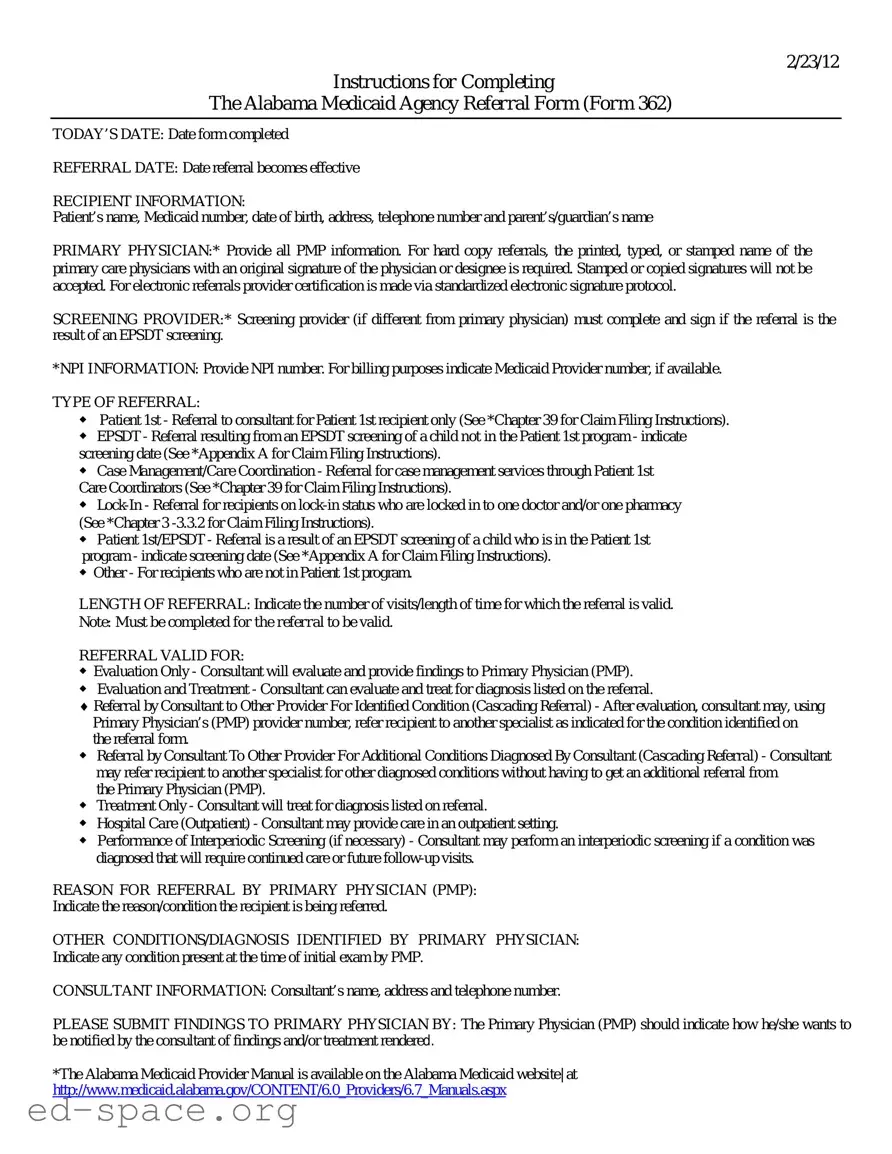
The Alabama Medicaid Referral Form, also known as Form 362, serves as a crucial tool for facilitating medical referrals within the Alabama Medicaid system. This form captures essential information to ensure that patients receive the appropriate care they need. It includes sections for the patient’s details, such as name, Medicaid number, date of birth, and contact information, as well as the primary physician's information, including their signature, which is mandatory for hard copy submissions. The form also allows for the identification of screening providers when referrals arise from EPSDT screenings. Various types of referrals are categorized on the form, ranging from Patient 1st referrals to case management services and lock-in status referrals. Each type has specific instructions and requirements, ensuring that the referral process is streamlined and effective. Additionally, the form requires details about the length of the referral, specifying the number of visits or duration for which the referral is valid. The consultant's information is also collected, including how they will communicate findings back to the primary physician. This structured approach not only facilitates better coordination of care but also helps in maintaining compliance with Medicaid guidelines.

2/23/12
Instructions for Completing
The Alabama Medicaid Agency Referral Form (Form 362)
TODAY’S DATE: Date form completed
REFERRAL DATE: Date referral becomes effective
RECIPIENT INFORMATION:
Patient’s name, Medicaid number, date of birth, address, telephone number and parent’s/guardian’s name
PRIMARY PHYSICIAN:* Provide all PMP information. For hard copy referrals, the printed, typed, or stamped name of the primary care physicians with an original signature of the physician or designee is required. Stamped or copied signatures will not be accepted. For electronic referrals provider certification is made via standardized electronic signature protocol.
SCREENING PROVIDER:* Screening provider (if different from primary physician) must complete and sign if the referral is the result of an EPSDT screening.
*NPI INFORMATION: Provide NPI number. For billing purposes indicate Medicaid Provider number, if available.
TYPE OF REFERRAL:
◆Patient 1st - Referral to consultant for Patient 1st recipient only (See *Chapter 39 for Claim Filing Instructions).
◆EPSDT - Referral resulting from an EPSDT screening of a child not in the Patient 1st program - indicate screening date (See *Appendix A for Claim Filing Instructions).
◆Case Management/Care Coordination - Referral for case management services through Patient 1st
Care Coordinators (See *Chapter 39 for Claim Filing Instructions).
◆
◆Patient 1st/EPSDT - Referral is a result of an EPSDT screening of a child who is in the Patient 1st program - indicate screening date (See *Appendix A for Claim Filing Instructions).
◆Other - For recipients who are not in Patient 1st program.
LENGTH OF REFERRAL: Indicate the number of visits/length of time for which the referral is valid.
Note: Must be completed for the referral to be valid.
REFERRAL VALID FOR:
◆Evaluation Only - Consultant will evaluate and provide findings to Primary Physician (PMP).
◆Evaluation and Treatment - Consultant can evaluate and treat for diagnosis listed on the referral.
♦Referral by Consultant to Other Provider For Identified Condition (Cascading Referral) - After evaluation, consultant may, using
Primary Physician’s (PMP) provider number, refer recipient to another specialist as indicated for the condition identified on the referral form.
◆Referral by Consultant To Other Provider For Additional Conditions Diagnosed By Consultant (Cascading Referral) - Consultant may refer recipient to another specialist for other diagnosed conditions without having to get an additional referral from
the Primary Physician (PMP).
◆Treatment Only - Consultant will treat for diagnosis listed on referral.
◆Hospital Care (Outpatient) - Consultant may provide care in an outpatient setting.
◆Performance of Interperiodic Screening (if necessary) - Consultant may perform an interperiodic screening if a condition was diagnosed that will require continued care or future
REASON FOR REFERRAL BY PRIMARY PHYSICIAN (PMP):
Indicate the reason/condition the recipient is being referred.
OTHER CONDITIONS/DIAGNOSIS IDENTIFIED BY PRIMARY PHYSICIAN:
Indicate any condition present at the time of initial exam by PMP.
CONSULTANT INFORMATION: Consultant’s name, address and telephone number.
PLEASE SUBMIT FINDINGS TO PRIMARY PHYSICIAN BY: The Primary Physician (PMP) should indicate how he/she wants to be notified by the consultant of findings and/or treatment rendered.
*The Alabama Medicaid Provider Manual is available on the Alabama Medicaid website| at http://www.medicaid.alabama.gov/CONTENT/6.0_Providers/6.7_Manuals.aspx

|
|
|
|
ALABAMA MEDICAID REFERRAL FORM |
|
|
Today’s Date _________________ |
|||||||||||||||
|
|
|
|
|
|
|
||||||||||||||||
|
|
|
|
|
Date Referral Begins _________________ |
|||||||||||||||||
|
|
|
|
|
Important NPI Information |
|||||||||||||||||
|
|
|
|
|
|
(If different from above) |
||||||||||||||||
MEDICAID RECIPIENT INFORMATION |
See Instructions |
|
|
|
|
|
|
|
|
|||||||||||||
|
|
|
|
|
|
|
|
|
|
|
|
|
|
|
|
|
||||||
Recipient Name |
|
|
|
|
Recipient # |
|
|
|
Recipient DOB |
|||||||||||||
|
|
|
|
|
|
|
|
|
|
|
|
|
|
|
|
|
|
|
|
|
|
|
Address |
|
|
|
|
|
|
|
Telephone # with Area Code |
||||||||||||||
|
|
|
|
|
|
|
|
|
|
|
|
|
|
|
|
|
|
|
|
|||
|
|
|
|
|
|
|
|
|
|
Name of Parent/Guardian |
||||||||||||
|
|
|
|
|
|
|
|
|
|
|
|
|
|
|
|
|
|
|
|
|
|
|
PRIMARY PHYSICIAN (PMP) INFORMATION |
|
|
|
|
SCREENING PROVIDER IF DIFFERENT FROM PRIMARY PHYSICIAN (PMP) |
|||||||||||||||||
Name |
|
|
|
|
|
|
|
Name |
|
|
|
|
|
|
|
|
||||||
|
|
|
|
|
|
|
|
|
|
|
|
|
|
|
|
|
|
|
|
|
|
|
Address |
|
|
|
|
|
|
|
Address |
|
|
|
|
|
|
|
|
||||||
|
|
|
|
|
|
|
|
|
|
|
|
|
|
|
|
|
|
|
|
|||
Telephone # with Area Code |
|
|
|
|
|
Telephone # with Area Code |
|
|
||||||||||||||
Fax # with Area Code |
|
|
|
|
|
Fax # with Area Code |
|
|
|
|
|
|
|
|
|
|||||||
|
|
|
|
|
|
|
|
|
|
|
|
|
|
|
|
|
||||||
NPI # |
|
|
|
|
|
|
|
|
NPI # |
|
|
|
|
|
|
|
|
|
||||
Medicaid Provider # |
|
|
|
|
|
Medicaid Provider # |
|
|
|
|
|
|
|
|
|
|||||||
Signature |
|
|
|
|
|
|
|
Signature |
|
|
|
|
|
|
|
|
||||||
|
|
|
|
|
|
|
|
|
|
|
|
|
|
|
||||||||
|
|
|
|
|
|
|
|
|
|
|
|
|
|
|
|
|
|
|
|
|
|
|
TYPE OF REFERRAL |
|
|
|
|
|
|
|
|
|
|
|
|
|
|
|
|
|
|||||
|
|
|
|
|
|
|
|
|
|
|
|
|
|
|
|
|
|
|
|
|
|
|
Patient 1st |
|
|
|
|
|
|
|
|
|
|
|
|
|
|
|
|
||||||
EPSDT |
Screening Date ______________________ |
|
|
|
|
Other |
|
|
|
|
|
|
|
|
||||||||
Case Management/Care Coordination |
|
|
|
|
|
|
|
|
|
|
|
|
|
|
|
|
|
|||||
LENGTH OF REFERRAL |
|
|
|
|
|
|
|
|
|
|
|
|
|
|
|
|
|
|||||
Referral Valid for __________ month(s) or __________ visit(s) from date referral begins. |
|
|
|
|
|
|
|
|
||||||||||||||
|
|
|
|
|
|
|
|
|
|
|
|
|
|
|
|
|
|
|
|
|
|
|
REFERRAL VALID FOR |
|
|
|
|
|
|
|
|
|
|
|
|
|
|
|
|
|
|||||
|
|
|
|
|
|
|
|
|
|
|
|
|
|
|
|
|
|
|
|
|
|
|
Evaluation Only |
|
|
|
|
Treatment Only |
|
|
|
|
|
|
|
|
|||||||||
Evaluation and Treatment |
|
|
|
|
Hospital Care (Outpatient) |
|||||||||||||||||
Referral by consultant to other provider for identified |
|
|
|
|
Performance of Interperiodic Screening (if necessary) |
|||||||||||||||||
condition (cascading referral)
Referral by consultant to other provider for additional conditions diagnosed by consultant (EPSDT Only)
Reason for referral by PMP |
Other conditions/diagnoses identified by PMP |
CONSULTANT INFORMATION
Consultant Name
Address
Consultant Telephone # with Area Code
Note: Please submit written report of findings including the date of examination/service, diagnosis, and consultant signature to Primary Physician (PMP).
Findings should be submitted to Primary Physician (PMP) by
|
Fax |
In addition, please telephone |
Form 362 |
Alabama Medicaid Agency |
Rev. |
www.medicaid.alabama.gov |
| Fact Name | Description |
|---|---|
| Form Title | The official name of the form is the Alabama Medicaid Agency Referral Form, also known as Form 362. |
| Governing Laws | This form is governed by Alabama Medicaid regulations and policies outlined in the Alabama Medicaid Provider Manual. |
| Recipient Information | Essential details such as the patient's name, Medicaid number, date of birth, address, and contact information must be provided. |
| Primary Physician Requirements | The primary physician's information must be included, and an original signature is required for hard copy referrals. |
| Referral Types | Multiple types of referrals exist, including Patient 1st, EPSDT, and Case Management, each serving different purposes. |
| Length of Referral | The form requires an indication of the number of visits or duration for which the referral is valid. |
Filling out the Alabama Medicaid Referral Form is an important step in ensuring that patients receive the necessary care. Once the form is completed, it will be submitted to the appropriate medical professionals for processing. This form requires specific information about the patient, the referring physician, and the nature of the referral. Follow the steps below to accurately complete the form.
What is the purpose of the Alabama Medicaid Referral form?
The Alabama Medicaid Referral form is designed to facilitate communication between primary care physicians and specialists. It ensures that patients receive the necessary evaluations and treatments based on their medical needs. By using this form, healthcare providers can streamline the referral process, making it easier for patients to access specialized care.
What information is required to complete the referral form?
To complete the referral form, you will need to provide several key pieces of information. This includes the patient's name, Medicaid number, date of birth, and contact information. You must also include details about the primary physician, such as their name, signature, and NPI number. If applicable, information about the screening provider and the type of referral must be specified. Additionally, the form requires the reason for the referral and any other conditions identified by the primary physician.
How long is the referral valid?
The referral is valid for a specified length of time, which can be indicated in months or the number of visits. It is essential to complete this section for the referral to be considered valid. The healthcare provider must ensure that the duration aligns with the patient's needs and the nature of the referral.
What are the different types of referrals that can be made?
There are several types of referrals that can be indicated on the form. These include Patient 1st referrals, EPSDT referrals, case management or care coordination referrals, and lock-in referrals. Each type serves a specific purpose, such as referring a patient for specialized treatment or for evaluation only. Selecting the appropriate type helps ensure that the patient receives the right level of care.
How should findings from the consultant be communicated to the primary physician?
The consultant must submit their findings to the primary physician in a timely manner. The referral form allows the primary physician to specify their preferred method of communication, which can include mail, email, or fax. Clear communication of findings is crucial for ongoing patient care and treatment planning.
Incomplete Recipient Information: Failing to provide all necessary details about the patient, such as the name, Medicaid number, date of birth, address, and telephone number, can lead to delays or denials in processing the referral.
Missing Primary Physician Signature: If the primary physician's signature is not included, or if a stamped or copied signature is used instead of an original, the referral will not be accepted. This is crucial for both hard copy and electronic submissions.
Incorrect Type of Referral: Selecting the wrong type of referral can result in miscommunication. It is essential to choose the correct category, such as Patient 1st, EPSDT, or Case Management, to ensure appropriate processing.
Omitting Length of Referral: Not indicating the number of visits or the duration for which the referral is valid can invalidate the referral. This information is critical for both the consultant and the primary physician.
Inadequate Reason for Referral: Providing vague or incomplete reasons for the referral can hinder proper evaluation and treatment. Clearly stating the condition or reason is vital for the consultant's understanding.
Consultant Information Errors: Failing to include accurate details for the consultant, such as their name, address, and telephone number, can lead to communication issues. This information is necessary for the primary physician to receive findings and treatment updates.
The Alabama Medicaid Referral form is a critical document used to facilitate patient referrals within the Medicaid system. Several other forms and documents often accompany this referral form to ensure comprehensive care and proper billing. Below is a list of these documents along with brief descriptions of each.
These documents play a vital role in the Medicaid process, ensuring that patients receive the necessary care while maintaining compliance with Medicaid regulations. Properly completing and submitting these forms can streamline the referral process and improve patient outcomes.
The Alabama Medicaid Referral form shares similarities with several other important documents used in healthcare settings. Here are five documents that are comparable:
Filling out the Alabama Medicaid Referral form can seem daunting, but with a clear understanding of what to do and what to avoid, you can streamline the process. Here are some essential guidelines to help you navigate the form effectively.
By following these guidelines, you can ensure that the Alabama Medicaid Referral form is completed correctly, facilitating timely care for the recipient. Remember, clarity and accuracy are key to a successful referral process.
Here are ten common misconceptions about the Alabama Medicaid Referral Form, along with explanations to clarify each point:
When filling out and using the Alabama Medicaid Referral form, it is essential to adhere to specific guidelines to ensure proper processing and compliance. Here are four key takeaways: