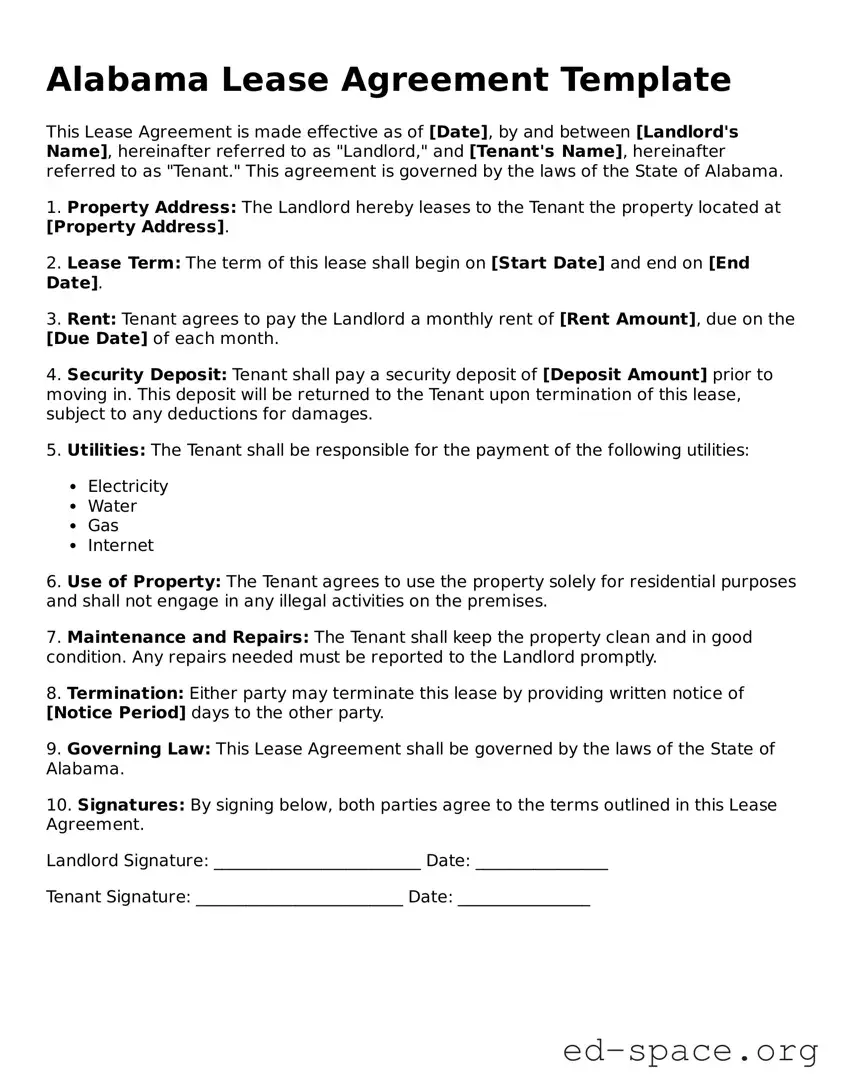
When renting a property in Alabama, having a clear and comprehensive lease agreement is essential for both landlords and tenants. This document serves as the foundation of the rental relationship, outlining the rights and responsibilities of each party. Key elements typically included in the Alabama Lease Agreement form are the duration of the lease, the amount of rent due, and the payment schedule. Additionally, it specifies security deposit requirements, maintenance responsibilities, and rules regarding pets or smoking on the premises. Understanding these components helps ensure that both parties are on the same page, reducing the potential for misunderstandings and disputes down the line. Whether you are a seasoned landlord or a first-time renter, familiarizing yourself with the nuances of the Alabama Lease Agreement can lead to a smoother, more positive renting experience.
Alabama Lease Agreement Template
This Lease Agreement is made effective as of [Date], by and between [Landlord's Name], hereinafter referred to as "Landlord," and [Tenant's Name], hereinafter referred to as "Tenant." This agreement is governed by the laws of the State of Alabama.
1. Property Address: The Landlord hereby leases to the Tenant the property located at [Property Address].
2. Lease Term: The term of this lease shall begin on [Start Date] and end on [End Date].
3. Rent: Tenant agrees to pay the Landlord a monthly rent of [Rent Amount], due on the [Due Date] of each month.
4. Security Deposit: Tenant shall pay a security deposit of [Deposit Amount] prior to moving in. This deposit will be returned to the Tenant upon termination of this lease, subject to any deductions for damages.
5. Utilities: The Tenant shall be responsible for the payment of the following utilities:
6. Use of Property: The Tenant agrees to use the property solely for residential purposes and shall not engage in any illegal activities on the premises.
7. Maintenance and Repairs: The Tenant shall keep the property clean and in good condition. Any repairs needed must be reported to the Landlord promptly.
8. Termination: Either party may terminate this lease by providing written notice of [Notice Period] days to the other party.
9. Governing Law: This Lease Agreement shall be governed by the laws of the State of Alabama.
10. Signatures: By signing below, both parties agree to the terms outlined in this Lease Agreement.
Landlord Signature: _________________________ Date: ________________
Tenant Signature: _________________________ Date: ________________
| Fact Name | Description |
|---|---|
| Governing Law | The Alabama Lease Agreement is governed by the Alabama Code, specifically Title 35, Chapter 9. |
| Parties Involved | The lease agreement typically involves a landlord and a tenant, both of whom must be clearly identified in the document. |
| Property Description | A detailed description of the rental property is required, including the address and any specific features. |
| Lease Duration | The lease must specify the duration of the tenancy, whether it is month-to-month or for a fixed term. |
| Rent Payment Terms | The agreement should outline the amount of rent, due dates, and acceptable payment methods. |
| Security Deposit | Details about the security deposit, including the amount and conditions for its return, must be included. |
| Maintenance Responsibilities | The lease should clarify the responsibilities of both the landlord and tenant regarding property maintenance. |
| Termination Clause | The agreement must include terms for terminating the lease, including notice periods and acceptable reasons for termination. |
Filling out the Alabama Lease Agreement form is an essential step in establishing a rental relationship between a landlord and a tenant. This document outlines the terms and conditions that both parties must adhere to during the lease period. Following the steps below will help ensure that all necessary information is accurately recorded.
After completing the form, ensure that both parties retain a copy for their records. This will help prevent misunderstandings and provide clarity regarding the terms of the lease.
What is an Alabama Lease Agreement form?
The Alabama Lease Agreement form is a legal document that outlines the terms and conditions under which a landlord rents property to a tenant. This form typically includes important details such as the duration of the lease, the amount of rent, payment due dates, and responsibilities of both the landlord and the tenant. It serves to protect the rights of both parties and provides a clear framework for the rental relationship.
What should be included in an Alabama Lease Agreement?
An effective Alabama Lease Agreement should contain several key elements. These include the names of the parties involved, the property address, the lease term (whether it is month-to-month or for a fixed duration), the rental amount and payment schedule, and security deposit details. Additionally, it should outline the responsibilities for maintenance and repairs, rules regarding pets, and procedures for terminating the lease. Including these elements helps to prevent misunderstandings and disputes in the future.
How can a tenant terminate an Alabama Lease Agreement?
To terminate an Alabama Lease Agreement, a tenant must follow the specific procedures outlined in the lease. Generally, for a month-to-month lease, a tenant is required to provide a written notice to the landlord, typically 30 days in advance. For a fixed-term lease, the tenant may need to fulfill the lease until its expiration unless there are valid reasons for early termination, such as a breach of contract by the landlord or certain legal protections. It is crucial for tenants to review their lease and understand their rights and obligations regarding termination.
What happens if a tenant does not pay rent on time?
If a tenant fails to pay rent on time, the landlord may have the right to impose late fees as specified in the lease agreement. After a certain period, which is usually outlined in the lease, the landlord may initiate eviction proceedings if the rent remains unpaid. However, tenants often have a grace period during which they can make the payment without penalty. It is advisable for tenants to communicate with their landlord if they are experiencing financial difficulties, as many landlords are willing to work out a payment plan or other arrangements.
Incomplete Information: One of the most common mistakes is failing to fill in all required fields. This can include the names of the landlord and tenant, property address, and lease term. Leaving any section blank can lead to confusion or disputes later on.
Incorrect Dates: Entering the wrong dates for the lease term is another frequent error. Ensure that the start and end dates are accurate to avoid misunderstandings about when the lease begins and ends.
Not Specifying Rent Amount: Some people forget to clearly state the monthly rent amount. This should be explicitly mentioned to prevent any disputes regarding payment expectations.
Ignoring Security Deposit Details: It's essential to outline the amount of the security deposit and the conditions for its return. Failing to do so can lead to disagreements when the lease ends.
Overlooking Maintenance Responsibilities: The lease should specify who is responsible for maintenance and repairs. Not addressing this can result in confusion about who handles issues that arise during the lease period.
Missing Signatures: Both the landlord and tenant must sign the lease for it to be valid. Forgetting to obtain signatures can render the agreement unenforceable.
Failing to Read the Entire Agreement: Rushing through the lease without reading all terms can lead to unexpected obligations. Take the time to understand every clause before signing.
When entering into a lease agreement in Alabama, it is helpful to have certain documents on hand. These documents can clarify responsibilities, protect rights, and ensure a smooth leasing process. Below are some commonly used forms that complement the Alabama Lease Agreement.
Having these documents can help ensure that both landlords and tenants understand their rights and obligations. It promotes a positive rental experience and can prevent misunderstandings down the line.
When filling out the Alabama Lease Agreement form, it’s crucial to approach the task with care. Here are five important dos and don’ts to consider:
By following these guidelines, you can help ensure a smoother leasing process. It's essential to be diligent and informed when entering into any rental agreement.
When it comes to the Alabama Lease Agreement form, several misconceptions can lead to confusion for both landlords and tenants. Here are six common misunderstandings:
Understanding these misconceptions can help both landlords and tenants navigate their rights and responsibilities more effectively. Clear communication and knowledge of the law are essential for a positive renting experience.
When filling out and using the Alabama Lease Agreement form, it is essential to keep several key points in mind to ensure a smooth rental process.
By focusing on these elements, both landlords and tenants can create a clear and enforceable lease agreement that protects their interests.