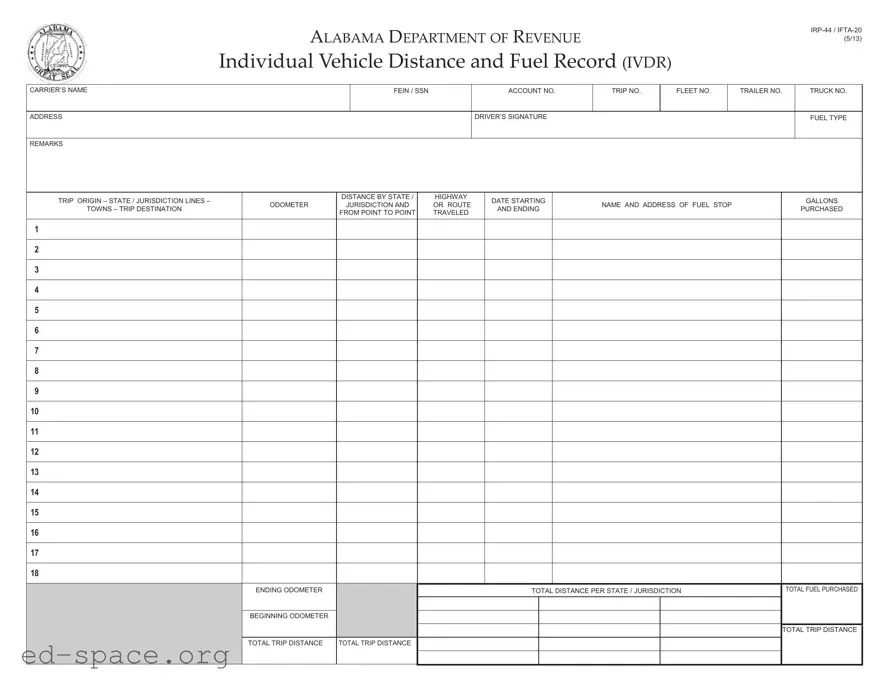
The Alabama IRP 44 form, formally known as the Individual Vehicle Distance and Fuel Record (IVDR), serves as a vital tool for commercial carriers operating within and beyond state lines. This form captures essential details regarding each trip taken by a vehicle, including the carrier's name, address, and identification numbers. It provides a structured format for recording crucial data such as trip origin, destination, distances traveled by state, and fuel purchases. Each entry includes specific odometer readings and the type of fuel used, ensuring accurate tracking of mileage and fuel consumption. Additionally, the IRP 44 form requires the driver's signature, affirming the accuracy of the information provided. By compiling this data, carriers can comply with regulatory requirements and facilitate the calculation of taxes owed under the International Fuel Tax Agreement (IFTA) and the International Registration Plan (IRP). Understanding the components and proper completion of the IRP 44 form is essential for maintaining compliance and ensuring smooth operations within the transportation industry.
ALABAMA DEPARTMENT OF REVENUE
Individual Vehicle Distance and Fuel Record (IVDR)
CARRIER’S NAME
ADDRESS
REMARKS
FEIN / SSN |
ACCOUNT NO. |
TRIP NO. |
FLEET NO. |
TRAILER NO. |
TRUCK NO. |
|
DRIVER’S SIGNATURE |
|
|
|
FUEL TYPE |
|
|
|
|
||
|
|
|
|
|
|
TRIP ORIGIN – STATE / JURISDICTION LINES – |
|
DISTANCE BY STATE / |
HIGHWAY |
DATE STARTING |
|
GALLONS |
|
ODOMETER |
JURISDICTION AND |
OR ROUTE |
NAME AND ADDRESS OF FUEL STOP |
||||
TOWNS – TRIP DESTINATION |
AND ENDING |
PURCHASED |
|||||
|
FROM POINT TO POINT |
TRAVELED |
|
||||
|
|
|
|
|
1
2
3
4
5
6
7
8
9
10
11
12
13
14
15
16
17
18
|
ENDING ODOMETER |
|
TOTAL DISTANCE PER STATE / JURISDICTION |
TOTAL FUEL PURCHASED |
||
|
|
|
|
|
|
|
|
|
|
|
|
|
|
|
BEGINNING ODOMETER |
|
|
|
|
|
|
|
|
|
|
|
|
|
|
|
|
|
|
TOTAL TRIP DISTANCE |
|
|
|
|
|
|
|
|
TOTAL TRIP DISTANCE |
TOTAL TRIP DISTANCE |
|
|
|
|
|
|
|
|
|
|
|
|
|
|
|
|
|
|

Sample Individual Vehicle Distance and Fuel Record (IVDR) With Instructions
|
|
|
|
ALABAMA DEPARTMENT OF REVENUE |
|
|
|
||||||
|
|
|
|
|
|
|
(6/95) |
||||||
|
|
|
|
|
|
|
|
|
|
|
|
|
|
|
1 |
3 Individual Vehicle Distance and Fuel Record (IVD4R) |
5 6 |
7 |
8 |
|
|||||||
CARRIER’S NAME |
|
|
2 |
FEIN / SSN |
|
|
ACCOUNT NO. |
TRIP NO. |
FLEET NO. |
TRAILER NO. |
TRUCK NO. |
||
Jones Trucking Co. |
|
|
|
|
9999 |
134 |
01 |
T477 |
|
156 |
|||
ADDRESS |
|
|
|
|
10 |
DRIVER’S SIGNATURE |
BOB SMITH |
|
|
FUEL TYPE |
|||
1415 Main Street, Birmingham, AL 36109 |
|
|
|
|
|
Diesel |
|||||||
REMARKS |
|
|
|
|
|
|
|
|
|
|
|
|
|
5/6 pickup load in B'ham |
|
|
5/9 deliver to Jackson & load |
|
|
|
|
||||||
5/7 deliver to Jackson & load |
|
5/9 return to B'ham |
|
16 |
|
17 |
18 |
11 |
|||||
9 5/8 deliver to Dallas & load |
|
14 |
15 |
|
|
|
|
|
|||||
|
TRIP ORIGIN – STATE / JURISDICTION LINES – |
|
|
DISTANCE BY STATE / |
HIGHWAY |
|
DATE STARTING |
|
|
|
|
GALLONS |
|
12 |
|
ODOMETER |
JURISDICTION AND |
OR ROUTE |
|
NAME AND ADDRESS OF FUEL STOP |
|
|
|||||
TOWNS – TRIP DESTINATION |
|
|
|
AND ENDING |
|
|
PURCHASED |
||||||
|
|
|
FROM POINT TO POINT |
TRAVELED |
|
|
|
|
|
||||
|
|
|
|
|
|
|
|
|
|
|
|||
1 |
Birmingham, AL |
13 |
45,997 |
|
|
|
|
|
|
||||
2 |
AL state line |
46,129 |
132 |
|
|
|
|
|
|
||||
|
|
|
|
|
|
|
|||||||
3 |
Jackson, MS |
|
46,241 |
112 |
|
Browns Truck Stop |
|
|
120 |
||||
4 |
MS state line |
|
46,285 |
44 |
|
Jackson, MS |
|
|
|
|
|||
5 |
LA state line |
|
46,471 |
186 |
|
|
|
|
|
|
|||
6 |
Dallas, TX |
|
46,634 |
163 |
|
|
|
|
100 |
||||
7 |
LA state line |
|
46,797 |
163 |
|
Dallas, TX |
|
|
|
|
|||
8 |
MS state line |
|
46,983 |
186 |
|
|
|
|
|
|
|||
9 |
Jackson, MS |
|
47,027 |
44 |
|
|
|
|
|
|
|||
10 |
AL state line |
|
47,139 |
112 |
|
|
|
|
|
|
|||
11 |
Birmingham, AL |
|
47,271 |
132 |
|
|
|
|
80 |
||||
12 |
|
|
|
|
|
|
|
|
Birmingham, AL |
|
|
|
|
13 |
|
|
|
|
|
|
|
|
|
|
|
|
|
14 |
|
|
|
|
|
|
|
|
|
|
|
|
|
15 |
|
|
|
|
|
|
|
|
|
|
|
|
|
16 |
|
|
|
|
|
|
|
|
|
|
|
|
|
17 |
|
|
|
|
|
|
|
|
|
|
|
|
|
18 |
20 |
19 |
|
|
|
23 |
|
|
|
|
24 |
|
|
|
|
|
|
|
|
|
|
|
|
|
|
|
|
|
|
ENDING ODOMETER |
|
|
|
TOTAL DISTANCE PER STATE / JURISDICTION |
|
TOTAL FUEL PURCHASED |
|||||
|
|
|
47,271 |
|
AL - 264 |
|
|
|
|
300 |
|||
|
|
|
|
|
|
MS - 312 |
|
|
|
|
|||
|
|
BEGINNING ODOMETER |
|
|
|
|
|
|
|||||
|
|
|
45,997 |
|
LA - 372 |
|
|
|
TOTAL TRIP DISTANCE |
||||
|
|
TOTAL TRIP DISTANCE |
TOTAL TRIP DIISTANCE |
TX - 326 |
|
|
|
|
1,274 |
||||
|
|
|
|
1,274 |
1,274 |
|
|
|
|
|
|
|
|
|
|
|
|
|
|
|
|
|
|
|
|
||
|
|
21 |
|
22 |
|
|
|
|
|
|
25 |
|
|
Instructions
1.Carrier’s name.
2.Federal ID number or social security number.
3 Carrier’s address.
4.IFTA/IRP account number.
5.Trip number.
6.Fleet number.
7.Trailer unit number.
8.Truck unit number.
9.Comments or additional information.
10.Driver’s signature.
11.Type of fuel used in the vehicle, i.e. diesel, propane, gas.
12.Trip origin, state/jurisdiction lines crossed, loading/unloading points, trip destination.
13.Odometer readings for each entry in No. 12.
14.Mileage between each entry in No. 12.
15.Road, highway, or interstate traveled.
16.Date trip started, date trip ended, and in between.
17.Vendor name and address where fuel pur- chased.
18.Number of gallons purchased.
19.Ending odometer reading for trip.
20.Beginning odometer reading for trip.
21.Difference between No. 19 and No. 20 equals total trip miles.
22.Add miles in No. 14 – Miles By State/ Jurisdiction And From Point To Point. (This should match the miles you have in No. 21.)
23.Add miles in No. 14 by state and enter total for each state.
24.Add gallons purchased in No. 18 and enter total here.
25.Add all miles for each state/jurisdiction in No. 23 and enter total here. (This should match the miles in No. 21 and No. 22.)
| Fact Name | Description |
|---|---|
| Form Purpose | The Alabama IRP 44 form, also known as the Individual Vehicle Distance and Fuel Record (IVDR), is used to track fuel purchases and mileage for commercial vehicles operating under the International Registration Plan (IRP) and the International Fuel Tax Agreement (IFTA). |
| Required Information | Key details must be provided, including the carrier’s name, address, federal ID or social security number, trip number, fuel type, and odometer readings. This ensures accurate reporting and compliance with state regulations. |
| Governing Laws | The Alabama IRP 44 form is governed by the International Registration Plan and the International Fuel Tax Agreement, which are designed to simplify the reporting of fuel use and vehicle registration for interstate commercial vehicles. |
| Submission Frequency | Carriers are typically required to submit the IRP 44 form quarterly, aligning with the reporting periods established by the IFTA, ensuring that fuel taxes are accurately calculated and paid to the appropriate jurisdictions. |
Filling out the Alabama IRP 44 form is a straightforward process that requires accurate information about vehicle distances and fuel purchases. Completing this form correctly is essential for maintaining compliance with state regulations.
What is the Alabama IRP 44 form?
The Alabama IRP 44 form, also known as the Individual Vehicle Distance and Fuel Record (IVDR), is a document used by carriers to record the distance traveled and fuel consumed by their vehicles during specific trips. This form is essential for compliance with the International Registration Plan (IRP) and the International Fuel Tax Agreement (IFTA), ensuring that carriers accurately report their mileage and fuel usage across state lines.
Who needs to complete the IRP 44 form?
Any carrier operating commercial vehicles that travel through multiple jurisdictions must complete the IRP 44 form. This includes trucking companies, freight carriers, and independent operators who are subject to the regulations of the IRP and IFTA. Completing this form helps ensure compliance with tax obligations related to fuel consumption and distance traveled.
What information is required on the IRP 44 form?
The IRP 44 form requires several key pieces of information. Carriers must provide their name, address, federal ID number or social security number, and IFTA/IRP account number. Additional details include trip numbers, fleet numbers, trailer and truck unit numbers, driver’s signature, fuel type, trip origin, and the jurisdiction lines crossed. Odometer readings, distances traveled by state, and fuel purchases must also be documented.
How is the distance traveled recorded on the IRP 44 form?
Distance traveled is recorded by entering odometer readings at various points during the trip. Carriers must log the starting and ending odometer readings, as well as the mileage between each jurisdiction or stop. This information is crucial for calculating total trip distance and for reporting to state authorities.
What should be done if there is an error on the IRP 44 form?
If an error is discovered on the IRP 44 form, it is important to correct it as soon as possible. Carriers should make the necessary adjustments directly on the form, ensuring that all figures remain accurate. If the form has already been submitted, it may be advisable to contact the relevant state authority to inform them of the correction and seek guidance on how to proceed.
How often must the IRP 44 form be submitted?
The frequency of submitting the IRP 44 form depends on the carrier's reporting schedule. Typically, carriers must submit this form quarterly or annually, depending on their specific circumstances and the regulations of the states in which they operate. It is crucial to stay informed about the reporting requirements to avoid penalties.
What happens if the IRP 44 form is not completed correctly?
Failure to complete the IRP 44 form correctly can result in various consequences, including fines, penalties, and potential audits by state authorities. Inaccurate reporting can lead to issues with fuel tax compliance and may affect a carrier's ability to operate legally across state lines. It is essential to ensure that all information is accurate and complete before submission.
Where can I obtain the Alabama IRP 44 form?
The Alabama IRP 44 form can be obtained from the Alabama Department of Revenue's website or by visiting their local office. Additionally, many trucking associations and industry groups may provide resources or assistance in accessing the form and understanding how to complete it correctly.
Incomplete Information: One common mistake is failing to fill out all required fields. Every section of the Alabama IRP 44 form is important. Missing information, such as the carrier's name or the trip number, can lead to delays or rejections.
Incorrect Odometer Readings: Providing inaccurate odometer readings can cause issues. Ensure that the beginning and ending odometer readings are correct. Any discrepancies may raise questions during audits or inspections.
Fuel Purchase Details: Neglecting to include accurate details about fuel purchases is another frequent error. It’s essential to list the name and address of the fuel stop, along with the number of gallons purchased. This information is crucial for calculating fuel tax obligations.
Failure to Sign: Not signing the form is a simple yet critical mistake. The driver's signature is required to validate the document. Without it, the form may be deemed invalid, leading to compliance issues.
The Alabama IRP 44 form is an essential document for tracking vehicle distance and fuel usage. It is often accompanied by other forms and documents that help streamline the reporting process for interstate travel. Below is a list of some commonly used forms that complement the IRP 44.
Each of these documents plays a role in ensuring accurate reporting and compliance with regulations. Keeping them organized and accessible will help facilitate a smoother process for vehicle registration and tax reporting.
The Alabama IRP 44 form serves a crucial role in tracking vehicle distance and fuel records for interstate travel. Similar documents exist that fulfill comparable functions in different contexts. Here’s a look at seven documents that share similarities with the Alabama IRP 44 form:
Understanding these documents can enhance compliance and operational efficiency for drivers and fleet operators alike. Each plays a unique role while sharing common elements with the Alabama IRP 44 form.
When filling out the Alabama IRP 44 form, it’s important to follow guidelines to ensure accuracy and compliance. Here’s a list of things to do and avoid:
Understanding the Alabama IRP 44 form is crucial for compliance and efficiency in record-keeping. Here are seven common misconceptions about this form:
Clearing up these misconceptions can help ensure compliance and streamline operations. Make sure to stay informed and keep accurate records.
When filling out the Alabama IRP 44 form, it’s essential to pay attention to detail. Here are some key takeaways to ensure accuracy and compliance:
By following these guidelines, users can effectively complete the Alabama IRP 44 form, leading to smoother operations and compliance with state regulations.