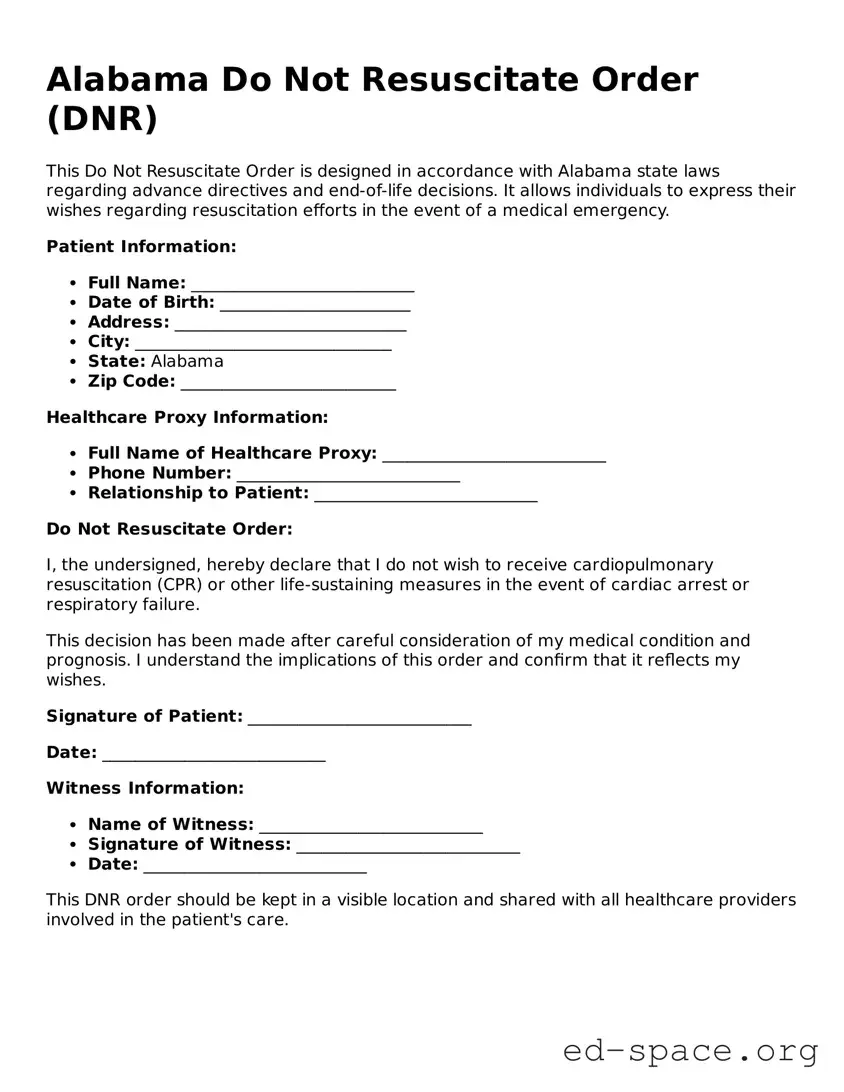
In Alabama, the Do Not Resuscitate (DNR) Order form plays a crucial role in ensuring that individuals receive the medical care they desire at the end of life. This form allows patients to express their wishes regarding resuscitation efforts in the event of cardiac or respiratory arrest. It is designed for individuals who wish to forgo life-saving measures, such as CPR or advanced cardiac life support, in favor of a more peaceful passing. The form must be completed by a licensed physician and signed by the patient or their legal representative. It is essential that the DNR order is easily accessible to healthcare providers, as it guides their actions during critical moments. Additionally, understanding the implications of this document can help families navigate difficult decisions during emotionally charged times. By clarifying a patient’s preferences, the DNR Order form fosters respect for individual autonomy and ensures that medical interventions align with personal values and wishes.
Alabama Do Not Resuscitate Order (DNR)
This Do Not Resuscitate Order is designed in accordance with Alabama state laws regarding advance directives and end-of-life decisions. It allows individuals to express their wishes regarding resuscitation efforts in the event of a medical emergency.
Patient Information:
Healthcare Proxy Information:
Do Not Resuscitate Order:
I, the undersigned, hereby declare that I do not wish to receive cardiopulmonary resuscitation (CPR) or other life-sustaining measures in the event of cardiac arrest or respiratory failure.
This decision has been made after careful consideration of my medical condition and prognosis. I understand the implications of this order and confirm that it reflects my wishes.
Signature of Patient: ___________________________
Date: ___________________________
Witness Information:
This DNR order should be kept in a visible location and shared with all healthcare providers involved in the patient's care.
| Fact Name | Description |
|---|---|
| Legal Authority | The Alabama Do Not Resuscitate (DNR) Order is governed by Alabama Code § 22-8A-1 et seq. |
| Purpose | The DNR Order allows individuals to refuse resuscitation in the event of cardiac or respiratory arrest. |
| Eligibility | Any adult, or a minor with parental consent, can complete a DNR Order in Alabama. |
| Form Requirements | The DNR Order must be signed by a physician and the patient or their authorized representative. |
| Recognition | Healthcare providers in Alabama are required to honor valid DNR Orders in emergency situations. |
Filling out the Alabama Do Not Resuscitate Order form is an important step for individuals who wish to express their preferences regarding medical treatment in emergency situations. This document helps ensure that your wishes are respected by healthcare providers. Follow these steps to complete the form accurately.
Once you have completed the form, it is essential to communicate your wishes to your family and healthcare team. This ensures everyone is aware of your preferences and can act accordingly in an emergency situation.
What is a Do Not Resuscitate (DNR) Order in Alabama?
A Do Not Resuscitate Order is a legal document that tells medical personnel not to perform cardiopulmonary resuscitation (CPR) if a person's heart stops beating or if they stop breathing. In Alabama, this order is recognized and must be followed by healthcare providers in emergency situations.
Who can request a DNR Order in Alabama?
In Alabama, a DNR Order can be requested by a patient who is at least 18 years old, or by a legally authorized representative if the patient is unable to make their own healthcare decisions. This may include a spouse, adult child, or legal guardian.
How do I obtain a DNR Order in Alabama?
To obtain a DNR Order, you need to fill out the official Alabama DNR Order form. This form can usually be acquired from hospitals, healthcare providers, or online. After completing the form, you should have it signed by a physician to make it valid.
What should I do with my DNR Order after it is completed?
Once your DNR Order is signed, keep it in a safe but accessible place. It’s important to inform your family members and healthcare providers about your DNR Order. You may also want to carry a copy with you, especially if you go to the hospital or have other medical appointments.
Can I change or revoke my DNR Order?
Yes, you can change or revoke your DNR Order at any time. To do this, simply create a new DNR Order form and indicate your current wishes. Make sure to inform your healthcare providers and family about the changes to ensure your latest wishes are respected.
Will a DNR Order affect my medical care?
A DNR Order specifically applies to resuscitation efforts. It does not mean that you will receive less medical care. Healthcare providers will continue to provide all other necessary treatments and care to manage your condition.
Is a DNR Order the same as a living will?
No, a DNR Order is not the same as a living will. A living will outlines your preferences for medical treatment in various situations, while a DNR Order specifically addresses your wishes regarding resuscitation. You can have both documents to ensure your healthcare preferences are clear.
What happens if I don’t have a DNR Order?
If you do not have a DNR Order and experience a medical emergency where your heart stops or you stop breathing, medical personnel are required to perform resuscitation efforts, including CPR. If you wish to avoid this, it’s important to create and communicate your DNR wishes.
Are there any costs associated with obtaining a DNR Order?
There are generally no costs for obtaining a DNR Order form itself. However, if you need to consult with a healthcare provider to discuss your wishes or to have the form signed, there may be associated medical fees. Always check with your provider about any potential costs.
Failing to provide all required signatures. The form must be signed by the patient, a witness, and a physician. Missing any of these can render the document invalid.
Not including the patient's full legal name. Ensure that the name matches the identification documents to avoid confusion.
Using outdated versions of the form. Always check for the most current version to ensure compliance with Alabama state regulations.
Neglecting to discuss the order with family members. Open communication can help prevent misunderstandings and ensure that everyone is on the same page.
Overlooking the need for periodic reviews. A Do Not Resuscitate Order should be reviewed regularly to ensure it still reflects the patient’s wishes.
Not providing copies to relevant parties. Distributing copies to healthcare providers and family members is essential for ensuring the order is honored.
Misunderstanding the implications of the order. It is important to fully understand what a Do Not Resuscitate Order entails and the impact it has on medical care.
When considering end-of-life decisions, individuals in Alabama may use various forms and documents alongside the Do Not Resuscitate (DNR) Order. Each of these documents serves a specific purpose and can help ensure that a person's healthcare wishes are respected.
Each of these documents plays a crucial role in healthcare planning. They help individuals communicate their wishes clearly, ensuring that their preferences are honored during critical times.
The Do Not Resuscitate (DNR) Order form is an important document that allows individuals to express their wishes regarding medical treatment in the event of a life-threatening situation. It’s not the only document that serves a similar purpose. Here are six other documents that share similarities with a DNR Order:
Understanding these documents can empower individuals to make informed decisions about their healthcare preferences. Each serves a unique role, but all aim to ensure that a person's wishes are respected during critical medical situations.
When filling out the Alabama Do Not Resuscitate Order form, it’s important to follow certain guidelines to ensure that your wishes are clearly communicated. Here are some things you should and shouldn't do:
Understanding the Alabama Do Not Resuscitate (DNR) Order form is essential for making informed healthcare decisions. Here are some common misconceptions about the form:
Clarifying these misconceptions can help individuals make informed decisions about their healthcare preferences. Always consult with a healthcare professional when considering a DNR order.
Filling out and utilizing the Alabama Do Not Resuscitate (DNR) Order form is a significant decision that requires careful consideration. Below are key takeaways that can help guide individuals and families through the process.