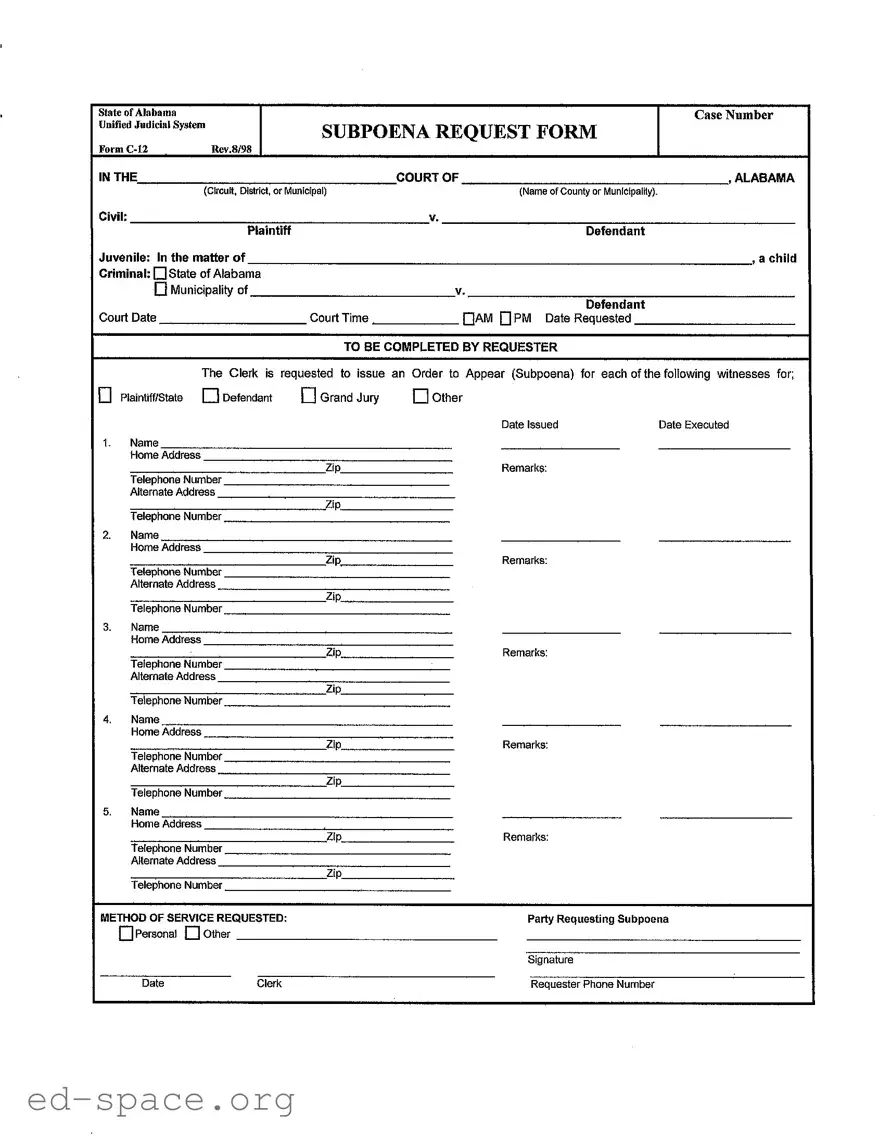
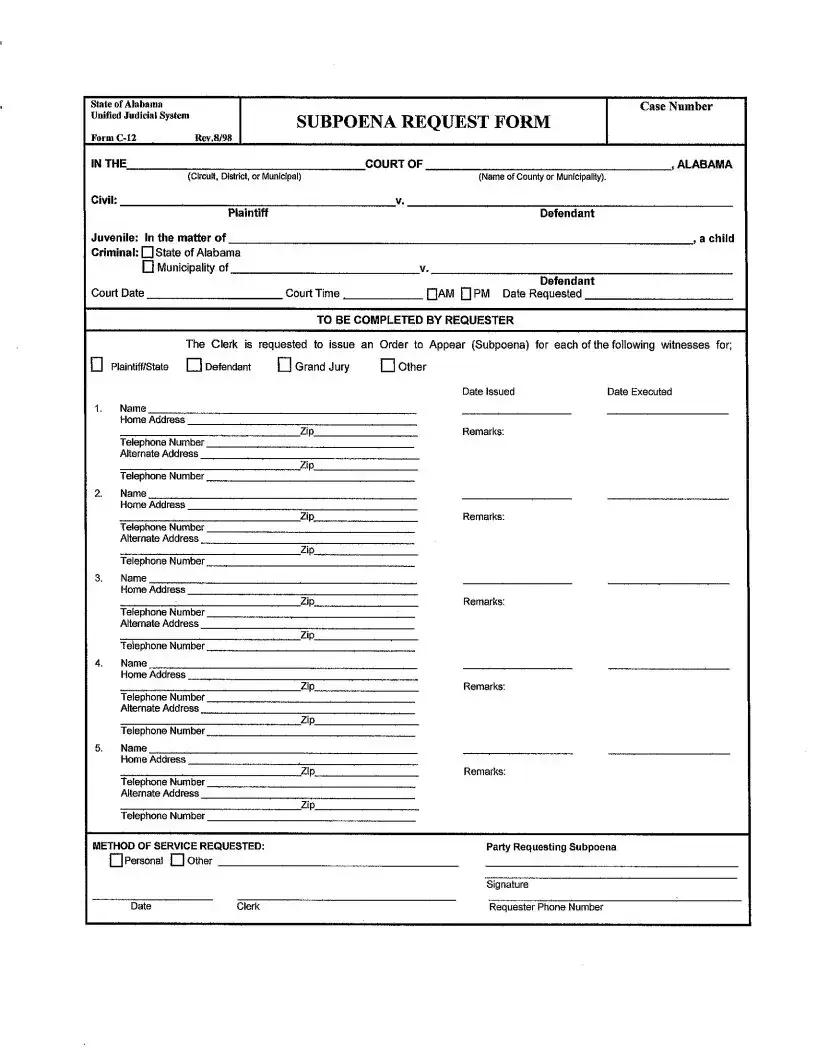
The Alabama C-12 form serves as a vital tool within the state's judicial system, specifically designed to facilitate the subpoena process in various legal contexts, including civil, criminal, and juvenile cases. This form allows a party, whether a plaintiff or defendant, to formally request the issuance of a subpoena for witnesses to appear in court. It requires the requester to provide essential information, such as the names and addresses of the witnesses, along with their telephone numbers and any alternate addresses. Additionally, the form includes sections for remarks, enabling the requester to add pertinent details that may assist in the subpoena process. The method of service can also be specified, allowing the requester to choose between personal service or other methods. By standardizing the subpoena request process, the C-12 form helps ensure that all necessary witnesses can be brought before the court, thereby promoting a fair and thorough examination of the case at hand. Understanding the nuances of this form is essential for anyone navigating the legal landscape in Alabama, as it plays a crucial role in the administration of justice.
| Fact Name | Details |
|---|---|
| Form Purpose | The Alabama C-12 form is used to request a subpoena for witnesses in civil, criminal, or juvenile cases. |
| Governing Law | This form is governed by the Alabama Rules of Civil Procedure and the Alabama Rules of Criminal Procedure. |
| Who Can Request | Any party involved in a case, such as the plaintiff or defendant, can request the issuance of a subpoena using this form. |
| Information Required | The requester must provide the names, addresses, and contact information for each witness they want to subpoena. |
| Method of Service | The form allows the requester to specify how they want the subpoena to be served, such as personally or by another method. |
Completing the Alabama C-12 form is a straightforward process. This form is used to request a subpoena for witnesses in a civil, criminal, or juvenile case. After filling out the form, it must be submitted to the appropriate court clerk for processing.
What is the purpose of the Alabama C-12 form?
The Alabama C-12 form is a Subpoena Request Form used within the Unified Judicial System of Alabama. Its primary purpose is to request the issuance of a subpoena, which compels witnesses to appear in court. This form is crucial for ensuring that all relevant parties can provide testimony or evidence in civil, criminal, or juvenile cases. By submitting this form, the requester can formally notify the court of the witnesses needed for their case, thus facilitating the legal process.
Who can request a subpoena using the Alabama C-12 form?
Any party involved in a legal proceeding, including plaintiffs, defendants, or their legal representatives, can request a subpoena using the Alabama C-12 form. This includes individuals representing themselves in court, as well as attorneys acting on behalf of their clients. It is important for the requester to provide accurate information regarding the witnesses, including their names and addresses, to ensure the subpoenas are correctly issued and served.
What information is required to complete the Alabama C-12 form?
To complete the Alabama C-12 form, the requester must provide several key details. This includes the case number, the names and addresses of the witnesses, their telephone numbers, and any alternate addresses if applicable. Additionally, the requester must specify the method of service requested, such as personal service. The form also requires the signature of the requester and their contact information, ensuring that the court can reach them if necessary.
How is the Alabama C-12 form submitted and processed?
The completed Alabama C-12 form must be submitted to the appropriate court clerk's office, which handles the case in question. Once the form is received, the clerk will review the information and issue the subpoenas for the listed witnesses. After issuance, it is the responsibility of the requester to ensure that the subpoenas are served to the witnesses in accordance with the specified method. Timeliness is crucial; therefore, submitting the form promptly can help avoid delays in the legal proceedings.
Incomplete Case Information: Failing to provide the full case number or the correct court name can lead to delays in processing the subpoena.
Missing Witness Details: Omitting crucial information such as the names, addresses, or telephone numbers of witnesses can result in the subpoena being ineffective.
Incorrect Date and Time: Not specifying the correct court date and time for the appearance can create confusion and may lead to witnesses not showing up.
Failure to Indicate Method of Service: Not selecting the appropriate method of service (e.g., personal service) can lead to complications in how the subpoena is delivered.
Neglecting to Sign the Form: Submitting the form without a signature from the requester can invalidate the request.
Providing Inaccurate Contact Information: Listing incorrect phone numbers or addresses can hinder communication regarding the subpoena.
Not Including Remarks: Failing to utilize the remarks section to clarify any special instructions or additional information can lead to misunderstandings.
Ignoring Alternate Address: Not providing an alternate address for witnesses can limit the chances of successful service.
Submitting Without Review: Not reviewing the form for errors or omissions before submission may result in processing delays.
The Alabama C-12 form is essential for requesting subpoenas in civil, criminal, or juvenile cases. To effectively navigate the legal process, you may need to utilize several other forms and documents alongside the C-12. Below is a list of commonly used forms that can help streamline your case.
Utilizing these forms and documents can significantly enhance your ability to navigate the legal system effectively. Each plays a unique role in the process, ensuring that all parties are informed and prepared for court proceedings.
The Alabama C-12 form serves as a subpoena request form, which allows parties involved in a legal case to request the appearance of witnesses. Several other documents share similar purposes or functions within the legal system. Here are seven documents that are comparable to the Alabama C-12 form:
When filling out the Alabama C-12 form, keep the following guidelines in mind. This will help ensure that your submission is clear and effective.
By following these do's and don'ts, you can help ensure that your subpoena request is processed smoothly and efficiently.
Here are four common misconceptions about the Alabama C-12 form, along with clarifications for each:
This form is specifically designed for subpoena requests in civil, criminal, or juvenile cases. It is not suitable for other legal documents or requests.
While attorneys frequently use this form, individuals can also request subpoenas. However, they should be aware of the legal implications and requirements involved.
All information submitted on the Alabama C-12 form must be accurate and truthful. Misrepresentation can lead to serious legal consequences.
The issuance of a subpoena is at the discretion of the court. The clerk will review the request, and it may require additional steps or approvals before being granted.
Here are key takeaways regarding the Alabama C-12 form: