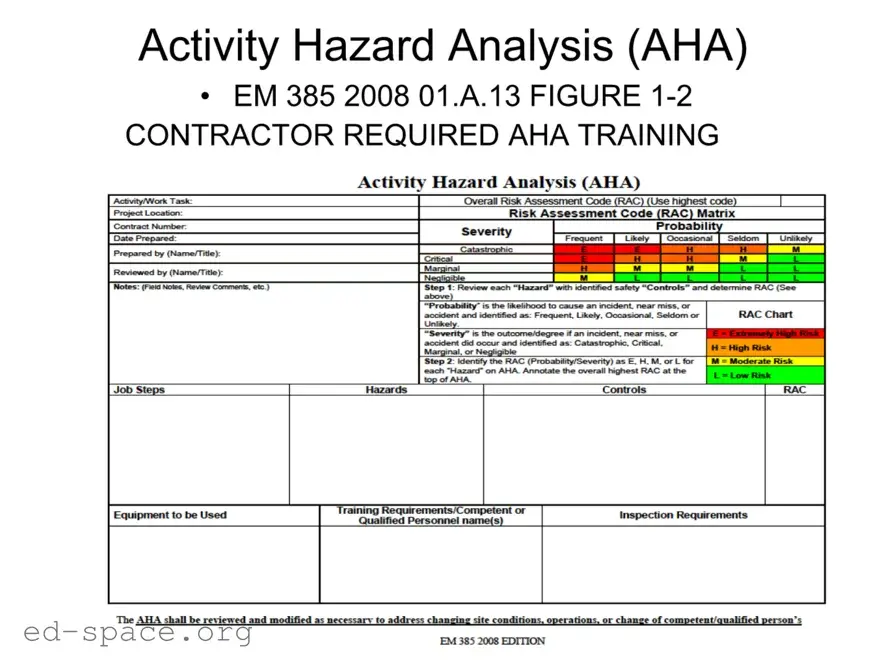
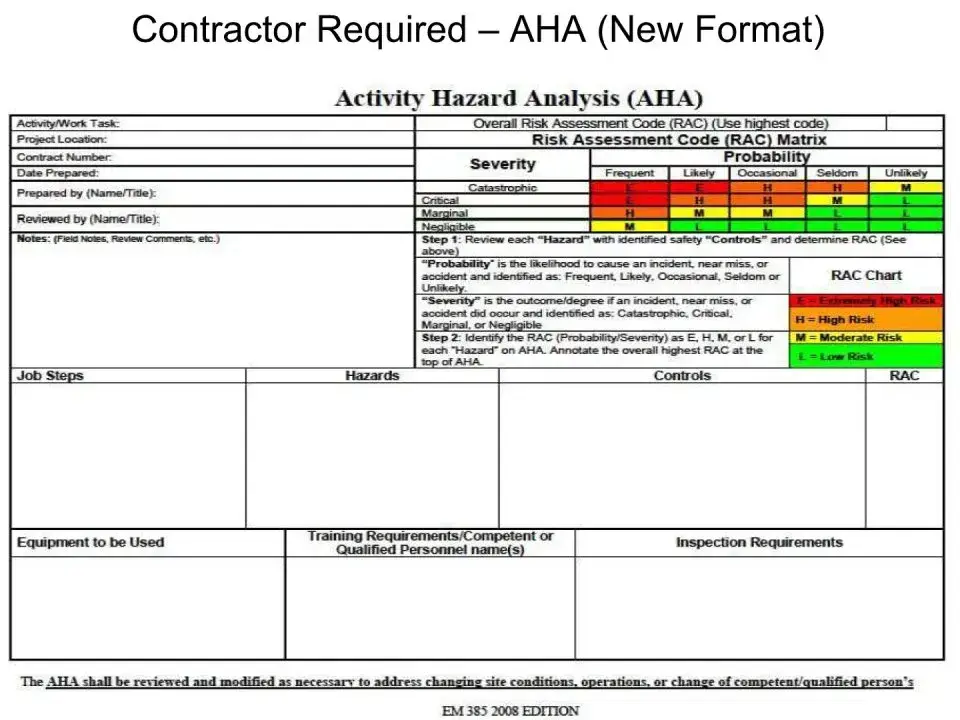
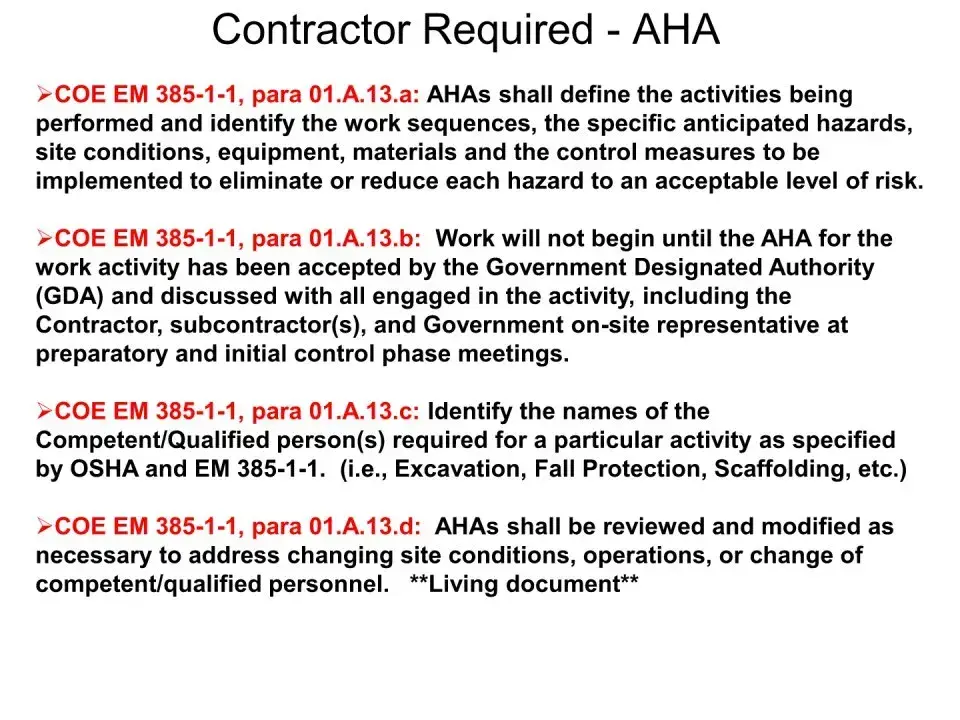
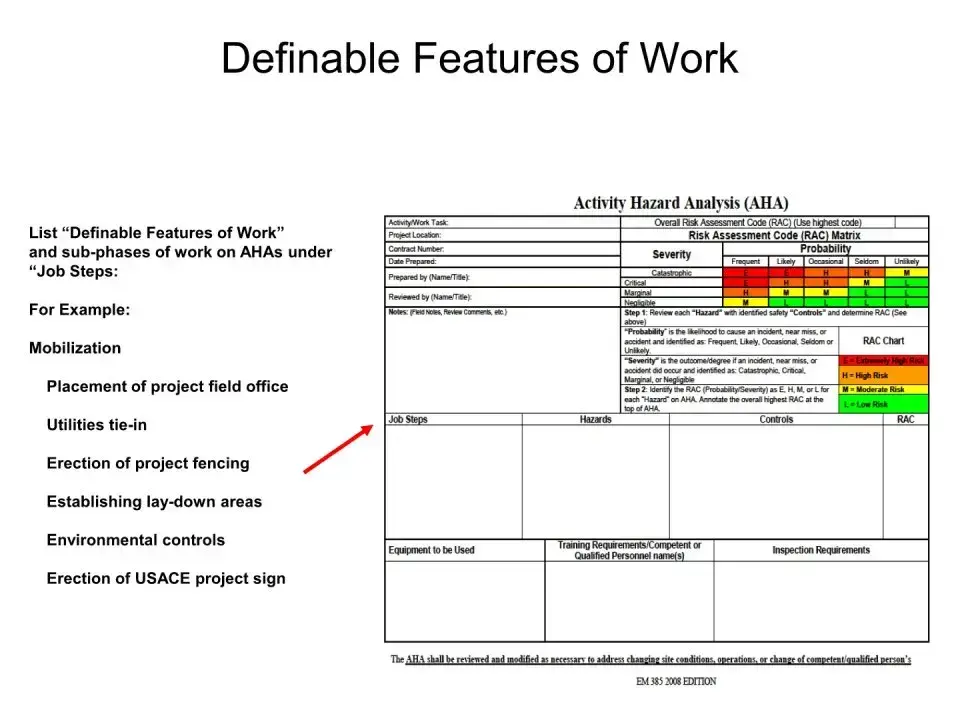
The AHA EM 385 form serves as a crucial tool for ensuring safety in various work environments, particularly in construction and related fields. It facilitates the Activity Hazard Analysis (AHA), which systematically identifies potential hazards associated with specific tasks. By outlining the work sequence, anticipated hazards, and necessary control measures, the form helps teams manage risks effectively. Each AHA includes an Overall Risk Assessment Code (RAC) that categorizes hazards based on their severity and probability, guiding the implementation of appropriate safety controls. This form is not static; it is a living document that must be reviewed and updated regularly to reflect changes in site conditions, operations, or personnel qualifications. Prior to commencing work, the AHA must be accepted by the Government Designated Authority and communicated to all involved parties, ensuring that everyone understands the risks and safety protocols. Through this structured approach, the AHA EM 385 form aims to prevent accidents and promote a culture of safety on job sites.
| Fact Name | Details |
|---|---|
| Purpose | The AHA EM 385 form is designed to assess hazards and establish controls for safety on job sites. |
| Governing Laws | This form is governed by the U.S. Army Corps of Engineers (COE) EM 385-1-1 regulations. |
| Risk Assessment Code (RAC) | The RAC is a crucial component that categorizes risks based on severity and probability. |
| Living Document | The AHA is a living document, meaning it should be updated to reflect changing conditions or personnel. |
| Training Requirements | Competent or qualified personnel must be identified for each task, ensuring proper training is in place. |
| Review Process | AHAs must be reviewed and accepted by the Government Designated Authority before work begins. |
Filling out the Aha Em 385 form is a crucial step in ensuring safety on job sites. This form helps identify potential hazards and establish controls to mitigate risks. By completing it thoroughly, you contribute to a safer working environment for everyone involved. The following steps will guide you through the process of filling out the form effectively.
What is the purpose of the AHA EM 385 form?
The AHA EM 385 form, or Activity Hazard Analysis, serves as a vital tool for identifying potential hazards associated with specific work tasks. It helps to assess risks and establishes control measures to mitigate those risks. This form is essential for ensuring that all personnel involved in a project are aware of the dangers they may face and the precautions they should take to maintain safety on the job site.
Who is required to complete the AHA EM 385 form?
What information is included in the AHA EM 385 form?
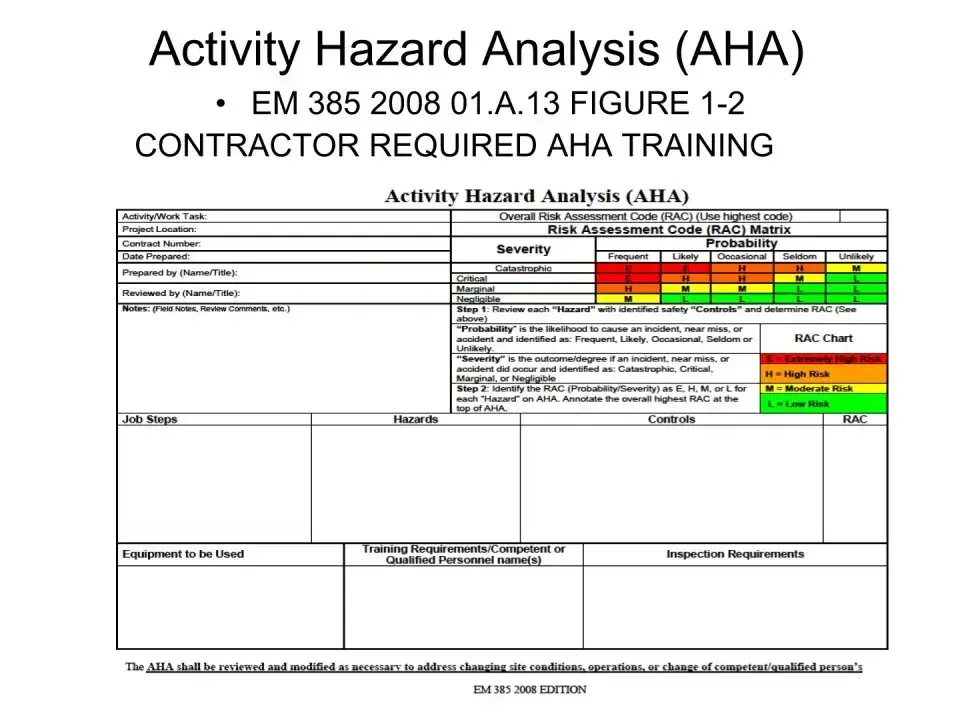
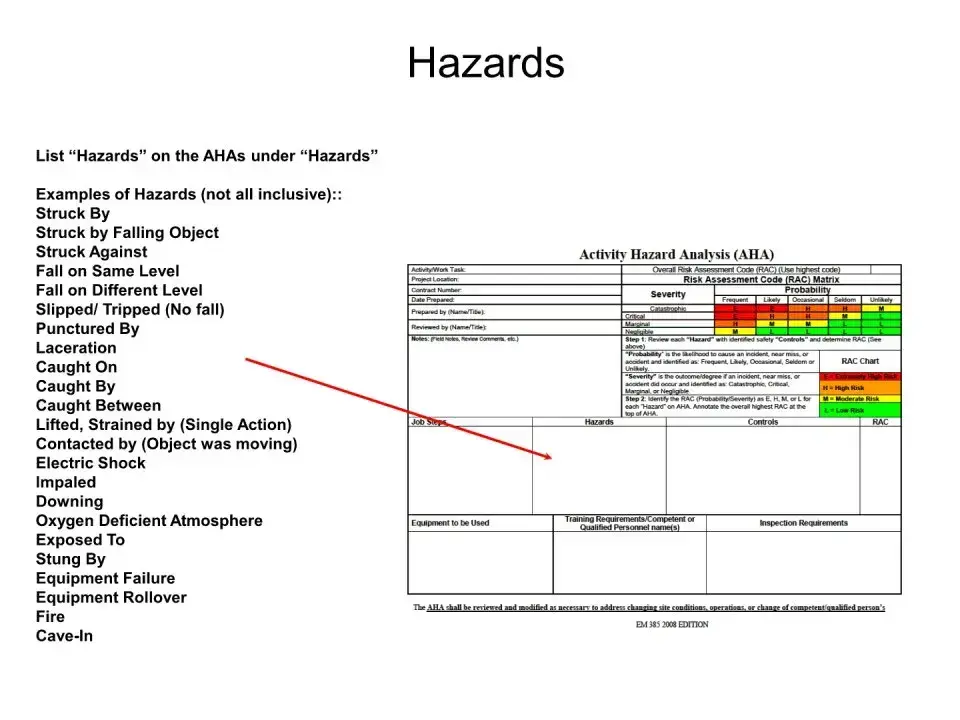
The AHA EM 385 form includes several key components. It outlines the activity or work task, identifies hazards, assesses the overall Risk Assessment Code (RAC), and details the necessary safety controls. Additionally, it specifies the equipment to be used, training requirements, and inspection protocols. This comprehensive approach ensures that all aspects of safety are addressed.
How is the Risk Assessment Code (RAC) determined?
The RAC is determined by evaluating both the probability of an incident occurring and the severity of its potential outcome. The form categorizes probability into five levels: Frequent, Likely, Occasional, Seldom, and Unlikely. Similarly, severity is classified as Catastrophic, Critical, Marginal, or Negligible. The highest RAC from these evaluations is then annotated at the top of the AHA form.
When should the AHA EM 385 form be reviewed and modified?
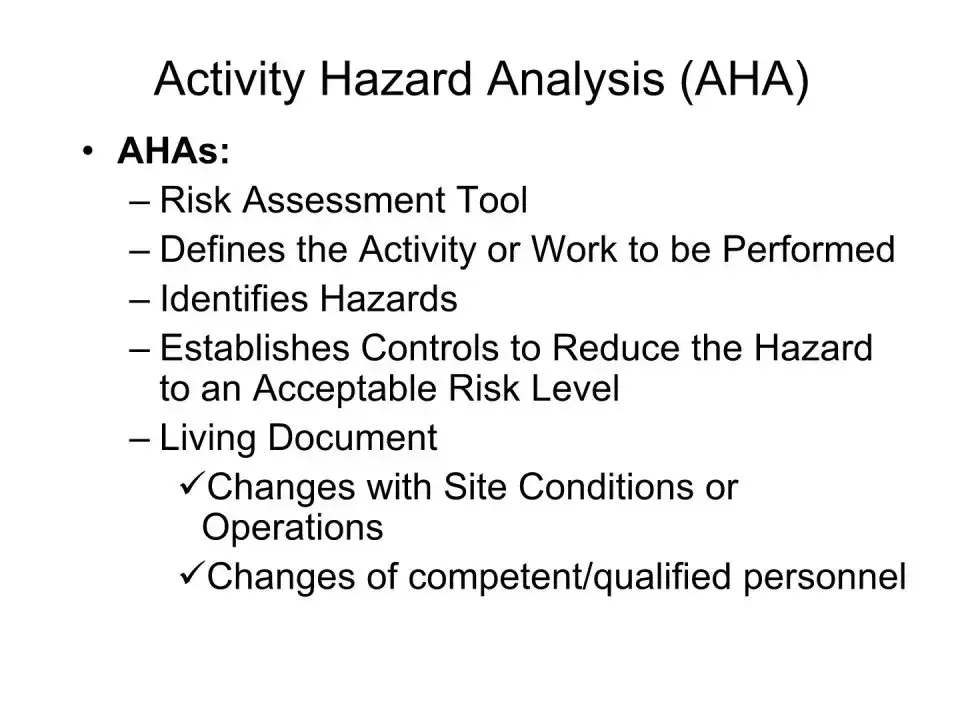
The AHA EM 385 form is a living document, meaning it should be reviewed and updated regularly. Changes in site conditions, operational procedures, or personnel can all necessitate modifications to the AHA. It is essential to keep the form current to ensure that all safety measures are relevant and effective in preventing accidents.
What happens if the AHA EM 385 form is not accepted?
Work on a project cannot commence until the AHA EM 385 form has been accepted by the Government Designated Authority (GDA). This acceptance process includes discussions with all parties involved in the activity, including contractors, subcontractors, and government representatives. Without this approval, the project may face delays or even legal ramifications due to non-compliance with safety regulations.
What role does training play in the AHA EM 385 process?
Training is a critical component of the AHA EM 385 process. The form specifies the training requirements for personnel involved in the project, ensuring that they are competent and qualified to perform their tasks safely. Proper training helps workers understand the hazards they may encounter and the controls in place to protect them, fostering a culture of safety on the job site.
Neglecting to Use the Highest Risk Assessment Code (RAC) - Many individuals fail to select the highest RAC when assessing hazards, which can lead to inadequate safety measures.
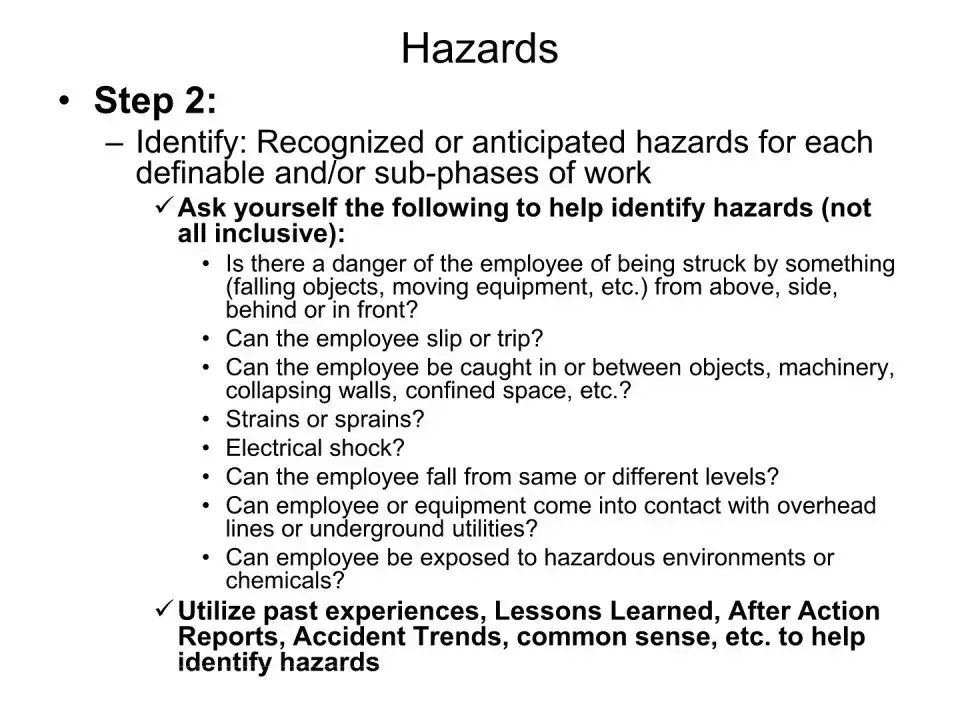
Inaccurate Identification of Hazards - Some people overlook specific hazards associated with the job task, resulting in incomplete risk assessments.
Failure to Review Controls - A common mistake is not reviewing the identified safety controls for each hazard, which is essential to ensure they are effective and appropriate.
Inadequate Documentation of Training Requirements - Individuals often neglect to specify the necessary training or qualifications for personnel involved, which can lead to safety violations.
Ignoring Changes in Site Conditions - Some do not update the AHA to reflect changing site conditions or operations, which can compromise safety.
Not Involving Competent Personnel - Failing to identify and involve competent or qualified personnel in the process can lead to poor decision-making regarding safety measures.
Omitting Equipment to be Used - Many forms lack a clear list of equipment that will be utilized, which is vital for assessing risk accurately.
Not Reviewing the AHA with All Stakeholders - Some individuals do not ensure that the AHA is discussed with all parties involved, including contractors and government representatives, which is critical for compliance and safety.
The AHA EM 385 form plays a crucial role in ensuring safety on construction sites. However, it is often accompanied by various other forms and documents that collectively enhance safety management and compliance. Below is a list of related documents, each serving a specific purpose in the safety protocol.
Incorporating these documents into the safety management system not only enhances compliance with regulations but also fosters a culture of safety awareness among workers. Each document serves a unique purpose, yet they all contribute to the overarching goal of maintaining a safe work environment.
The AHA EM 385 form is essential for ensuring safety on job sites. It serves as a framework for identifying hazards and implementing controls. Several other documents share similarities with the AHA EM 385 form. Here’s a look at six of them:
Understanding these documents can enhance safety protocols and ensure compliance with regulations on job sites. Each plays a unique role in the overall safety strategy, contributing to a safer work environment.
When filling out the AHA EM 385 form, it is essential to adhere to best practices to ensure accuracy and compliance. Below is a list of things you should and shouldn't do during this process.
Understanding the AHA EM 385 form is crucial for safety on job sites. However, several misconceptions can lead to confusion. Here are six common misunderstandings:
Many believe the AHA is static. In reality, it is a living document that should be updated as site conditions or operations change.
Some think that only the contractor is responsible for the AHA. However, all parties involved, including subcontractors and government representatives, must discuss and understand it.
While hazard identification is important, the AHA also establishes controls to reduce risks to acceptable levels.
It is a misconception that training is not necessary. Competent or qualified personnel must be identified and trained for specific activities outlined in the AHA.
Some believe that low-risk tasks do not require an AHA. This is incorrect; an AHA is essential for all activities to ensure safety.
This is false. The AHA should be reviewed and modified as necessary to reflect any changes in site conditions or personnel.
When filling out and using the AHA EM 385 form, keep these key points in mind: