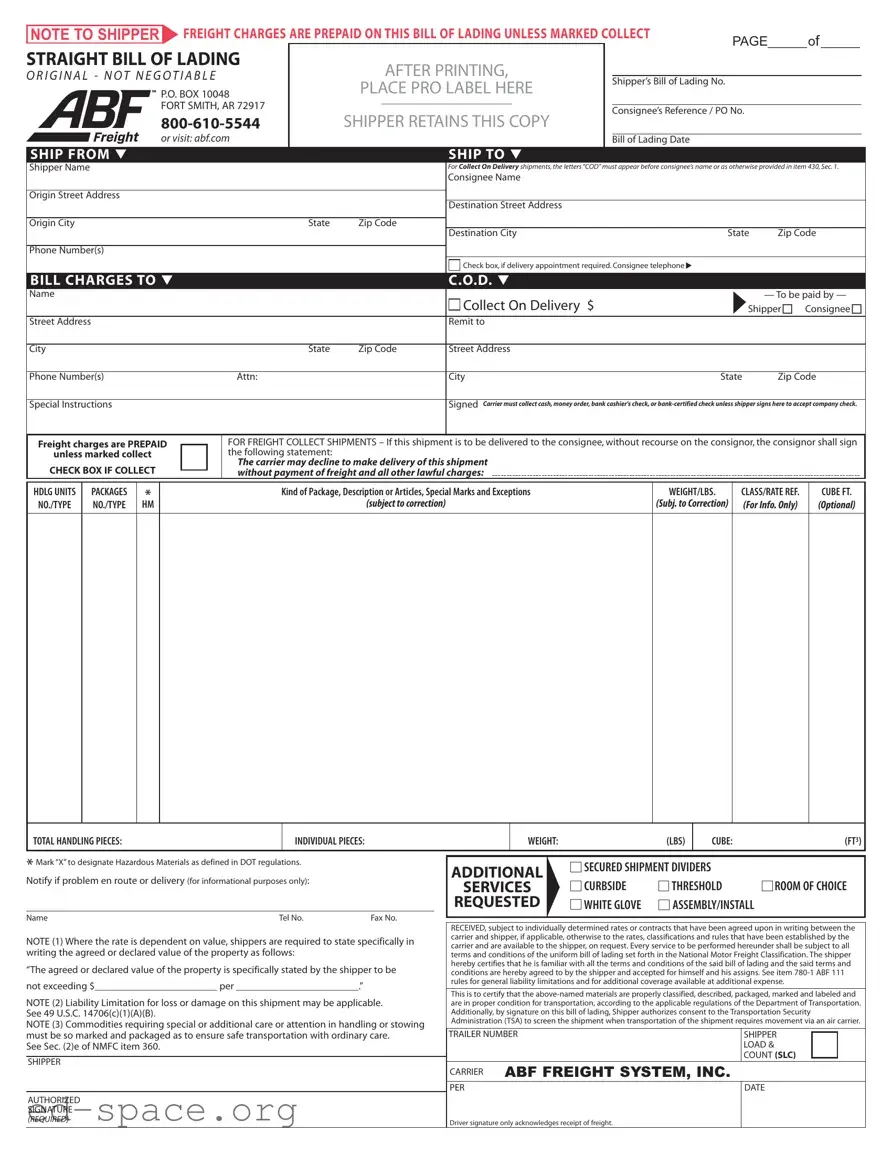
The ABF Freight Bill of Lading form serves as a crucial document in the shipping process, detailing important information about the shipment and the responsibilities of both the shipper and the carrier. It outlines whether freight charges are prepaid or to be collected upon delivery, and it includes spaces for essential details such as the shipper's and consignee's names, addresses, and contact information. This form also accommodates special instructions, including the need for a delivery appointment and any specific handling requirements for hazardous materials. Additionally, it addresses payment methods, allowing the shipper to specify whether charges will be billed to them or the consignee. The form emphasizes the importance of accurately declaring the value of the shipment, which can affect liability in case of loss or damage. By signing the document, the shipper agrees to the terms and conditions set forth by the carrier, ensuring compliance with regulations established by the Department of Transportation. Ultimately, the ABF Freight Bill of Lading is not just a receipt; it is a comprehensive agreement that facilitates the smooth transportation of goods while protecting the interests of all parties involved.
NOTE TO SHIPPER |
FREIGHT CHARGES ARE PREPAID ON THIS BILL OF LADING UNLESS MARKED COLLECT |
PAGE______of______ |
||
|
|
|
|
|
STRAIGHT BILL OF LADING |
|
AFTER PRINTING, |
|
|
|
|
|||
O R I G I N A L - N O T N E G O T I A B L E |
|
|
|
|
|
||||
|
|
Shipper’s Bill of Lading No. |
|
|
|||||
|
|
|
PLACE PRO LABEL HERE |
|
|
|
|||
|
P.O. BOX 10048 |
|
|
|
|
|
|||
|
|
_______________ |
|
|
|
|
|||
|
FORT SMITH, AR 72917 |
|
|
|
|
|
Consignee’s Reference / PO No. |
|
|
|
|
SHIPPER RETAINS THIS COPY |
|
|
|
||||
|
|
|
|
|
|
||||
|
or visit: abf.com |
|
|
|
|
|
Bill of Lading Date |
|
|
|
|
|
|
|
|
|
|
|
|
SHIP FROM q |
|
|
|
SHIP TO q |
|
|
|
|
|
Shipper Name |
|
|
|
For Collect On Delivery shipments, the letters “COD” must appear before consignee’s name or as otherwise provided in item 430, Sec. 1. |
|||||
|
|
|
|
|
Consignee Name |
|
|
|
|
|
|
|
|
|
|
|
|
|
|
Origin Street Address |
|
|
|
|
|
|
|
|
|
|
|
|
|
|
Destination Street Address |
|
|
|
|
|
|
|
|
|
|
|
|
||
Origin City |
State |
Zip Code |
|
|
|
|
|
||
|
|
|
|
|
Destination City |
|
State |
Zip Code |
|
|
|
|
|
|
|
|
|
|
|
Phone Number(s) |
|
|
|
|
|
|
|
|
|
|
|
|
|
|
Check box, if delivery appointment required. Consignee telephone▼ |
|
|
||
|
|
|
|
|
|
|
|
|
|
BILL CHARGES TO q |
|
|
|
C.O.D. q |
|
|
|
|
|
Name |
|
|
|
Collect On Delivery $ |
|
|
— To be paid by — |
||
|
|
|
|
|
|
Shipper¨ Consignee¨ |
|||
Street Address |
|
|
|
Remit to |
|
|
|
|
|
City |
State |
Zip Code |
Street Address
Phone Number(s) |
Attn: |
City |
State |
Zip Code |
Special Instructions
Signed Carrier must collect cash, money order, bank cashier’s check, or
Freight charges are PREPAID
unless marked collect
CHECK BOX IF COLLECT
FOR FREIGHT COLLECT SHIPMENTS – If this shipment is to be delivered to the consignee, without recourse on the consignor, the consignor shall sign the following statement:
The carrier may decline to make delivery of this shipment without payment of freight and all other lawful charges:
HDLG UNITS |
PACKAGES |
* |
Kind of Package, Description or Articles, Special Marks and Exceptions |
WEIGHT/LBS. |
|
CLASS/RATE REF. |
CUBE FT. |
||||
NO./TYPE |
NO./TYPE |
HM |
|
|
(subject to correction) |
(Subj. to Correction) |
|
(For Info. Only) |
(Optional) |
||
|
|
|
|
|
|
|
|
|
|
|
|
TOTAL HANDLING PIECES: |
|
|
INDIVIDUAL PIECES: |
|
WEIGHT: |
(LBS) |
CUBE: |
|
(FT3) |
||
*Mark “X” to designate Hazardous Materials as defined in DOT regulations.
Notify if problem en route or delivery (for informational purposes only):
________________________________________________________________________________
Name |
Tel No. |
Fax No. |
NOTE (1) Where the rate is dependent on value, shippers are required to state specifically in writing the agreed or declared value of the property as follows:
“The agreed or declared value of the property is specifically stated by the shipper to be
not exceeding $________________________ per ________________________.”
NOTE (2) Liability Limitation for loss or damage on this shipment may be applicable. See 49 U.S.C. 14706(c)(1)(A)(B).
NOTE (3) Commodities requiring special or additional care or attention in handling or stowing must be so marked and packaged as to ensure safe transportation with ordinary care.
See Sec. (2)e of NMFC item 360.
SHIPPER
AUTHORIZED
SIGNATURE
(REQUIRED)
ADDITIONAL |
SECURED SHIPMENT DIVIDERS |
|
|
SERVICES |
CURBSIDE |
THRESHOLD |
ROOM OF CHOICE |
REQUESTED |
WHITE GLOVE |
ASSEMBLY/INSTALL |
|
|
|
|
|
RECEIVED, subject to individually determined rates or contracts that have been agreed upon in writing between the carrier and shipper, if applicable, otherwise to the rates, classifications and rules that have been established by the carrier and are available to the shipper, on request. Every service to be performed hereunder shall be subject to all terms and conditions of the uniform bill of lading set forth in the National Motor Freight Classification. The shipper hereby certifies that he is familiar with all the terms and conditions of the said bill of lading and the said terms and conditions are hereby agreed to by the shipper and accepted for himself and his assigns. See item
This is to certify that the
TRAILER NUMBER |
SHIPPER |
|
|
|
LOAD & |
|
|
|
COUNT (SLC) |
|
|
|
|
|
|
CARRIER |
ABF FREIGHT SYSTEM, INC. |
PER |
DATE |
|
|
Driver signature only acknowledges receipt of freight.
| Fact Name | Details |
|---|---|
| Freight Charges | Freight charges are prepaid unless marked as collect on the bill of lading. |
| Bill of Lading Type | This is a straight bill of lading, which means it is non-negotiable. |
| Shipper's Information | The shipper's address must be clearly stated, including city, state, and zip code. |
| Consignee's Information | The consignee's name and address are required for proper delivery. |
| COD Shipments | For collect on delivery shipments, the term "COD" must precede the consignee's name. |
| Special Instructions | Shippers can include special instructions regarding the shipment on the bill. |
| Liability Limitations | Liability limitations for loss or damage may apply, as stated in 49 U.S.C. 14706. |
| Hazardous Materials | Shippers must mark hazardous materials as defined by DOT regulations. |
| Governing Law | Federal law governs the bill of lading, with specific state laws applicable based on the shipment's origin. |
Filling out the ABF Freight Bill of Lading form is an important step in ensuring your shipment is processed correctly. Follow these steps to complete the form accurately.
Once you have completed these steps, make sure to review the form for any errors. After confirming all details are correct, you can submit the form as required for your shipment.
What is the purpose of the ABF Freight Bill of Lading?
The ABF Freight Bill of Lading serves as a contract between the shipper and the carrier. It outlines the details of the shipment, including the origin and destination, the nature of the goods being transported, and the payment terms. This document is crucial for ensuring that both parties understand their rights and responsibilities regarding the shipment.
What does "freight charges are prepaid" mean?
When the Bill of Lading states that freight charges are prepaid, it indicates that the shipper has already paid for the shipping costs before the goods are transported. This is important for both the shipper and the carrier, as it clarifies who is responsible for the payment of shipping fees.
How do I indicate if my shipment is Collect On Delivery (COD)?
To indicate that a shipment is COD, you must write the letters "COD" before the consignee's name on the Bill of Lading. Additionally, you need to specify who will be responsible for paying the charges—either the shipper or the consignee. This ensures that the carrier knows to collect payment upon delivery.
What should I include if my shipment contains hazardous materials?
If your shipment includes hazardous materials, you must mark it clearly on the Bill of Lading. Specifically, you should mark an "X" in the designated area for hazardous materials as defined by Department of Transportation regulations. Proper labeling is essential for safety and compliance with transportation laws.
What happens if my shipment requires special handling?
In cases where your shipment requires special handling, you should clearly indicate this on the Bill of Lading. This includes specifying any additional care or attention needed for the goods. Proper packaging and marking are vital to ensure safe transportation, as outlined in the National Motor Freight Classification.
What is the significance of the shipper's signature on the Bill of Lading?
The shipper's signature is a critical component of the Bill of Lading. By signing, the shipper certifies that all information provided is accurate and that they understand and agree to the terms and conditions of the shipment. This signature also authorizes the carrier to handle the shipment as described.
What does it mean if the Bill of Lading states "liability limitation for loss or damage may be applicable"?
This statement indicates that there may be limitations on the carrier's liability for loss or damage to the shipment. It is important for shippers to be aware of these limitations, as they may affect the compensation available in the event of an issue during transportation. Shippers can inquire about additional coverage options if desired.
How can I confirm my shipment is ready for transportation?
To confirm that your shipment is ready for transportation, ensure that all required information is filled out accurately on the Bill of Lading. This includes the description of the goods, weights, and any special instructions. Additionally, the shipper must sign the document, certifying that the materials are properly classified and in good condition for transport.
Not Indicating Freight Charges: Many people forget to specify whether the freight charges are prepaid or collect. This can lead to confusion and unexpected costs.
Incorrectly Filling Out Consignee Information: Providing inaccurate or incomplete details about the consignee can delay delivery. Always double-check the consignee's name, address, and contact information.
Neglecting to Include Special Instructions: If there are specific delivery requirements, such as a delivery appointment, these should be clearly noted on the form.
Forgetting to Sign: The shipper's signature is crucial. Without it, the bill of lading may be considered invalid, leading to potential issues with the shipment.
Failing to Declare Value: If the shipment has a specific value, it’s essential to state this clearly. Not doing so can limit liability in case of loss or damage.
Ignoring Hazardous Materials Regulations: If the shipment includes hazardous materials, this must be marked clearly. Failure to do so can result in serious safety violations.
Incorrect Weight and Dimensions: Providing inaccurate weight or dimensions can lead to additional charges or delivery issues. Always measure and weigh the shipment carefully.
Not Using the Correct Bill of Lading: Ensure you are using the correct version of the bill of lading. Using an outdated or incorrect form can lead to complications.
Omitting Contact Information: Including a phone number for both the shipper and consignee is vital. This allows for quick communication in case of delivery issues.
When shipping goods, the Abf Freight Bill of Lading form serves as a crucial document. However, it often works in tandem with several other forms and documents that help facilitate the shipping process. Understanding these documents can ensure a smoother experience for both shippers and consignees. Below is a list of commonly used forms alongside the Bill of Lading.
Utilizing these documents alongside the Abf Freight Bill of Lading can significantly streamline the shipping process. Each form plays a vital role in ensuring that shipments are handled efficiently and legally. Be sure to prepare and organize these documents in advance to avoid any delays or complications during transit.
The Abf Freight Bill of Lading form shares similarities with several other shipping and transportation documents. Each of these documents serves specific functions in the shipping process, ensuring that goods are transported efficiently and legally. Below is a list of eight documents that are comparable to the Abf Freight Bill of Lading:
When filling out the ABF Freight Bill of Lading form, attention to detail is crucial. Here are four important dos and don'ts to keep in mind:
By following these guidelines, you can help ensure that your shipment process is efficient and hassle-free. Remember, clarity and accuracy are your best allies when filling out this important document.
Understanding the Abf Freight Bill of Lading form is essential for anyone involved in shipping. However, several misconceptions can lead to confusion. Here are six common misunderstandings:
Being informed about these misconceptions can help shippers navigate the shipping process more effectively and avoid potential pitfalls.
When using the ABF Freight Bill of Lading form, it is essential to ensure accuracy and compliance with regulations. Here are key takeaways to keep in mind:
By following these guidelines, you can help ensure a smooth shipping process and avoid potential issues with your freight. Always double-check the form before submission to confirm that all information is complete and correct.