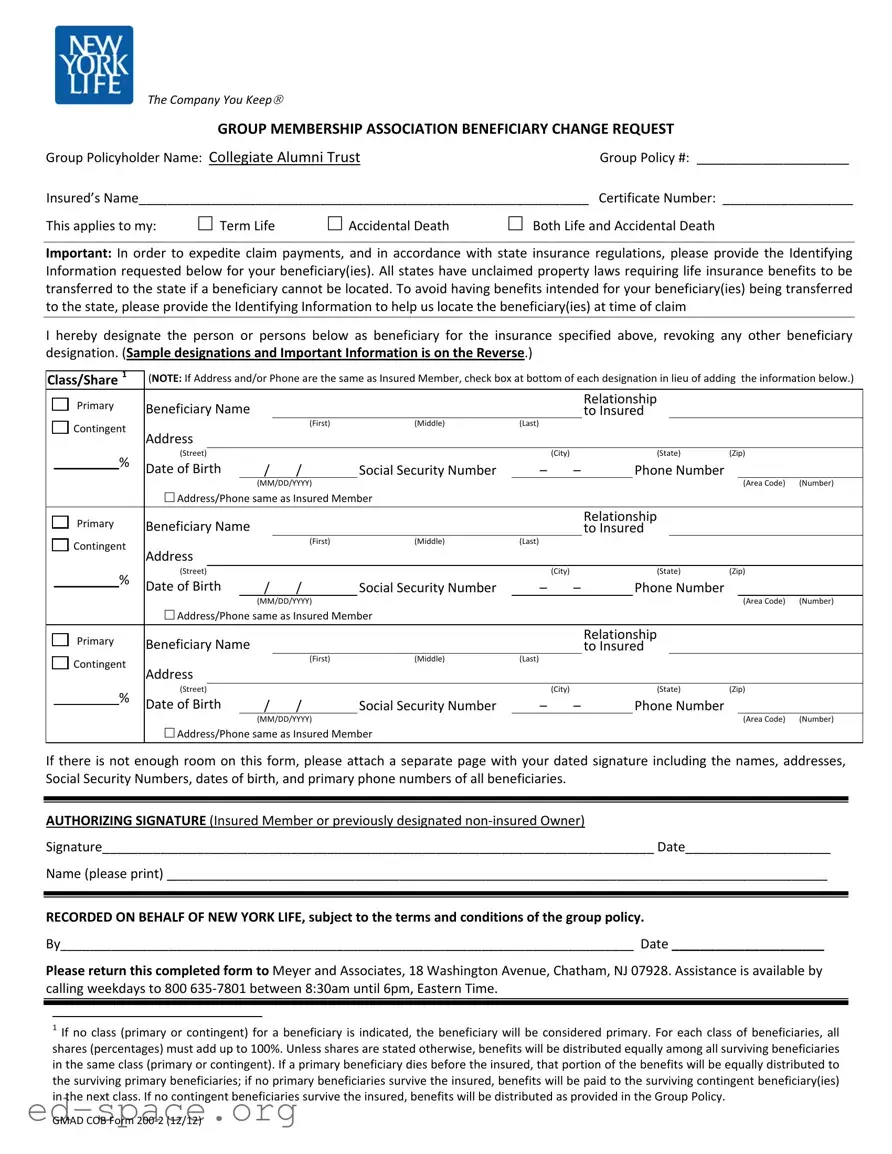
The AARP Life Insurance form serves as a critical document for individuals seeking to designate beneficiaries for their life insurance policies. It is essential for policyholders to complete this form accurately to ensure that benefits are distributed according to their wishes. The form includes sections for the group policyholder's name, policy number, and the insured's details, including their certificate number. Policyholders can specify whether the insurance applies to term life, accidental death, or both. An important aspect of the form is the requirement for identifying information about beneficiaries, which helps expedite claim payments and avoids complications with state unclaimed property laws. The form allows for the designation of multiple beneficiaries, both primary and contingent, and requires details such as names, relationships, addresses, dates of birth, and social security numbers. Additionally, the form provides guidance on how to handle unique beneficiary situations, such as trusts or minor beneficiaries, ensuring that policyholders understand the implications of their designations. Completing the AARP Life Insurance form accurately is vital for ensuring that intended beneficiaries receive the benefits without unnecessary delays or legal complications.

The Company You Keep®
GROUP MEMBERSHIP ASSOCIATION BENEFICIARY CHANGE REQUEST
Group Policyholder Name: Collegiate Alumni TrustGroup Policy #: _____________________
Insured’s Name______________________________________________________________ Certificate Number: __________________
This applieS to my: |
□ Term Life |
□ Accidental Death |
□ Both Life and Accidental Death |
Important: In order to expedite claim payments, and in accordance with state insurance regulations, please provide the Identifying Information requested below for your beneficiary(ies). All states have unclaimed property laws requiring life insurance benefits to be transferred to the state if a beneficiary cannot be located. To avoid having benefits intended for your beneficiary(ies) being transferred to the state, please provide the Identifying Information to help us locate the beneficiary(ies) at time of claim
I hereby designate the person or persons below as beneficiary for the insurance specified above, revoking any other beneficiary designation. (Sample designations and Important Information is on the Reverse.)
Class/Share 1 |
(NOTE: If Address and/or Phone are the same as Insured Member, check box at bottom of each designation in lieu of adding the information below.) |
|||||||||||||
Primary |
Beneficiary Name |
|
|
|
|
|
Relationship |
|
|
|
||||
|
|
|
|
|
to Insured |
|
|
|
||||||
|
|
|
|
|
|
|
|
|
||||||
Contingent |
|
|
|
|
(First) |
(Middle) |
(Last) |
|
|
|
|
|
|
|
Address |
|
|
|
|
|
|
|
|
|
|
|
|
||
|
|
|
|
|
|
|
|
|
|
|
|
|||
_________% |
(Street) |
|
|
|
|
(City) |
|
(State) |
(Zip) |
|
||||
Date of Birth |
/ |
/ |
Social Security Number |
– |
– |
|
Phone Number |
|
|
|
||||
|
|
|
|
|
||||||||||
|
|
|
|
(MM/DD/YYYY) |
|
|
|
|
|
|
|
(Area Code) |
(Number) |
|
|
□ Address/Phone same as Insured Member |
|
|
|
|
|
|
|
|
|||||
Primary |
Beneficiary Name |
|
|
|
|
|
Relationship |
|
|
|
||||
|
|
|
|
|
to Insured |
|
|
|
||||||
|
|
|
|
|
|
|
|
|
||||||
Contingent |
|
|
|
|
(First) |
(Middle) |
(Last) |
|
|
|
|
|
|
|
Address |
|
|
|
|
|
|
|
|
|
|
|
|
||
|
|
|
|
|
|
|
|
|
|
|
|
|||
_________% |
(Street) |
|
|
|
|
(City) |
|
(State) |
(Zip) |
|
||||
Date of Birth |
/ |
/ |
Social Security Number |
– |
– |
|
Phone Number |
|
|
|
||||
|
|
|
|
|
||||||||||
|
|
|
|
(MM/DD/YYYY) |
|
|
|
|
|
|
|
(Area Code) |
(Number) |
|
|
□ Address/Phone same as Insured Member |
|
|
|
|
|
|
|
|
|||||
Primary |
Beneficiary Name |
|
|
|
|
|
Relationship |
|
|
|
||||
|
|
|
|
|
to Insured |
|
|
|
||||||
|
|
|
|
|
|
|
|
|
||||||
Contingent |
|
|
|
|
(First) |
(Middle) |
(Last) |
|
|
|
|
|
|
|
Address |
|
|
|
|
|
|
|
|
|
|
|
|||
|
|
|
|
|
|
|
|
|
|
|
|
|||
|
|
|
|
|
|
|
|
|
|
|
|
|||
_________% |
(Street) |
|
|
|
|
(City) |
|
(State) |
(Zip) |
|
||||
Date of Birth |
/ |
/ |
Social Security Number |
– |
– |
|
Phone Number |
|
|
|
||||
|
|
|
|
|
||||||||||
|
|
|
|
(MM/DD/YYYY) |
|
|
|
|
|
|
|
(Area Code) |
(Number) |
|
|
□ Address/Phone same as Insured Member |
|
|
|
|
|
|
|
|
|||||
If there is not enough room on this form, please attach a separate page with your dated signature including the names, addresses, Social Security Numbers, dates of birth, and primary phone numbers of all beneficiaries.
AUTHORIZING SIGNATURE (Insured Member or previously designated non‐insured Owner)
Signature____________________________________________________________________________ Date____________________
Name (please print) ___________________________________________________________________________________________
RECORDED ON BEHALF OF NEW YORK LIFE, subject to the terms and conditions of the group policy.
By_______________________________________________________________________________ Date _____________________
Please return this completed form to Meyer and Associates, 18 Washington Avenue, Chatham, NJ 07928. Assistance is available by calling weekdays to 800 635‐7801 between 8:30am until 6pm, Eastern Time.
1If no class (primary or contingent) for a beneficiary is indicated, the beneficiary will be considered primary. For each class of beneficiaries, all shares (percentages) must add up to 100%. Unless shares are stated otherwise, benefits will be distributed equally among all surviving beneficiaries in the same class (primary or contingent). If a primary beneficiary dies before the insured, that portion of the benefits will be equally distributed to the surviving primary beneficiaries; if no primary beneficiaries survive the insured, benefits will be paid to the surviving contingent beneficiary(ies) in the next class. If no contingent beneficiaries survive the insured, benefits will be distributed as provided in the Group Policy.
GMAD COB Form 200‐2 (12/12)

SAMPLES OF BENEFICIARY DESIGNATIONS: Below are examples of some common beneficiary designations that may be helpful as you complete this form.
1. Specific unequal shares (NOTE: Insert “Per Stirpes” after % to have any Benefits due any deceased beneficiary payable to his/her descendents)
|
Class/Share |
|
|
|
|
|
|
|
|
|
|
|
|
|
|
|
|
||
|
|
|
Primary |
Beneficiary Name |
|
|
|
|
|
Relationship |
|
|
|
|
|||||
|
|
|
John |
J. |
|
Smith |
to Insured |
Brother |
|
||||||||||
|
|
|
|
|
|
|
|
|
|
|
|
|
|
|
|
|
|
|
|
|
|
|
Contingent |
Address |
|
|
|
|
(First) |
(Middle) |
|
(Last) |
|
99999‐1111 |
|
|
|||
|
|
|
|
|
|
|
|
|
|
|
|||||||||
|
|
|
|
|
|
|
|
|
|
|
|
|
|
|
|||||
|
|
|
|
15 Bay Ridge Boulevard |
Smithville |
AK |
|
|
|||||||||||
__60%___ |
|
|
(Street) |
|
|
|
|
|
(City) |
|
(State) |
(Zip) |
|||||||
|
Per stirpes |
Date of Birth |
|
11 / 15 / 1974 |
|
Social Security Number |
123 – 45 – 6789 |
Phone Number |
(111) 234‐5678 |
||||||||||
|
|
|
|
|
|
|
(MM/DD/YYYY) |
|
|
|
|
|
|
|
(Area Code) |
(Number) |
|||
|
|
|
|
□ Address/Phone same as Insured Member |
|
|
|
|
|
|
|
|
|
||||||
|
|
|
Primary |
Beneficiary Name |
|
|
|
|
|
Relationship |
|
|
|
|
|||||
|
|
|
Antoinette |
Dubois |
|
Jones |
to Insured |
Sister |
|
||||||||||
|
|
|
|
|
|
|
|
|
|
|
|
|
|
|
|
|
|
|
|
|
|
|
Contingent |
|
|
|
|
|
(First) |
(Middle) |
|
(Last) |
|
|
|
|
|
|
|
|
|
|
|
|
|
|
|
|
|
|
|
|
|
|
|||||
|
|
|
Address |
2201‐1870 Southwest Third Avenue |
|
|
Ocean City |
KS |
11111‐2222 |
||||||||||
|
|
|
|
|
|
||||||||||||||
__40%___ |
|
|
(Street) |
|
|
|
|
|
(City) |
|
(State) |
(Zip) |
|||||||
|
Per stirpes |
Date of Birth |
|
5 / |
7 / 1979 |
|
Social Security Number |
987 – 65 – 4321 |
Phone Number |
|
(999) 876‐5432 |
||||||||
|
|
|
|
|
|
|
(MM/DD/YYYY) |
|
|
|
|
|
|
|
(Area Code) |
(Number) |
|||
|
|
|
|
□ Address/Phone same as Insured Member |
|
|
|
|
|
|
|
|
|
||||||
2. Trust as Beneficiary:
“John Smith and Mary Jones as Trustees of the Jones Family Trust under the Trust document dated December 1, 2012.” [Please provide Identifying Information for all Trustees.]
3.Minor Beneficiary ‐ Uniform Transfers/Gifts to Minors Act (UTMA/UGMA) Designation:
“[Name of Adult] as Custodian for [Name of Minor] under [Insured Member’s or Minor’s State of Residence] Uniform Transfers/Gifts to Minors Act.” [Please provide Identifying Information for the minor and adult Custodian.]
NOTICE REGARDING DESIGNATING A MINOR BENEFICIARY
Unless a UTMA/UGMA designation is used, or there is an existing court appointed guardian of the minor’s estate who can make financial decisions for the minor, a claims payment to a minor may be delayed until a surviving parent, relative, or other interested party obtains a court appointment as financial guardian of the minor’s estate, for the purpose of receiving the proceeds on behalf of the child.
NOTICE REGARDING TESTAMENTARY TRUST UNDER LAST WILL AND TESTAMENT AS BENEFICIARY
The following is understood and agreed when naming a Testamentary Trust under the Last Will and Testament as beneficiary of a specified decedent (Insured Member or non‐insured owner).
Proceeds shall be paid to the named contingent beneficiary if the decedent dies intestate (without a Last Will and Testament), or with a Last Will and Testament but (1) it does not create a Trust and name a Trustee or (2) no court proceeding has been started to probate the Last Will and Testament or no Trustee qualifies and claims the proceeds within 12 months (18 in Mississippi, New York, Texas; 6 months in Florida and North Carolina) after the decedent’s death. If the named contingent beneficiary is not living, and no further beneficiary is named, payment shall be made in accordance with the Group Policy.
New York Life is not obligated to inquire about the terms of any Trust affecting this policy or its proceeds, and shall not be held responsible for knowing the terms of any such Trust.
Payment to and receipt by said Trustee(s) or any successor Trustee(s), or payment to and receipt by the contingent beneficiary or insured’s estate shall constitute a full discharge and releases the New York Life Insurance Company to the extent of such payment. The full discharge and release of the New York Life Insurance Company’s obligation for payment applies to all persons and fiduciaries having any interest in such proceeds.
NOTICE REGARDING NON‐INSURED OWNER
A non‐insured owner who wishes to name a person other than themselves as beneficiary should do so only after receiving advice from their Counsel as to the possible tax consequences in light of existing decisional law to the effect that, when the proceeds are paid to someone other than the non‐insured owner, the proceeds constitute a taxable gift from the owner to the beneficiary at the time of the insured’s death.
*Per Stirpes means that any interest in a life insurance policy that a deceased beneficiary would have, if living, will be shared equally by all living children of that deceased beneficiary.
GMAD COB Form 200‐2 (12/12)
| Fact Name | Details |
|---|---|
| Group Policyholder | The group policyholder for this life insurance is the Collegiate Alumni Trust. |
| Beneficiary Designation | Policyholders can designate multiple beneficiaries, including primary and contingent beneficiaries, to ensure the intended recipients receive benefits. |
| State Regulations | Each state has its own laws regarding unclaimed property, which may affect how life insurance benefits are distributed if beneficiaries cannot be located. |
| Identifying Information Requirement | To expedite claim payments, policyholders must provide identifying information for beneficiaries, including Social Security numbers and dates of birth. |
| Tax Implications | Naming a non-insured owner as a beneficiary may have tax consequences, potentially constituting a taxable gift at the time of the insured's death. |
Completing the AARP Life Insurance form requires careful attention to detail to ensure that all necessary information is accurately provided. Following these steps will help facilitate the processing of your beneficiary change request.
What is the purpose of the AARP Life Insurance form?
The AARP Life Insurance form is designed to facilitate the designation of beneficiaries for life insurance policies. It allows policyholders to specify who will receive the benefits in the event of their passing. Completing this form accurately ensures that the intended beneficiaries receive the benefits without unnecessary delays or complications.
How do I fill out the beneficiary information?
When filling out the beneficiary information, you need to provide the full name, relationship to the insured, address, date of birth, Social Security number, and phone number for each beneficiary. If the address and phone number are the same as the insured member, you can check the designated box to avoid redundancy. Ensure that the percentage shares for each class of beneficiaries add up to 100% to avoid any distribution issues.
What happens if a primary beneficiary passes away before the insured?
If a primary beneficiary dies before the insured, the benefits will be equally distributed among the surviving primary beneficiaries. If no primary beneficiaries survive the insured, the benefits will be paid to the contingent beneficiaries. It is important to designate both primary and contingent beneficiaries to ensure that the benefits are distributed according to your wishes.
What is the significance of providing identifying information for beneficiaries?
Providing identifying information for beneficiaries is crucial for expediting claim payments and ensuring that benefits do not revert to the state under unclaimed property laws. This information helps the insurance company locate beneficiaries quickly at the time of a claim, preventing delays and ensuring that the intended recipients receive their benefits promptly.
What should I do if I need more space to list beneficiaries?
If the form does not provide enough space to list all beneficiaries, you can attach a separate page. This page should include your dated signature and the required information for each beneficiary, such as names, addresses, Social Security numbers, dates of birth, and primary phone numbers. Ensure that the information is clear and legible to avoid processing issues.
Leaving Fields Blank: Ensure all required fields are filled out completely. Missing information can delay processing.
Incorrect Certificate Number: Double-check the certificate number. An incorrect number can lead to confusion and delays.
Not Specifying Beneficiary Class: Failing to indicate whether a beneficiary is primary or contingent can complicate claims.
Percentage Shares Not Adding Up: Ensure that the total percentage shares for primary and contingent beneficiaries equal 100%.
Using Outdated Information: Update beneficiary details, such as addresses and phone numbers, to ensure accuracy.
Not Providing Social Security Numbers: Omitting this information can hinder the ability to locate beneficiaries when needed.
Missing Signature: The form must be signed by the insured member or the designated non-insured owner. A missing signature will render the form invalid.
Not Including Additional Beneficiaries: If there isn’t enough room on the form, attach a separate page with all required information.
Ignoring State Regulations: Be aware of state laws regarding unclaimed property. Providing complete beneficiary information is crucial.
Failing to Review the Form: Always review the completed form for errors before submission. A second look can catch mistakes.
When dealing with life insurance, several forms and documents may be needed alongside the AARP Life Insurance form. Each of these documents serves a specific purpose and can help streamline the process of managing your insurance policy. Below is a list of common forms you might encounter.
Understanding these documents can significantly ease the management of life insurance policies. Each plays a vital role in ensuring that your intentions are honored and that the process runs smoothly for your beneficiaries.
The AARP Life Insurance form shares similarities with several other important documents related to insurance and beneficiary designations. Here are seven documents that have comparable features:
When filling out the AARP Life Insurance form, it's essential to ensure accuracy and completeness. Here are some important dos and don'ts to keep in mind:
By following these guidelines, you can help ensure that your AARP Life Insurance form is filled out correctly and efficiently.
Misconceptions about AARP Life Insurance Form
Key Takeaways for Filling Out the AARP Life Insurance Form: