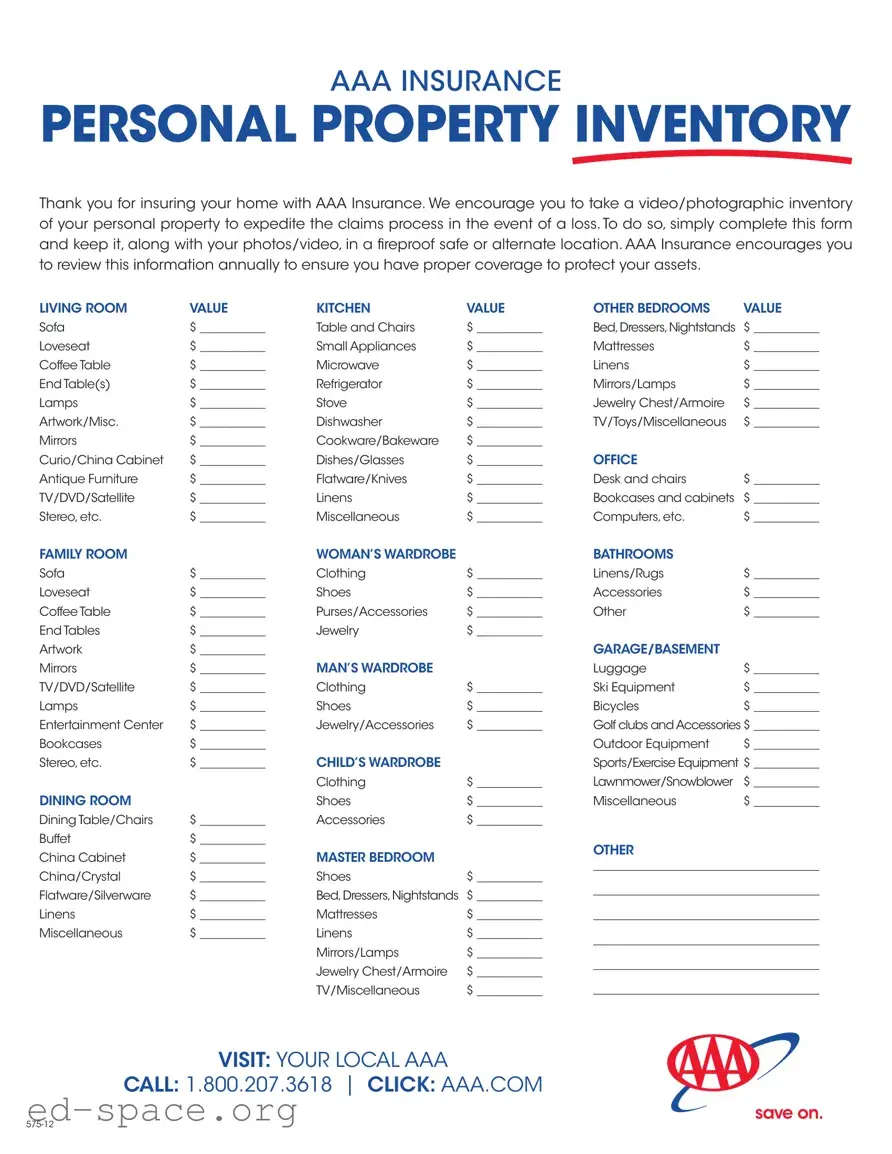
The AAA Property Loss Worksheet is an essential tool for homeowners seeking to safeguard their personal belongings. This form encourages individuals to take a comprehensive inventory of their possessions, ensuring that they are prepared in the event of a loss. By documenting items room by room—such as furniture in the living room, kitchen appliances, and personal items in bedrooms—policyholders can streamline the claims process with their insurance provider. The form also highlights the importance of maintaining an updated inventory, recommending an annual review to ensure adequate coverage for all assets. Additionally, it suggests keeping a video or photographic record of items, stored securely in a fireproof safe or alternative location. This proactive approach not only helps in effective claims management but also provides peace of mind knowing that valuable possessions are well accounted for.

AAA INSURANCE
PERSONAL PROPERTY INVENTORY
Thank you for insuring your home with AAA Insurance. We encourage you to take a video/photographic inventory of your personal property to expedite the claims process in the event of a loss. To do so, simply complete this form and keep it, along with your photos/video, in a fireproof safe or alternate location. AAA Insurance encourages you to review this information annually to ensure you have proper coverage to protect your assets.
LIVING ROOM |
VALUE |
KITCHEN |
VALUE |
OTHER BEDROOMS |
VALUE |
|
Sofa |
$ ___________ |
Table and Chairs |
$ ___________ |
Bed, Dressers, Nightstands |
$ ___________ |
|
Loveseat |
$ ___________ |
Small Appliances |
$ ___________ |
Mattresses |
$ ___________ |
|
Coffee Table |
$ ___________ |
Microwave |
$ ___________ |
Linens |
$ ___________ |
|
End Table(s) |
$ ___________ |
Refrigerator |
$ ___________ |
Mirrors/Lamps |
$ ___________ |
|
Lamps |
$ ___________ |
Stove |
$ ___________ |
Jewelry Chest/Armoire |
$ ___________ |
|
Artwork/Misc. |
$ ___________ |
Dishwasher |
$ ___________ |
TV/Toys/Miscellaneous |
$ ___________ |
|
Mirrors |
$ ___________ |
Cookware/Bakeware |
$ ___________ |
|
|
|
Curio/China Cabinet |
$ ___________ |
Dishes/Glasses |
$ ___________ |
OFFICE |
|
|
Antique Furniture |
$ ___________ |
Flatware/Knives |
$ ___________ |
Desk and chairs |
$ ___________ |
|
TV/DVD/Satellite |
$ ___________ |
Linens |
$ ___________ |
Bookcases and cabinets |
$ ___________ |
|
Stereo, etc. |
$ ___________ |
Miscellaneous |
$ ___________ |
Computers, etc. |
$ ___________ |
|
FAMILY ROOM |
|
WOMAN’S WARDROBE |
|
BATHROOMS |
|
|
Sofa |
$ ___________ |
Clothing |
$ ___________ |
Linens/Rugs |
$ ___________ |
|
Loveseat |
$ ___________ |
Shoes |
$ ___________ |
Accessories |
$ ___________ |
|
Coffee Table |
$ ___________ |
Purses/Accessories |
$ ___________ |
Other |
$ ___________ |
|
End Tables |
$ ___________ |
Jewelry |
$ ___________ |
|
|
|
Artwork |
$ ___________ |
|
|
GARAGE/BASEMENT |
|
|
Mirrors |
$ ___________ |
MAN’S WARDROBE |
|
Luggage |
$ ___________ |
|
TV/DVD/Satellite |
$ ___________ |
Clothing |
$ ___________ |
Ski Equipment |
$ ___________ |
|
Lamps |
$ ___________ |
Shoes |
$ ___________ |
Bicycles |
$ ___________ |
|
Entertainment Center |
$ ___________ |
Jewelry/Accessories |
$ ___________ |
Golf clubs and Accessories $ ___________ |
||
Bookcases |
$ ___________ |
|
|
Outdoor Equipment |
$ ___________ |
|
Stereo, etc. |
$ ___________ |
CHILD’S WARDROBE |
|
Sports/Exercise Equipment $ ___________ |
||
|
|
Clothing |
$ ___________ |
Lawnmower/Snowblower |
$ ___________ |
|
DINING ROOM |
|
Shoes |
$ ___________ |
Miscellaneous |
$ ___________ |
|
Dining Table/Chairs |
$ ___________ |
Accessories |
$ ___________ |
|
|
|
Buffet |
$ ___________ |
|
|
OTHER |
|
|
China Cabinet |
$ ___________ |
MASTER BEDROOM |
|
|
||
|
______________________________________ |
|||||
China/Crystal |
$ ___________ |
Shoes |
$ ___________ |
|||
______________________________________ |
||||||
Flatware/Silverware |
$ ___________ |
Bed, Dressers, Nightstands |
$ ___________ |
|||
|
|
|||||
Linens |
$ ___________ |
Mattresses |
$ ___________ |
______________________________________ |
||
Miscellaneous |
$ ___________ |
Linens |
$ ___________ |
______________________________________ |
||
|
|
Mirrors/Lamps |
$ ___________ |
|||
|
|
______________________________________ |
||||
|
|
Jewelry Chest/Armoire |
$ ___________ |
|||
|
|
|
|
|||
|
|
TV/Miscellaneous |
$ ___________ |
______________________________________ |
||
VISIT: YOUR LOCAL AAA
CALL: 1.800.207.3618 | CLICK: AAA.COM
| Fact Name | Details |
|---|---|
| Purpose of the Form | The Aaa Property Loss Worksheet helps homeowners document their personal property for insurance claims. |
| Inventory Recommendation | Homeowners are encouraged to take video or photographic inventories of their belongings to speed up the claims process. |
| Storage Advice | It is advised to keep the completed form and any photos or videos in a fireproof safe or another secure location. |
| Annual Review | AAA Insurance recommends reviewing the inventory annually to ensure adequate coverage for personal assets. |
| State-Specific Laws | In some states, specific laws govern the documentation of personal property for insurance claims. Check local regulations for details. |
Completing the AAA Property Loss Worksheet is essential for documenting personal property in case of loss. This form helps ensure that all valuable items are accounted for and can expedite the claims process. After filling out the worksheet, it is advisable to store it securely along with any photographic or video evidence of your possessions.
What is the purpose of the AAA Property Loss Worksheet?
The AAA Property Loss Worksheet is designed to help you keep an inventory of your personal property. This form allows you to document the value of items in various rooms of your home, making it easier to file a claim in the event of a loss. By maintaining this inventory, you can ensure that you have adequate coverage for your belongings.
How should I use the AAA Property Loss Worksheet?
To use the worksheet, fill in the values of your personal property in the designated sections for each room. It’s advisable to take photos or videos of your items and store them alongside the completed form. Keep everything in a fireproof safe or another secure location. Review and update this inventory annually to reflect any changes in your possessions.
Why is it important to keep an updated inventory of my personal property?
Having an updated inventory is crucial for ensuring that your insurance coverage accurately reflects the value of your belongings. In the event of a loss, an accurate inventory can expedite the claims process, helping you recover faster. Regularly reviewing your inventory also allows you to adjust your coverage as needed, protecting your assets effectively.
Where should I store the completed AAA Property Loss Worksheet?
After completing the worksheet, store it in a safe place, such as a fireproof safe. You may also consider keeping a copy in an alternate location, like a trusted friend’s house or a secure online storage service. This ensures that your inventory is accessible when needed, especially during emergencies.
Inaccurate Valuation: One common mistake is underestimating the value of personal items. Individuals often assign lower values to their belongings, which can lead to inadequate coverage. It’s important to conduct thorough research or consult with professionals to determine the true worth of items.
Omitting Items: Another frequent error involves leaving out significant possessions from the inventory. People may forget to include valuable items such as electronics, jewelry, or collectibles. A comprehensive list ensures that all assets are accounted for in the event of a claim.
Neglecting Documentation: Failing to keep receipts, photos, or videos of items is a mistake that can complicate the claims process. Proper documentation serves as proof of ownership and value, which is crucial during a loss assessment.
Not Updating Regularly: Many individuals complete the form once and forget about it. However, personal property can change over time. Regularly reviewing and updating the inventory ensures that it accurately reflects current assets and their values.
The Aaa Property Loss Worksheet is a crucial document for homeowners to inventory their personal property and facilitate the claims process in case of loss. Along with this form, several other documents may be required or beneficial in managing property loss claims effectively. Below is a list of commonly used forms and documents that complement the Aaa Property Loss Worksheet.
Utilizing these documents alongside the Aaa Property Loss Worksheet can streamline the claims process and help ensure that all relevant information is provided to the insurance company. Proper documentation is key to a successful claim outcome.
The AAA Property Loss Worksheet form serves as a valuable tool for documenting personal property in case of loss. Several other documents share similar purposes and structures. Below is a list of ten such documents:
When filling out the AAA Property Loss Worksheet form, it is essential to approach the task with care and attention to detail. Here are some important do's and don'ts to keep in mind:
Understanding the AAA Property Loss Worksheet form is essential for homeowners looking to protect their assets. However, several misconceptions can cloud the clarity of its purpose and use. Here are six common misconceptions:
By dispelling these misconceptions, homeowners can better prepare themselves for potential losses and ensure they have the right coverage in place.
Filling out the AAA Property Loss Worksheet is a crucial step in safeguarding your personal belongings. Here are some key takeaways to consider: