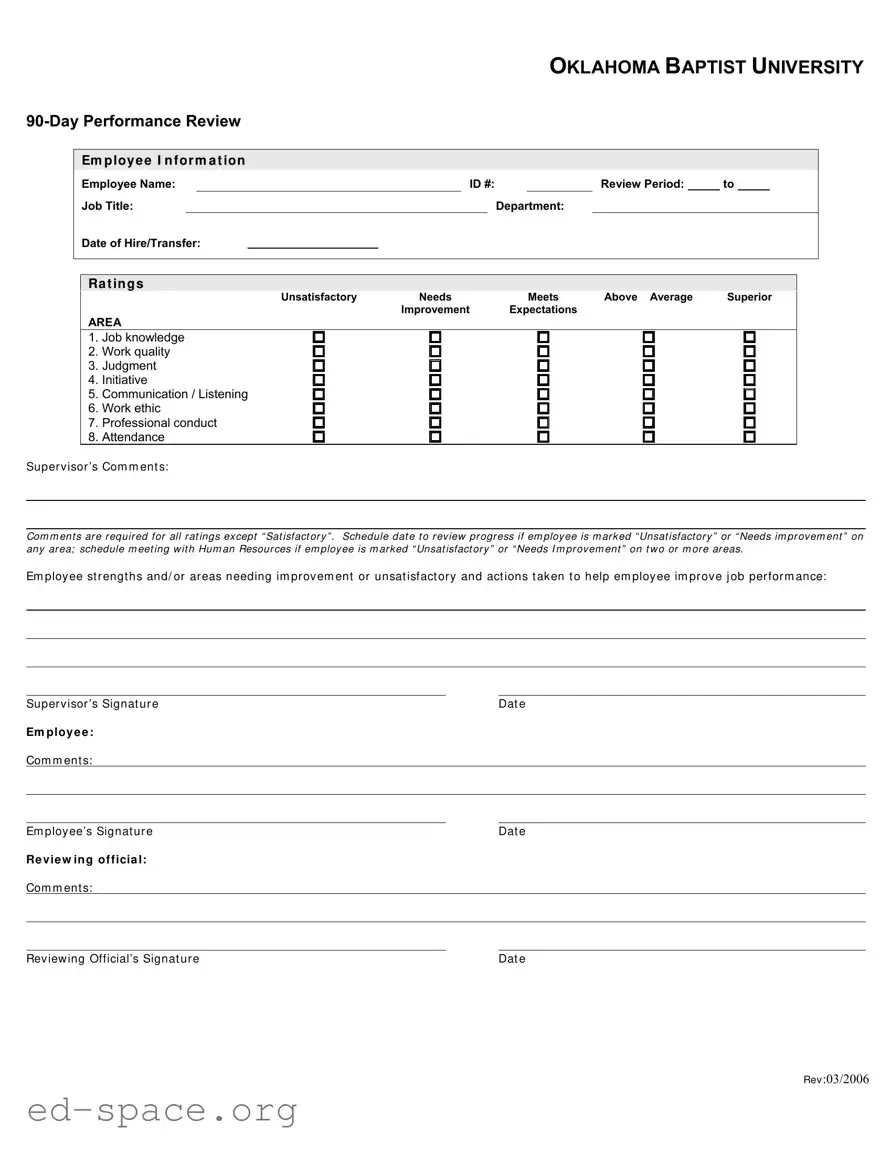
The 90 Day Performance form serves as a vital tool for evaluating employee performance at Oklahoma Baptist University. This structured review process covers several key areas essential for assessing an employee's contributions and growth within their role. The form includes sections for job knowledge, work quality, judgment, initiative, communication, work ethic, professional conduct, and attendance. Each area is rated on a scale ranging from "Unsatisfactory" to "Superior," allowing supervisors to provide clear feedback. Comments are required for all ratings except for "Satisfactory," ensuring that employees receive constructive insights into their performance. Additionally, if an employee receives a rating of "Unsatisfactory" or "Needs Improvement" in any category, a follow-up meeting is scheduled to discuss progress. This proactive approach not only highlights strengths but also identifies areas needing improvement, fostering a supportive environment for professional development. The supervisor's signature and comments, along with the employee's input, are essential components of this review process, emphasizing collaboration and accountability.
OKLAHOMA BAPTIST UNIVERSITY
Em p loy e e I n f o r m a t ion
Employee Name: |
|
ID #: |
|
|
Review Period: |
|
to |
||
Job Title: |
|
|
|
|
Department: |
|
|
||
Date of Hire/Transfer:
Ra t in g s
|
Unsatisfactory |
Needs |
Meets |
Above Average |
Superior |
|
|
Improvement |
Expectations |
|
|
AREA |
|
|
|
|
|
1. |
Job knowledge |
|
|
|
|
2. |
Work quality |
|
|
|
|
3. |
Judgment |
|
|
|
|
4. |
Initiative |
|
|
|
|
5. |
Communication / Listening |
|
|
|
|
6. |
Work ethic |
|
|
|
|
7. |
Professional conduct |
|
|
|
|
8. |
Attendance |
|
|
|
|
Super v isor ’s Com m ent s:
Com m ent s ar e r equir ed for all r at ings ex cept “ Sat isfact or y ” . Schedule dat e t o r ev iew pr ogr ess if em ploy ee is m ar k ed “ Unsat isfact or y ” or “ Needs im pr ov em ent ” on any ar ea; schedule m eet ing w it h Hum an Resour ces if em ploy ee is m ar ked “ Unsat isfact or y ” or “ Needs I m pr ov em ent ” on t w o or m or e ar eas.
Em ploy ee st r engt h s and/ or ar eas n eeding im pr ov em en t or unsat isfact or y and act ion s t ak en t o h elp em ploy ee im pr ov e j ob per for m ance:
Super v isor ’s Signat ur e |
|
Dat e |
Em p loy e e : |
|
|
Com m en t s: |
|
|
|
|
|
|
|
|
Em ploy ee’s Signat ur e |
|
Dat e |
Re v ie w in g of f icia l: |
|
|
Com m en t s: |
|
|
|
|
|
|
|
|
Rev iew ing Official’s Signat ur e |
|
Dat e |
Rev :03/2006
| Fact Name | Details |
|---|---|
| Purpose | The 90-Day Performance Review form is designed to assess employee performance during the initial 90 days of employment. |
| Employee Information | It requires the employee's name, ID number, job title, department, and dates of hire or transfer. |
| Rating Categories | Performance is rated across five categories: Unsatisfactory, Needs Improvement, Meets Expectations, Above Average, and Superior. |
| Evaluation Areas | Eight specific areas are evaluated, including job knowledge, work quality, judgment, initiative, communication, work ethic, professional conduct, and attendance. |
| Supervisor Comments | Comments are mandatory for all ratings except for "Satisfactory." This ensures clarity in performance evaluation. |
| Follow-Up Requirements | If an employee receives a rating of "Unsatisfactory" or "Needs Improvement" in any area, a follow-up meeting must be scheduled. |
| Employee Strengths | The form allows for the documentation of employee strengths and areas needing improvement, along with actions taken to assist in performance enhancement. |
| Governing Law | This performance review process is governed by Oklahoma employment law, ensuring compliance with state regulations. |
Completing the 90 Day Performance form is an important step in evaluating employee performance and providing constructive feedback. Following these steps will ensure that the form is filled out accurately and comprehensively, setting the stage for future discussions about performance and development.
What is the purpose of the 90 Day Performance form?
The 90 Day Performance form is designed to evaluate an employee's job performance during their first three months of employment. It helps supervisors assess various aspects of the employee's work, such as job knowledge, work quality, and communication skills. This review process is essential for identifying strengths and areas needing improvement, ensuring that employees are on the right track to succeed in their roles.
What areas are evaluated on the form?
The form evaluates eight key areas: job knowledge, work quality, judgment, initiative, communication/listening, work ethic, professional conduct, and attendance. Each area is rated to provide a comprehensive overview of the employee's performance and contributions to the team.
How does the rating system work?
The rating system includes five categories: Unsatisfactory, Needs Improvement, Meets Expectations, Above Average, and Superior. Supervisors must provide comments for all ratings except for "Meets Expectations." This feedback is crucial for employees to understand how they are performing and what specific improvements may be necessary.
What happens if an employee receives an "Unsatisfactory" or "Needs Improvement" rating?
If an employee is marked as "Unsatisfactory" or "Needs Improvement" in any area, the supervisor is required to schedule a date to review progress. If the employee receives these ratings in two or more areas, a meeting with Human Resources must be arranged. This process is intended to ensure that employees receive the support they need to improve their performance.
Are there any required comments from supervisors?
Yes, supervisors must provide comments for all ratings except for "Meets Expectations." These comments are essential for clarifying the reasons behind the ratings and guiding the employee on how to enhance their performance. Constructive feedback is a valuable part of the review process.
What should an employee do if they disagree with their performance rating?
If an employee disagrees with their performance rating, they should first discuss their concerns with their supervisor. Open communication is key. If the issue is not resolved, the employee may consider reaching out to Human Resources for further assistance and guidance on how to address the situation.
How can an employee prepare for their 90 Day Performance review?
To prepare for the review, an employee should reflect on their contributions during the past three months. They can gather examples of their work, accomplishments, and any challenges they faced. Being ready to discuss these points can help facilitate a productive conversation during the review.
What role does the reviewing official play in the process?
The reviewing official is responsible for overseeing the performance review process and ensuring that it is conducted fairly and thoroughly. They may provide additional comments and insights on the employee's performance and sign off on the completed form, ensuring that all necessary steps have been taken.
What happens after the performance review is completed?
Once the performance review is completed, the employee and supervisor will discuss the results and any necessary action steps. If areas for improvement are identified, a plan will be developed to help the employee enhance their performance. This may include additional training or regular check-ins to monitor progress.
Is there a follow-up process after the review?
Yes, follow-up meetings may be scheduled if an employee needs improvement in specific areas. Regular check-ins can help track progress and ensure that the employee receives ongoing support. This approach fosters a continuous feedback loop, promoting professional growth and development.
Inadequate Completion of Required Fields: Many individuals overlook essential sections of the form, such as the employee name, ID number, or job title. Omitting this information can lead to confusion and delays in the review process.
Failure to Provide Supervisor Comments: It is crucial for supervisors to include comments for all ratings except "Satisfactory." Neglecting this requirement can hinder the employee’s understanding of their performance and the areas that need improvement.
Not Scheduling Follow-Up Meetings: If an employee is marked as "Unsatisfactory" or "Needs Improvement," a follow-up meeting with Human Resources should be scheduled. Failing to do so can result in unresolved issues and a lack of support for the employee.
Ignoring Employee Feedback: Employees are encouraged to provide their comments on the review form. Not allowing or disregarding this input can lead to dissatisfaction and a feeling of disconnection from the evaluation process.
The 90-Day Performance Review form is a vital tool for assessing employee performance early in their tenure. However, it is often accompanied by other important documents that provide a more comprehensive view of an employee's contributions and areas for growth. Here are four key documents frequently used alongside the 90-Day Performance form:
Utilizing these documents together with the 90-Day Performance Review form can create a more complete picture of an employee's performance, fostering growth and development within the organization. By combining various perspectives, employers can better support their staff and enhance overall workplace productivity.
The 90-Day Performance Review form shares similarities with several other performance-related documents. Each of these documents serves to evaluate employee performance, provide feedback, and foster professional development. Below are seven documents that resemble the 90-Day Performance form:
When filling out the 90 Day Performance form, it’s important to approach the task with care and attention. Here are some dos and don’ts to keep in mind:
Misconceptions about the 90 Day Performance form can lead to confusion and miscommunication. Here are nine common misunderstandings:
Understanding these misconceptions can help employees approach the 90 Day Performance form with a clearer perspective, fostering a more productive review process.
Filling out and using the 90 Day Performance form is an important process for both employees and supervisors. Here are some key takeaways to keep in mind: