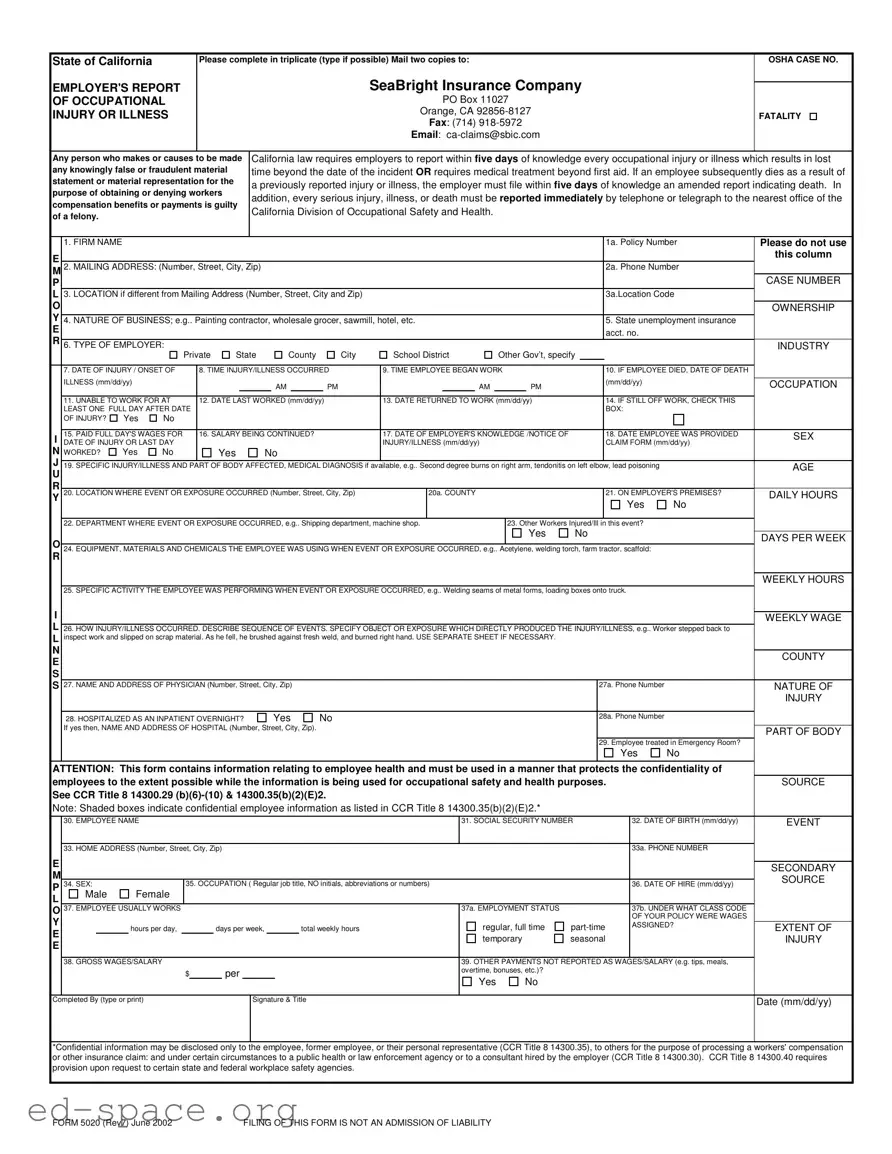
The 5020 California form, officially known as the Employer's Report of Occupational Injury or Illness, serves as a crucial tool for employers in the state of California. This form is designed to document any occupational injuries or illnesses that employees may experience while on the job. Employers are required to complete this form in triplicate, ensuring that two copies are sent to SeaBright Insurance Company within five days of becoming aware of the incident. The form captures essential details, including the nature of the injury, the date it occurred, and the medical treatment required. It also prompts employers to report any fatalities or serious injuries immediately to the California Division of Occupational Safety and Health. By providing a structured way to report these incidents, the 5020 form helps maintain workplace safety and compliance with state regulations. The information collected not only aids in processing workers' compensation claims but also contributes to broader efforts to prevent future workplace injuries. Understanding how to accurately fill out this form is vital for employers, as any false statements can lead to serious legal repercussions.
State of California
EMPLOYER'S REPORT OF OCCUPATIONAL INJURY OR ILLNESS
Please complete in triplicate (type if possible) Mail two copies to:
SeaBright Insurance Company
PO Box 11027
Orange, CA
Fax: (714)
Email:
OSHA CASE NO.
FATALITY
Any person who makes or causes to be made any knowingly false or fraudulent material statement or material representation for the purpose of obtaining or denying workers compensation benefits or payments is guilty of a felony.
California law requires employers to report within five days of knowledge every occupational injury or illness which results in lost time beyond the date of the incident OR requires medical treatment beyond first aid. If an employee subsequently dies as a result of a previously reported injury or illness, the employer must file within five days of knowledge an amended report indicating death. In addition, every serious injury, illness, or death must be reported immediately by telephone or telegraph to the nearest office of the California Division of Occupational Safety and Health.
|
|
1. FIRM NAME |
|
|
|
|
|
|
|
|
|
|
|
|
|
|
|
|
|
|
|
|
1a. Policy Number |
Please do not use |
||
E |
|
|
|
|
|
|
|
|
|
|
|
|
|
|
|
|
|
|
|
|
|
|
|
|
|
this column |
|
2. MAILING ADDRESS: (Number, Street, City, Zip) |
|
|
|
|
|
|
|
|
|
|
|
|
|
|
2a. Phone Number |
|
|||||||||
M |
|
|
|
|
|
|
|
|
|
|
|
|
|
|
|
|||||||||||
P |
|
|
|
|
|
|
|
|
|
|
|
|
|
|
|
|
|
|
|
|
|
|
|
|
|
CASE NUMBER |
L |
3. LOCATION if different from Mailing Address (Number, Street, City and Zip) |
|
|
|
|
|
|
|
|
|
3a.Location Code |
|
||||||||||||||
O |
|
|
|
|
|
|
|
|
|
|
|
|
|
|
|
|
|
|
|
|
|
|
|
|
OWNERSHIP |
|
Y |
|
4. NATURE OF BUSINESS; e.g.. Painting contractor, wholesale grocer, sawmill, hotel, etc. |
|
|
|
|
|
5. State unemployment insurance |
|
|||||||||||||||||
E |
|
|
|
|
|
|
|
|
|
|
|
|
|
|
|
|
|
|
|
|
|
acct. no. |
|
|
|
|
R |
|
|
|
|
|
|
|
|
|
|
|
|
|
|
|
|
|
|
|
|
|
|
|
|
|
|
|
6. TYPE OF EMPLOYER: |
Private |
State |
|
County |
City |
School District |
Other Gov’t, specify |
|
|
INDUSTRY |
|||||||||||||||
|
|
|
|
|
|
|
|
|
||||||||||||||||||
|
|
|
|
|
|
|
|
|
|
|
|
|
|
|
|
|
|
|
||||||||
|
|
7. DATE OF INJURY / ONSET OF |
|
8. TIME INJURY/ILLNESS OCCURRED |
9. TIME EMPLOYEE BEGAN WORK |
|
|
10. IF EMPLOYEE DIED, DATE OF DEATH |
|
|||||||||||||||||
|
|
ILLNESS (mm/dd/yy) |
|
|
|
|
|
|
|
|
|
|
|
|
|
|
|
|
|
|
|
(mm/dd/yy) |
|
|
|
|
|
|
|
|
|
|
|
|
AM |
|
|
PM |
|
|
|
AM |
|
|
PM |
|
|
|
|
OCCUPATION |
|||
|
|
|
|
|
|
|
|
|
|
|
|
|
|
|
|
|
|
|
|
|||||||
|
|
|
|
|
|
|
|
|
|
|
|
|
||||||||||||||
|
|
11. UNABLE TO WORK FOR AT |
|
12. DATE LAST WORKED (mm/dd/yy) |
|
13. DATE RETURNED TO WORK (mm/dd/yy) |
|
|
14. IF STILL OFF WORK, CHECK THIS |
|
||||||||||||||||
|
|
LEAST ONE FULL DAY AFTER DATE |
|
|
|
|
|
|
|
|
|
|
|
|
|
|
|
|
|
BOX: |
|
|
|
|||
|
|
OF INJURY? |
Yes |
No |
|
|
|
|
|
|
|
|
|
|
|
|
|
|
|
|
|
|
|
|
|
|
|
|
|
|
|
|
|
|
|
|
|
|
|
||||||||||||||
I |
15. PAID FULL DAY'S WAGES FOR |
|
16. SALARY BEING CONTINUED? |
|
17. DATE OF EMPLOYER'S KNOWLEDGE /NOTICE OF |
|
|
18. DATE EMPLOYEE WAS PROVIDED |
SEX |
|||||||||||||||||
DATE OF INJURY OR LAST DAY |
|
|
|
|
|
|
|
|
|
INJURY/ILLNESS (mm/dd/yy) |
|
|
|
|
|
CLAIM FORM (mm/dd/yy) |
|
|||||||||
N |
WORKED? |
Yes |
No |
|
|
Yes |
No |
|
|
|
|
|
|
|
|
|
|
|
|
|
|
|||||
J |
|
19. SPECIFIC INJURY/ILLNESS AND PART OF BODY AFFECTED, MEDICAL DIAGNOSIS if available, e.g.. Second degree burns on right arm, tendonitis on left elbow, lead poisoning |
|
|
AGE |
|||||||||||||||||||||
U |
|
|
|
|
|
|
|
|
|
|
|
|
|
|
|
|
|
|
|
|
|
|
|
|
||
|
|
|
|
|
|
|
|
|
|
|
|
|
|
|
|
|
|
|
|
|
|
|
|
|
||
R |
|
|
|
|
|
|
|
|
|
|
|
|
|
|
|
|
|
|
|
|
|
|
|
|
|
|
Y |
20. LOCATION WHERE EVENT OR EXPOSURE OCCURRED (Number, Street, City, Zip) |
|
20a. COUNTY |
|
|
|
|
|
21. ON EMPLOYER'S PREMISES? |
DAILY HOURS |
||||||||||||||||
|
|
|
|
|
|
|
|
|
|
|
|
|
|
|
|
|
|
|
|
|
Yes |
No |
|
|||
|
|
|
|
|
|
|
|
|
|
|
|
|
|
|
|
|
|
|
|
|
|
|
|
|||
|
|
|
|
|
|
|
|
|
|
|||||||||||||||||
|
|
22. DEPARTMENT WHERE EVENT OR EXPOSURE OCCURRED, e.g.. Shipping department, machine shop. |
|
23. Other Workers Injured/Ill in this event? |
|
|
|
|||||||||||||||||||
|
|
|
|
|
|
|
|
|
|
|
|
|
|
|
|
|
|
|
|
Yes |
No |
|
|
|
||
O |
|
|
|
|
|
|
|
|
|
|
|
|
|
|
|
|
|
|
|
|
|
DAYS PER WEEK |
||||
|
|
|
|
|
|
|
|
|
|
|
|
|
|
|
|
|
|
|
|
|
|
|
|
|
||
|
24. EQUIPMENT, MATERIALS AND CHEMICALS THE EMPLOYEE WAS USING WHEN EVENT OR EXPOSURE OCCURRED, e.g.. Acetylene, welding torch, farm tractor, scaffold: |
|
|
|
||||||||||||||||||||||
R |
|
|
|
|
|
|
|
|
|
|
|
|
|
|
|
|
|
|
|
|
|
|
|
|
|
|
WEEKLY HOURS
25. SPECIFIC ACTIVITY THE EMPLOYEE WAS PERFORMING WHEN EVENT OR EXPOSURE OCCURRED, e.g.. Welding seams of metal forms, loading boxes onto truck.
I |
WEEKLY WAGE |
|
L26. HOW INJURY/ILLNESS OCCURRED. DESCRIBE SEQUENCE OF EVENTS. SPECIFY OBJECT OR EXPOSURE WHICH DIRECTLY PRODUCED THE INJURY/ILLNESS, e.g.. Worker stepped back to L inspect work and slipped on scrap material. As he fell, he brushed against fresh weld, and burned right hand. USE SEPARATE SHEET IF NECESSARY.
N |
|
|
|
|
|
|
|
|
|
|
|
|
|
|
|
|
|
|
|
|
|
|
|
|
|
|
|
|
|
|
|
|
|
|
|
|
|
|
|
|
|
|
|
|
|
|
|
|
|
|
|
|
|
|
|
|
|
COUNTY |
|
E |
|
|
|
|
|
|
|
|
|
|
|
|
|
|
|
|
|
|
|
|
|
|
|
|
|
|
|
|
|
|
|
|
|
|
|
|
|
|
|
|
|
|
|
|
|
|
|
|
|
|
|
|
|
|
|
|
|
|
|
S |
|
|
|
|
|
|
|
|
|
|
|
|
|
|
|
|
|
|
|
|
|
|
|
|
|
|
|
|
|
S 27. NAME AND ADDRESS OF PHYSICIAN (Number, Street, City, Zip) |
|
|
|
|
|
|
|
|
27a. Phone Number |
|
|
|
NATURE OF |
||||||||||||||||
|
|
|
|
|
|
|
|
|
|
|
|
|
|
|
|
|
|
|
|
|
|
|
|
|
|
|
|
|
INJURY |
|
|
|
|
|
|
|
|
|
|
|
|
|
|
|
|
|
|
|
|
|
|
|
|
|
|
|
|||
|
|
28. HOSPITALIZED AS AN INPATIENT OVERNIGHT? |
|
|
Yes |
|
|
No |
|
|
|
|
|
28a. Phone Number |
|
|
|
|
|||||||||||
|
|
|
|
|
|
|
|
|
|
|
|
|
|||||||||||||||||
|
|
If yes then, NAME AND ADDRESS OF HOSPITAL (Number, Street, City, Zip). |
|
|
|
|
|
|
|
|
|
|
|
PART OF BODY |
|||||||||||||||
|
|
|
|
|
|
|
|
|
|
|
|
|
|
|
|
|
|
|
|
|
|
|
|
|
|
|
|
|
|
|
|
|
|
|
|
|
|
|
|
|
|
|
|
|
|
|
|
|
|
|
|
|
29. Employee treated in Emergency Room? |
|
|
||||
|
|
|
|
|
|
|
|
|
|
|
|
|
|
|
|
|
|
|
|
|
|
|
|
Yes |
No |
|
|
||
|
|
|
|
|
|
|
|
|
|
|
|
|
|
|
|
|
|
|
|
|
|||||||||
ATTENTION: This form contains information relating to employee health and must be used in a manner that protects the confidentiality of |
|
|
|||||||||||||||||||||||||||
employees to the extent possible while the information is being used for occupational safety and health purposes. |
|
|
|
|
|
SOURCE |
|||||||||||||||||||||||
See CCR Title 8 14300.29 |
|
|
|
|
|
|
|
|
|
|
|
|
|||||||||||||||||
Note: Shaded boxes indicate confidential employee information as listed in CCR Title 8 14300.35(b)(2)(E)2.* |
|
|
|
|
|
|
|
|
|
|
|||||||||||||||||||
|
30. EMPLOYEE NAME |
|
|
|
|
|
|
|
|
|
|
|
|
31. SOCIAL SECURITY NUMBER |
|
|
32. DATE OF BIRTH (mm/dd/yy) |
|
EVENT |
||||||||||
|
|
|
|
|
|
|
|
|
|
|
|
|
|
|
|
|
|
|
|
|
|
|
|
|
|||||
|
33. HOME ADDRESS (Number, Street, City, Zip) |
|
|
|
|
|
|
|
|
|
|
|
|
|
|
33a. PHONE NUMBER |
|
|
|||||||||||
E |
|
|
|
|
|
|
|
|
|
|
|
|
|
|
|
|
|
|
|
|
|
|
|
|
|
|
|
|
|
|
|
|
|
|
|
|
|
|
|
|
|
|
|
|
|
|
|
|
|
|
|
|
|
|
|
|
|
SECONDARY |
|
M |
|
|
|
|
|
|
|
|
|
|
|
|
|
|
|
|
|
|
|
|
|
|
|
|
|
|
|
|
|
|
|
|
|
|
|
|
|
|
|
|
|
|
|
|
|
|
|
|
|
|
|
|
|
|
|
|
|
SOURCE |
|
P |
34. SEX: |
Female |
35. OCCUPATION ( Regular job title, NO initials, abbreviations or numbers) |
|
|
|
|
|
|
|
36. DATE OF HIRE (mm/dd/yy) |
|
|||||||||||||||||
|
|
|
|
|
|
|
|
|
|||||||||||||||||||||
L |
|
Male |
|
|
|
|
|
|
|
|
|
|
|
|
|
|
|
|
|
|
|
|
|
|
|
|
|||
|
|
|
|
|
|
|
|
|
|
|
|
|
|
|
|
|
|
|
|
|
|
|
|
|
|
|
|
|
|
O |
37. EMPLOYEE USUALLY WORKS |
|
|
|
|
|
|
|
|
|
|
|
|
37a. EMPLOYMENT STATUS |
|
|
|
|
|
37b. UNDER WHAT CLASS CODE |
|
|
|||||||
Y |
|
|
|
|
|
|
|
|
|
|
|
|
|
|
|
|
|
|
|
|
|
|
|
|
OF YOUR POLICY WERE WAGES |
|
|
||
|
|
|
hours per day, |
|
|
days per week, |
total weekly hours |
regular, full time |
|
ASSIGNED? |
|
EXTENT OF |
|||||||||||||||||
E |
|
|
|
|
|
|
|
|
|
|
|||||||||||||||||||
|
|
|
|
|
|
|
|
|
|
|
|
|
|
|
|
|
temporary |
|
seasonal |
|
|
|
|
|
INJURY |
||||
E |
|
|
|
|
|
|
|
|
|
|
|
|
|
|
|
|
|
|
|
|
|
|
|
||||||
|
|
|
|
|
|
|
|
|
|
|
|
|
|
|
|
|
|
|
|
|
|
|
|
|
|
|
|
|
|
|
|
|
|
|
|
|
|
|
|
|
|
|
|
|
|
|
|
||||||||||||
|
38. GROSS WAGES/SALARY |
|
|
|
|
|
|
|
|
|
|
|
|
39. OTHER PAYMENTS NOT REPORTED AS WAGES/SALARY (e.g. tips, meals, |
|
|
|||||||||||||
|
|
|
|
|
|
$ |
|
per |
|
|
|
|
|
|
|
overtime, bonuses, etc.)? |
|
|
|
|
|
|
|
|
|
|
|||
|
|
|
|
|
|
|
|
|
|
|
|
|
|
Yes |
No |
|
|
|
|
|
|
|
|
|
|
||||
|
|
|
|
|
|
|
|
|
|
|
|
|
|
|
|
|
|
|
|
|
|
|
|
|
|
|
|
||
|
|
|
|
|
|
|
|
|
|
|
|
|
|
|
|
|
|
|
|
||||||||||
Completed By (type or print) |
|
|
|
|
|
Signature & Title |
|
|
|
|
|
|
|
|
|
|
|
Date (mm/dd/yy) |
|||||||||||
|
|
|
|
|
|
|
|
|
|
|
|
|
|
|
|
|
|
|
|
|
|
|
|
|
|
|
|
|
|
*Confidential information may be disclosed only to the employee, former employee, or their personal representative (CCR Title 8 14300.35), to others for the purpose of processing a workers' compensation or other insurance claim: and under certain circumstances to a public health or law enforcement agency or to a consultant hired by the employer (CCR Title 8 14300.30). CCR Title 8 14300.40 requires provision upon request to certain state and federal workplace safety agencies.
FORM 5020 (Rev7) June 2002 |
FILING OF THIS FORM IS NOT AN ADMISSION OF LIABILITY |
| Fact Name | Description |
|---|---|
| Purpose | The 5020 California form is used to report occupational injuries or illnesses to the employer's insurance company. |
| Submission Requirement | Employers must complete this form in triplicate and send two copies to SeaBright Insurance Company. |
| Governing Law | This form is governed by California Code of Regulations, Title 8, Sections 14300.29 and 14300.35. |
| Reporting Timeline | Employers are required to report injuries or illnesses within five days of becoming aware of them. |
| Amended Reports | If an employee dies due to a reported injury, an amended report must be filed within five days. |
| Confidentiality | The form contains confidential employee information, which must be protected during use. |
| Emergency Reporting | Serious injuries must be reported immediately by phone or telegraph to the California Division of Occupational Safety and Health. |
| False Statements | Making false statements on this form can result in felony charges under California law. |
Filling out the 5020 California form requires attention to detail, as it is essential for reporting occupational injuries or illnesses. After completing the form, you will need to submit two copies to SeaBright Insurance Company and keep one for your records. Be sure to provide accurate information to avoid delays in processing.
What is the purpose of the 5020 California form?
The 5020 California form is designed for employers to report occupational injuries or illnesses that occur in the workplace. It serves as a formal record of incidents that result in lost time or require medical treatment beyond first aid. This form is crucial for ensuring compliance with state regulations regarding workplace safety and workers' compensation claims.
Who needs to complete the 5020 form?
Employers in California are required to complete the 5020 form whenever an employee experiences an occupational injury or illness that meets specific criteria. This includes cases where the employee misses work or needs medical treatment beyond first aid. Additionally, if an employee dies as a result of a previously reported injury or illness, an amended report must be filed.
How soon must the form be submitted after an incident?
Employers must submit the 5020 form within five days of learning about the occupational injury or illness. This prompt reporting is essential to comply with California law and to facilitate the processing of workers' compensation claims.
Where should the completed form be sent?
After completing the 5020 form, employers must mail two copies to SeaBright Insurance Company at their designated address: PO Box 11027, Orange, CA 92856-8127. Alternatively, the form can be faxed to (714) 918-5972 or emailed to [email protected].
What information is required on the form?
The 5020 form requires various details, including the employer's name, policy number, mailing address, and specifics about the employee and the incident. This includes the date and time of the injury, the nature of the injury, and any medical diagnosis if available. Employers must also provide information about the employee's work status and any treatments received.
Is the information on the 5020 form confidential?
Yes, the information contained in the 5020 form is sensitive and must be handled with care. Employers are required to protect the confidentiality of the employee's health information. Disclosure is limited to the employee, their personal representative, or for processing workers' compensation claims, as stipulated by California regulations.
What happens if an employer fails to file the form on time?
Failing to file the 5020 form within the required timeframe can lead to penalties and complications in the workers' compensation process. Employers may face legal repercussions for not adhering to reporting requirements, which can impact their liability and insurance claims.
Can the form be amended after submission?
If an employer discovers additional information or if the situation changes—such as the employee's death due to the reported injury—they must file an amended report within five days of gaining that knowledge. This ensures that all relevant information is accurately reflected in the records.
What should be done if the injury results in a serious incident?
In the event of a serious injury, illness, or death, employers must report the incident immediately by telephone or telegraph to the nearest office of the California Division of Occupational Safety and Health. This immediate reporting is crucial for regulatory compliance and workplace safety oversight.
Incomplete Information: Failing to fill out all required fields can lead to delays in processing the report. Each section of the form is crucial for a complete understanding of the incident.
Incorrect Dates: Entering the wrong dates for the injury, last worked day, or return to work can cause confusion. Ensure that all dates are accurate and formatted correctly.
Vague Descriptions: Providing unclear or generic descriptions of the injury or illness may hinder the claims process. Be specific about the nature of the injury and the circumstances surrounding it.
Neglecting Confidentiality: Sharing sensitive employee information improperly can lead to legal issues. Always handle the form with care, ensuring that confidential details are protected according to regulations.
When dealing with workplace injuries or illnesses in California, the 5020 California form is a crucial document. However, there are several other forms and documents that are often used in conjunction with it. Understanding these can help ensure that all necessary steps are taken for compliance and proper handling of claims.
Using the 5020 form alongside these additional documents can help ensure that all aspects of a workplace injury or illness are properly addressed. By being thorough in documentation and reporting, employers can better navigate the complexities of workers' compensation claims.
The California Form 5020, which serves as an employer's report of occupational injury or illness, shares similarities with several other important documents related to workplace injuries and workers' compensation. Each of these forms plays a crucial role in ensuring that injuries are reported and managed appropriately. Below is a list of documents that are similar to the 5020 form, along with explanations of their similarities.
Each of these documents plays a vital role in the workers' compensation system, ensuring that injuries are reported, tracked, and managed effectively. Understanding their similarities can help employers and employees navigate the complexities of workplace injuries more efficiently.
When filling out the 5020 California form, it is essential to follow specific guidelines to ensure accuracy and compliance. Here are ten things to keep in mind:
Understanding the 5020 California form is crucial for employers dealing with workplace injuries and illnesses. However, several misconceptions exist regarding this form. Below is a list of common misunderstandings, along with clarifications.
Clarifying these misconceptions can help ensure that employers comply with legal requirements and protect both their employees and themselves in the event of workplace injuries or illnesses.
When filling out the 5020 California form, it is crucial to adhere to specific guidelines to ensure compliance and accuracy. Here are key takeaways: