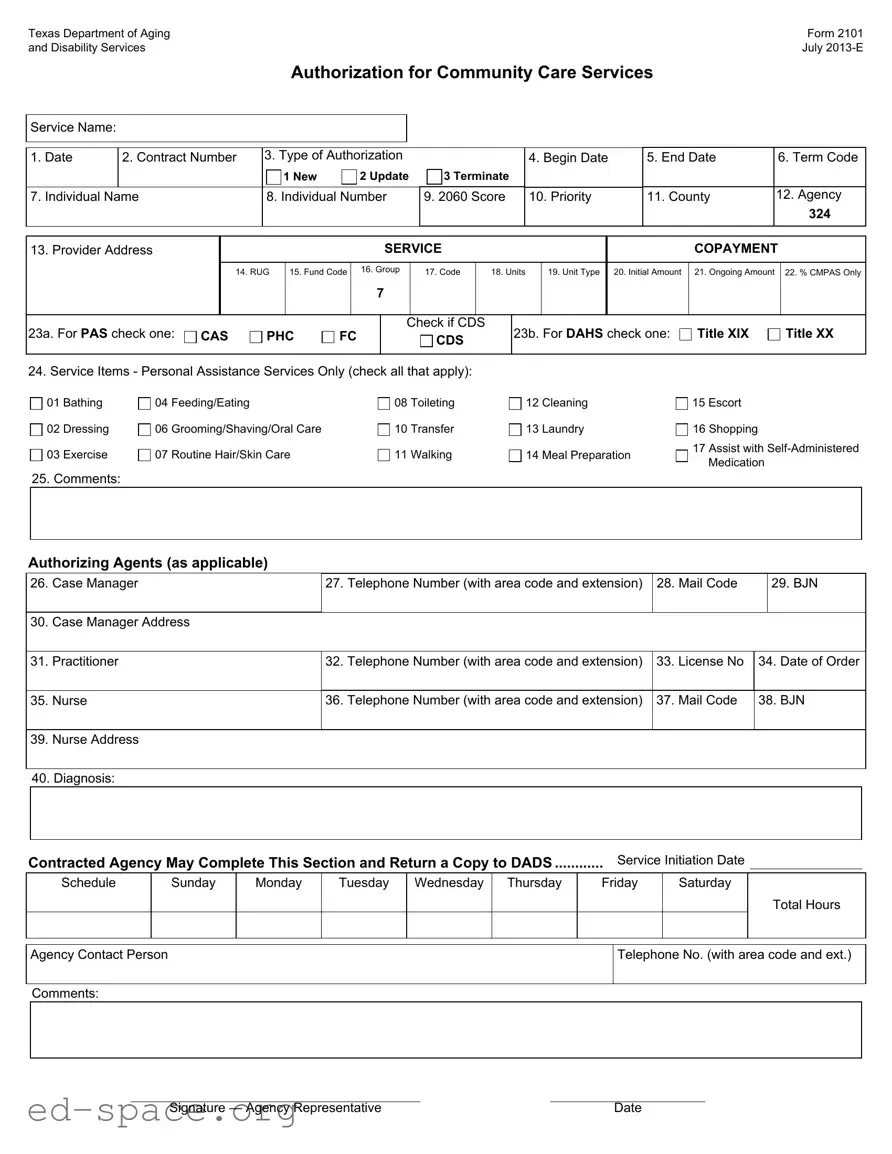
The Texas Department of Aging and Disability Services utilizes the 2101 form to authorize community care services effectively. This essential document captures vital information such as the individual’s name, identification number, and specific service details. It includes sections for the service's start and end dates, type of authorization—whether new, updated, or terminated—and the associated contract number. The form also requires a score assessment, which helps determine the priority level for services. Additionally, it outlines the service copayment details and specifies various personal assistance services that may be provided, including bathing, grooming, and meal preparation. Authorizing agents, including case managers and practitioners, must provide their contact information and credentials, ensuring accountability and proper communication. The completion of this form is crucial for the timely initiation of services, making it a key component in supporting individuals in need of assistance.
Texas Department of Aging |
Form 2101 |
and Disability Services |
July |
Authorization for Community Care Services
Service Name:
1. |
Date |
2. Contract Number |
3. Type of Authorization |
|
|
|
|
|
1 New |
2 Update |
3 Terminate |
|
|
|
|
|
|
7. |
Individual Name |
8. Individual Number |
9. 2060 Score |
||
|
|
|
|
|
|
4.Begin Date
10.Priority
5. End Date |
6. Term Code |
|
|
11. County |
12. Agency |
|
324 |
|
|
13. Provider Address
|
|
SERVICE |
|
|
|
COPAYMENT |
||
|
|
|
|
|
|
|
|
|
14. RUG |
15. Fund Code |
16. Group |
17. Code |
18. Units |
19. Unit Type |
20. Initial Amount |
21. Ongoing Amount |
22. % CMPAS Only |
|
||||||||
|
|
7 |
|
|
|
|
|
|
|
|
|
|
|
|
|
|
|
23a. For PAS check one: |
|
CAS |
|
PHC |
|
FC |
|
|
|
Check if CDS
CDS
23b. For DAHS check one: |
|
Title XIX |
|
Title XX |
24. Service Items - Personal Assistance Services Only (check all that apply):
01 Bathing
02 Dressing
03 Exercise
25. Comments:
04 Feeding/Eating
06 Grooming/Shaving/Oral Care
07 Routine Hair/Skin Care
08Toileting
10Transfer
11Walking
12Cleaning
13Laundry
14Meal Preparation
15 Escort
16 Shopping
17 Assist with
Authorizing Agents (as applicable)
26. |
Case Manager |
27. Telephone Number (with area code and extension) |
28. Mail Code |
|
29. BJN |
||
|
|
|
|
|
|
|
|
30. |
Case Manager Address |
|
|
|
|
|
|
|
|
|
|
|
|
|
|
31. |
Practitioner |
32. Telephone Number (with area code and extension) |
33. |
License No |
34. |
Date of Order |
|
|
|
|
|
|
|
|
|
35. |
Nurse |
36. Telephone Number (with area code and extension) |
37. |
Mail Code |
38. |
BJN |
|
|
|
|
|
|
|
|
|
39. |
Nurse Address |
|
|
|
|
|
|
|
|
|
|
|
|
|
|
40. Diagnosis:
Contracted Agency May Complete This Section and Return a Copy to DADS |
Service Initiation Date |
Schedule
Sunday
Monday
Tuesday Wednesday Thursday
Friday
Saturday
Total Hours
Agency Contact Person
Telephone No. (with area code and ext.)
Comments:
Signature — Agency Representative |
|
Date |
| Fact Name | Details |
|---|---|
| Form Title | Texas Department of Aging and Disability Services Form 2101 |
| Purpose | This form authorizes community care services for individuals in need. |
| Version Date | July 2013 |
| Governing Laws | Texas Health and Safety Code, Chapter 142 |
| Authorization Types | New, Update, or Terminate |
| Service Items | Includes personal assistance services such as bathing, dressing, and meal preparation. |
| Individual Identification | Requires the individual's name and number for processing. |
| Agency Contact | Details of the agency representative must be provided, including their signature. |
| Service Schedule | Allows for the scheduling of services across the week, detailing total hours needed. |
Completing the Texas Form 2101 is essential for accessing community care services. Follow these steps carefully to ensure accurate submission.
What is the purpose of the Texas Form 2101?
The Texas Form 2101, also known as the Authorization for Community Care Services, is designed to facilitate the provision of community care services for individuals with disabilities or aging needs. This form allows service providers to request authorization for various types of services, such as personal assistance and daily living support. It captures essential information, including the individual's name, service type, and the specific assistance required, ensuring that the necessary care is delivered efficiently and effectively.
What information is required on the Texas Form 2101?
The form requires several key pieces of information to process the authorization correctly. This includes the individual's name and number, the type of authorization (new, update, or terminate), and the service items being requested. Additionally, it asks for specific dates, such as the beginning and end of service, along with details about the contracted agency and the case manager involved. Service providers must also indicate the type of care needed, which can range from personal assistance services like bathing and grooming to meal preparation and medication assistance.
How does the service copayment work on the Texas Form 2101?
The service copayment section of the Texas Form 2101 outlines any costs that the individual may be responsible for when receiving community care services. This includes the initial and ongoing amounts for services rendered, as well as the percentage of copayment applicable for specific programs. Understanding these financial responsibilities is crucial for both the service provider and the individual receiving care, as it ensures transparency and helps manage expectations regarding service costs.
Who should complete the Texas Form 2101?
The Texas Form 2101 should be completed by the authorized representatives of the contracted agency providing the community care services. This includes case managers and practitioners who have the necessary knowledge about the individual’s needs and the services being requested. It is important that the form is filled out accurately and thoroughly to avoid delays in service initiation and to ensure that the individual receives the appropriate level of care. Additionally, signatures from agency representatives are required to validate the request.
Neglecting to complete all required fields: Each section of the 2101 Texas form is important. Missing information can lead to delays in processing. Ensure that every required field, such as the Individual Name and Contract Number, is filled out completely.
Using incorrect codes: The form includes various codes, such as Fund Code and Term Code. Double-check these codes for accuracy. An incorrect code can misrepresent the type of service being requested, causing confusion and potential denial of services.
Failing to specify the service items: When selecting service items for Personal Assistance Services, it is crucial to check all that apply. Omitting services like Bathing or Meal Preparation can result in inadequate care being provided.
Not updating information when necessary: If there are changes in the individual’s circumstances, such as a new address or a change in diagnosis, it’s essential to update the form. An outdated form can lead to miscommunication and delays in service delivery.
Ignoring the importance of signatures: The form must be signed by an authorized agency representative. Without this signature, the form is incomplete and cannot be processed. Always ensure that the signature is included before submission.
Overlooking the comments section: The comments section is an opportunity to provide additional context or information that may be relevant to the case. Leaving it blank can mean missing out on conveying important details that could assist in the approval process.
The Texas Department of Aging Form 2101 is essential for individuals seeking authorization for community care services. This form outlines important details such as service types, individual information, and agency contacts. Along with this form, several other documents are often used to ensure a comprehensive understanding of the services being provided. Below is a list of commonly associated forms and documents.
These documents work together with the Texas Department of Aging Form 2101 to create a clear picture of the services needed and ensure that individuals receive the appropriate care. Understanding each document's role can help streamline the process and improve outcomes for those seeking assistance.
The Texas Department of Aging Form 2101 is designed to facilitate the authorization of community care services. It shares similarities with several other important documents used in healthcare and social services. Here are seven such documents, along with a brief explanation of how they are similar to the 2101 form:
Each of these documents plays a crucial role in ensuring that individuals receive the appropriate care and services they need, reflecting the shared goals of effective communication and service delivery in the healthcare system.
When filling out the Texas Department of Aging Form 2101, it is important to adhere to certain guidelines to ensure accuracy and compliance. Below is a list of things to do and avoid during the process.
By following these guidelines, you can facilitate a smoother application process and help ensure that the necessary services are provided without unnecessary delays.
Understanding the 2101 Texas form can be challenging, and there are several misconceptions that people often have about it. Here are nine common misunderstandings, along with clarifications to help you navigate this important document.
By addressing these misconceptions, individuals can better understand the purpose and function of the 2101 Texas form, ensuring a smoother experience in accessing community care services.
When filling out the 2101 Texas form, it is essential to ensure accuracy and completeness. This form is used for authorizing community care services, and each section plays a critical role in the process.
Each entry on the form contributes to a comprehensive understanding of the individual's needs and the services required. Review the completed form carefully before submission to avoid any delays in service initiation.
Timeliness is also important. The service initiation date should be scheduled accurately to meet the individual's needs. Make sure to coordinate with the agency contact person for any follow-up or additional information required.
Lastly, the signature of the agency representative is necessary to validate the form. Ensure that this is completed before submitting the form to the Texas Department of Aging and Disability Services.