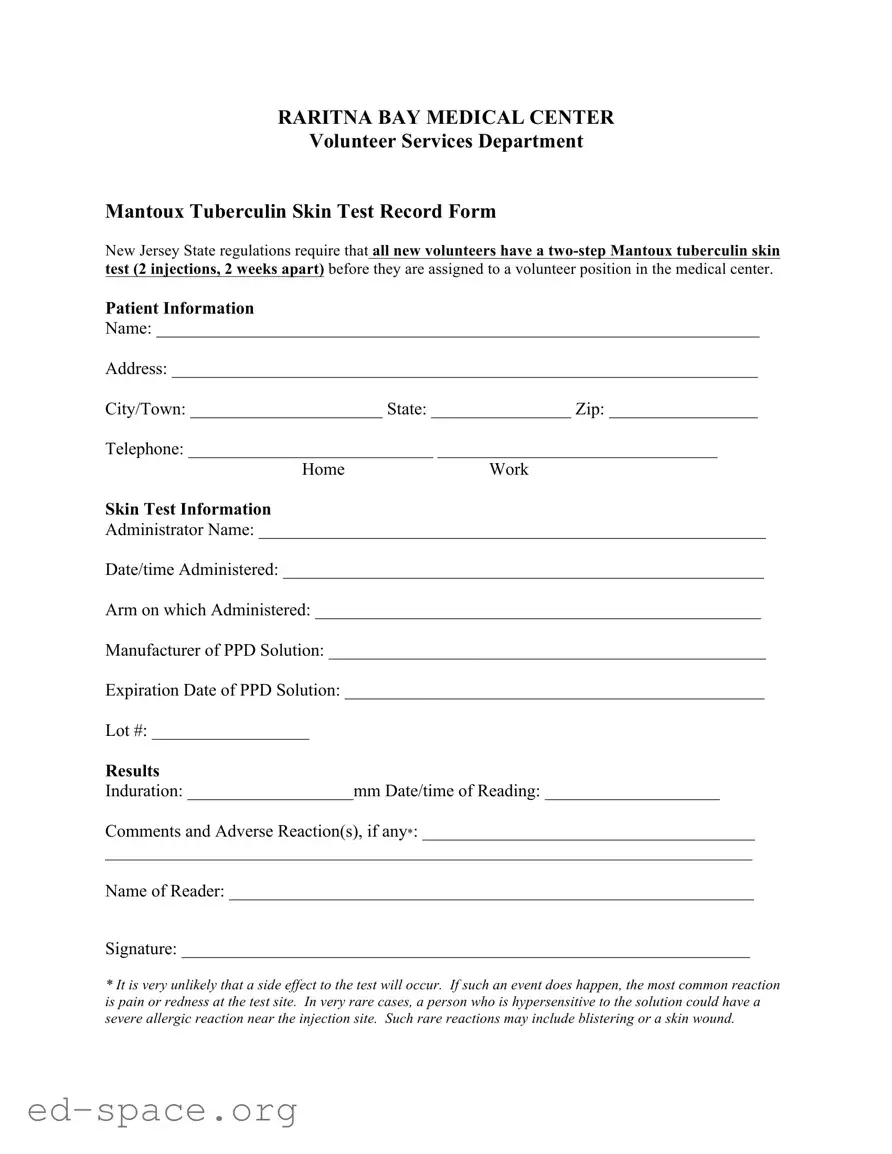
The 2 Step TB Test form is an essential document for anyone looking to volunteer at Raritan Bay Medical Center. This form is part of New Jersey State regulations that require new volunteers to undergo a two-step Mantoux tuberculin skin test. This process involves two separate injections administered two weeks apart. The form collects important patient information, including the volunteer's name, address, and contact details. Additionally, it captures specifics about the skin test itself, such as the administrator's name, the date and time the test was given, and the arm used for the injection. It also includes details about the PPD solution, including the manufacturer, expiration date, and lot number. After the test is read, the results, including any induration measurements and comments on adverse reactions, are documented. While side effects are rare, the form provides space to note any reactions, ensuring that volunteers are well-informed and safe throughout the process. This comprehensive approach helps maintain the health standards necessary for all volunteers within the medical center.

RARITNA BAY MEDICAL CENTER
Volunteer Services Department
Mantoux Tuberculin Skin Test Record Form
New Jersey State regulations require that all new volunteers have a
Patient Information
Name: _____________________________________________________________________
Address: ___________________________________________________________________
City/Town: ______________________ State: ________________ Zip: _________________
Telephone: ____________________________ ________________________________
HomeWork
Skin Test Information
Administrator Name: __________________________________________________________
Date/time Administered: _______________________________________________________
Arm on which Administered: ___________________________________________________
Manufacturer of PPD Solution: __________________________________________________
Expiration Date of PPD Solution: ________________________________________________
Lot #: __________________
Results
Induration: ___________________mm Date/time of Reading: ____________________
Comments and Adverse Reaction(s), if any*: ______________________________________
__________________________________________________________________________
Name of Reader: ____________________________________________________________
Signature: _________________________________________________________________
*It is very unlikely that a side effect to the test will occur. If such an event does happen, the most common reaction is pain or redness at the test site. In very rare cases, a person who is hypersensitive to the solution could have a severe allergic reaction near the injection site. Such rare reactions may include blistering or a skin wound.
| Fact Name | Details |
|---|---|
| Purpose | The 2 Step TB Test is required to screen for tuberculosis in new volunteers. |
| Regulatory Requirement | New Jersey state regulations mandate the two-step Mantoux tuberculin skin test for all new volunteers. |
| Testing Procedure | The test consists of two injections administered two weeks apart. |
| Patient Information | Volunteers must provide their name, address, and contact information on the form. |
| Administration Details | The form requires the administrator's name, date and time of administration, and the arm used for the injection. |
| Result Recording | Results must include the induration measurement in millimeters and the date/time of reading. |
| Adverse Reactions | While rare, the form allows for comments on any adverse reactions, such as pain or redness at the injection site. |
After completing the 2 Step TB Test form, the next steps involve submitting the form to the appropriate department for review. Ensure that all information is accurate and legible to avoid any delays in processing. Follow the instructions below to fill out the form correctly.
What is the purpose of the 2 Step TB Test?
The 2 Step TB Test is designed to screen for tuberculosis (TB) infection among new volunteers at Raritan Bay Medical Center. New Jersey state regulations mandate that all new volunteers must complete this test before beginning their service. The test involves two injections administered two weeks apart to ensure accurate results.
How is the 2 Step TB Test administered?
The test consists of two Mantoux tuberculin skin tests. The first injection is given, followed by a second injection two weeks later. A healthcare professional will administer both tests, ensuring the correct technique is used for accurate results.
What information is required on the TB Test form?
The TB Test form requires several pieces of information. Volunteers must provide their name, address, city, state, zip code, and telephone number. Additionally, the form includes details about the skin test, such as the administrator's name, date and time of administration, the arm where the test was given, the manufacturer of the PPD solution, expiration date, lot number, and the results of the test.
What should I expect after receiving the TB Test?
After receiving the TB Test, you may experience minor reactions such as pain or redness at the injection site. These are common and usually resolve quickly. It is important to return for a reading of the test results within 48 to 72 hours after the first injection. The healthcare provider will assess the induration (swelling) at the site to determine if further action is needed.
What if I have an adverse reaction to the TB Test?
While it is very unlikely to experience a severe reaction to the TB Test, some individuals may have mild side effects such as pain or redness. In rare cases, a person may have a hypersensitive reaction, which could include blistering or skin wounds at the injection site. If you notice any unusual symptoms, it is important to contact a healthcare professional immediately.
How long is the TB Test valid for volunteering?
The results of the 2 Step TB Test are typically valid for a certain period, often one year, but this can vary by organization or state regulations. It is best to check with Raritan Bay Medical Center's Volunteer Services Department for specific requirements regarding the validity of your TB Test results.
What happens if my TB Test results are positive?
If your TB Test results are positive, it does not necessarily mean you have active tuberculosis. A healthcare provider will evaluate your results and may recommend additional testing, such as a chest X-ray or further medical evaluation. It is important to follow up as directed to ensure your health and safety.
Incomplete Patient Information: Many individuals forget to fill out all sections of the patient information. Missing details like the name, address, or telephone number can delay the process.
Incorrect Dates: Some people write the wrong date or time for when the skin test was administered. This can lead to confusion about when the reading should occur.
Missing Signature: It's essential to sign the form after completing it. Without a signature, the form may not be considered valid.
Failing to Document Results: After the skin test reading, results should be clearly noted. Leaving this section blank can result in complications later.
Neglecting Comments and Reactions: If there are any adverse reactions or comments, they must be documented. Ignoring this section could lead to health risks being overlooked.
When preparing to volunteer in a medical setting, several documents are essential alongside the 2 Step TB Test form. Each of these forms plays a crucial role in ensuring compliance with health regulations and maintaining safety standards. Below is a list of these documents.
Each of these documents is vital for a smooth and compliant volunteer experience. Ensuring that all forms are completed accurately and submitted on time will facilitate a safer and more organized environment for everyone involved.
The 2 Step TB Test form is similar to several other medical and administrative documents. Each serves a specific purpose in healthcare and volunteer services. Below is a list of documents that share similarities with the 2 Step TB Test form:
When filling out the 2 Step TB Test form, it’s important to follow certain guidelines to ensure accuracy and compliance. Here are five things to do and not to do:
Misconceptions about the 2 Step TB Test can lead to confusion and misinformation. Here are eight common misunderstandings, along with clarifications to help set the record straight.
When filling out and using the 2 Step TB Test form, it is essential to follow specific guidelines to ensure accuracy and compliance with New Jersey State regulations. Here are some key takeaways:
By adhering to these guidelines, volunteers can ensure a smooth process and meet the necessary health regulations.